 May 19, 2026
 6 min read
Key Takeaways
- Merchandising is the set of decisions that controls product visibility, intent matching, and revenue outcomes.
- Personalization and segmentation improve relevance, but only if they’re constrained by margin and inventory reality.
- The best merchandising programs connect discovery (search/navigation) with conversion and retention metrics.
Understanding Merchandising
Merchandising in e-commerce is how you translate business priorities into what shoppers actually see. It’s not just “making pages look nice.” It’s deciding which products get traffic, which queries they win, and which segments you’re willing to pay to convert.
This is where most teams get it wrong: they treat merchandising as a one-time setup. In reality, it’s a weekly operating cadence tied to inventory, seasonality, and performance data from search, category pages, and recommendations.
Key takeaway: Treat merchandising as a control system for discovery and conversion—if you can’t explain why a product is ranked or featured, you can’t defend the revenue outcome.
What Is Merchandising?
Merchandising is the discipline of selecting, ranking, and presenting products to drive purchases. In e-commerce, the “shelf” is your category structure, onsite search results, recommendation placements, and email/SMS modules. The same product can perform very differently depending on where it appears and what it’s paired with.
Effective merchandising uses creative and commercial inputs together: product content quality, pricing and promo rules, and placement logic. On platforms like Shopify, WooCommerce, Magento, and BigCommerce, the constraint is usually not capability—it’s governance: who can change ranking rules, how often, and based on which KPI.
Key elements include:
- Product design: Building variants, bundles, and options that match real buying jobs (not internal assumptions).
- Selection: Curating assortment by demand, margin, and stock risk—not just “more SKUs.”
- Pricing: Setting price and promo logic with margin guardrails and clear intent (acquisition vs. profit).
- Display: Controlling ranking, filters, and placements to reduce friction and increase relevance.
- Packaging: Using packaging and presentation to reduce returns and increase perceived value.
Why Is Merchandising Important For E-commerce Owners?
Good merchandising directly affects conversion rate, AOV, and return rate because it shapes the path from intent to product. If search results are noisy, shoppers bounce. If category pages don’t reflect seasonality or stock, you push customers into out-of-stock dead ends. If recommendations ignore margin, you can “grow revenue” while shrinking contribution.
It also compounds over time. Better relevance improves engagement signals, which improves future ranking and personalization quality. That’s why tactics like cross-sell aren’t just add-ons—they’re part of how you increase basket efficiency without relying on discounts.
The importance of merchandising for us at Clerk lies in:
- Enhancing the shopping experience by creating personalized and relevant displays tied to intent.
- Increasing sales by promoting products with the right balance of relevance, margin, and availability.
- Building brand loyalty through consistent discovery patterns across search, categories, and recommendations. At Clerk, we treat merchandising as a measurable system: you set rules, test placements, and monitor the downstream impact on conversion, AOV, and repeat purchase behavior.
Challenges In Merchandising
Merchandising breaks when teams optimize for one metric in isolation. “Best sellers” everywhere can starve new products. Aggressive discounting can inflate conversion while destroying margin. Over-personalization can reduce discovery and make the catalog feel smaller than it is.
The other failure mode is operational: too many manual overrides, too little feedback loop. If you can’t connect ranking decisions to outcomes (by segment, channel, and device), you end up arguing opinions instead of shipping improvements.
Main Pitfalls For E-commerce Owners
Consumer Behavior: Trends shift fast, but the bigger issue is intent diversity. New vs. returning shoppers behave differently. Merchandising needs segmentation, not averages.
Market Dynamics: Demand spikes and supply constraints force trade-offs. If you don’t have rules that account for stock and lead times, you’ll merchandise products you can’t fulfill.
Resource Allocation: Every manual collection, banner, and promo has an opportunity cost. If it’s not tied to a KPI (conversion, margin, inventory turns), it’s busywork.
Customer Experience: Friction usually comes from navigation and discovery: weak filters, irrelevant search results, and inconsistent sorting logic. Fixing these often beats redesigns.
Data Utilization: Data without decisions is noise. You need a clear measurement plan: what you test, what you hold constant, and what you’ll change if the result is negative.
Omnichannel Presence: Consistency matters, but so does context. Align messaging and product availability across channels while keeping the experience coherent. That includes omnichannel discovery and personalization rules that don’t fight each other.
If you want a practical baseline, start by auditing: (1) top 50 search queries, (2) top 10 category pages, (3) top recommendation placements. That’s where most revenue and most leakage live.
Strategies For Success
Strong merchandising is a set of repeatable decisions: how you rank products, how you handle low stock, how you introduce newness, and how you protect margin. The best programs are boring in the right way—clear rules, clear ownership, and a steady testing cadence.
The goal isn’t maximum personalization. It’s profitable relevance. That means using segmentation and automation where it reduces manual work, and using human overrides where brand, seasonality, or inventory risk demands it.
Leveraging Merchandising In E-commerce Sites
Personalization: Personalization works when it’s constrained by business logic. Recommendations should consider availability, margin, and customer intent (new vs. returning, category affinity, price sensitivity). If you’re running Klaviyo flows or similar lifecycle messaging, the same segmentation should carry into onsite placements to avoid mixed signals.
-
Product Recommendations: Use behavioral signals (views, add-to-cart, purchases) to rank items, but apply guardrails for stock and margin.
-
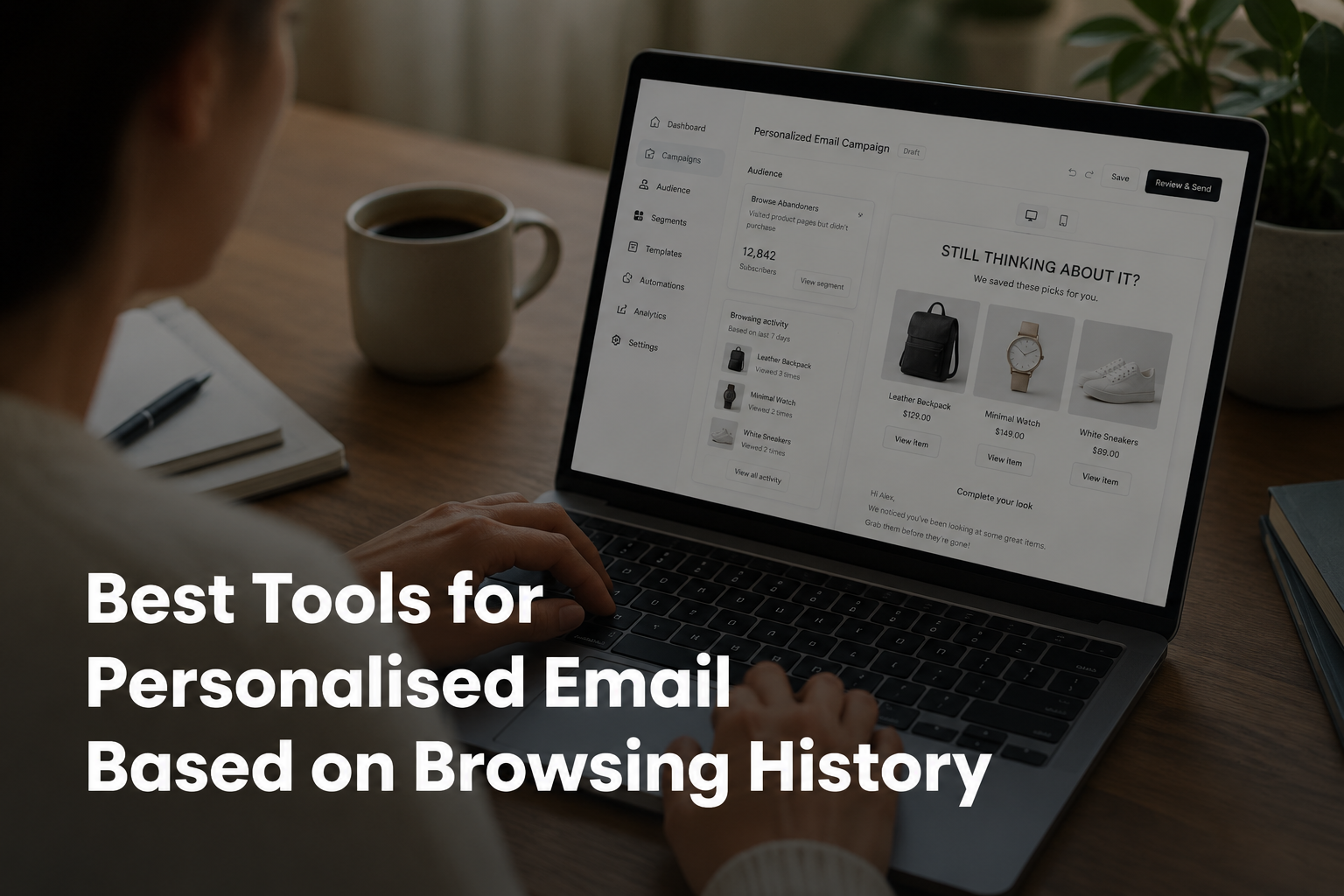
Email Campaigns: Personalize modules based on onsite behavior so email doesn’t promote products the site won’t surface (or can’t fulfill). Visual Merchandising: Visuals are performance assets. Image quality, variant clarity, and consistent merchandising tiles reduce hesitation and returns. The trade-off is speed: heavy assets can hurt load times and conversion, especially on mobile.
-
High-Quality Images: Prioritize clarity and consistency (angles, backgrounds, scale). This improves comparison shopping.
-
Video Content: Use video where it reduces uncertainty (fit, function, assembly). Don’t add it everywhere by default. User Experience (UX) Optimization: UX is where merchandising becomes measurable. Search and navigation are the highest-leverage areas because they affect every session. If your search is powered by tools like Algolia or similar, treat ranking rules and synonyms as merchandising controls, not just “search settings.” For a deeper look at discovery mechanics, see how onsite search impacts product discovery and conversion.
-
Site Navigation: Build categories and filters around how customers shop, then validate with query and click data.
-
Page Loading Speed: Protect speed budgets. A prettier category page that loads slower often loses money. The operating model that tends to win: test one change per high-traffic template (search, category, PDP) at a time, measure impact on conversion and margin, then roll forward.
Integrating Solutions
Tools don’t fix weak merchandising. They do make good merchandising scalable. The value comes from turning manual curation into repeatable rules, and from using audience and product data to keep relevance high as the catalog grows.
When you evaluate solutions, focus on control and measurement: can you set ranking logic, segment experiences, and attribute revenue impact by placement? If you can’t measure it, you’ll end up debating it.
A common integration mistake is treating personalization as a layer on top of a broken catalog. Clean product data (titles, attributes, variants) and a sensible taxonomy are prerequisites for reliable search, filters, and recommendations.
Merchandising With Clerk
Effective merchandising is about making product discovery and decision-making easier for the shopper while keeping your commercial constraints intact. Clerk’s tools are designed to operationalize that: automate relevance, keep experiences consistent across touchpoints, and give teams levers they can actually control.
The practical benefit is speed. Instead of manually curating every collection or guessing what to promote, you can set rules and let behavior data adjust placements over time—while still overriding when brand or inventory requires it. If you’re comparing platforms like Nosto, Bloomreach, or Dynamic Yield, the questions stay the same: how fast can you ship changes, and how clearly can you attribute results?
Site Search: Our AI-driven search engine helps customers find products faster and with fewer dead ends. In practice, better search reduces bounce on high-intent sessions and increases conversion on long-tail queries where category navigation struggles.
Product Recommendations: Tailor each customer’s shopping experience with personalized product recommendations. This is where you can drive incremental AOV—if you apply guardrails for stock and margin and place modules where customers are making decisions (category, PDP, cart).
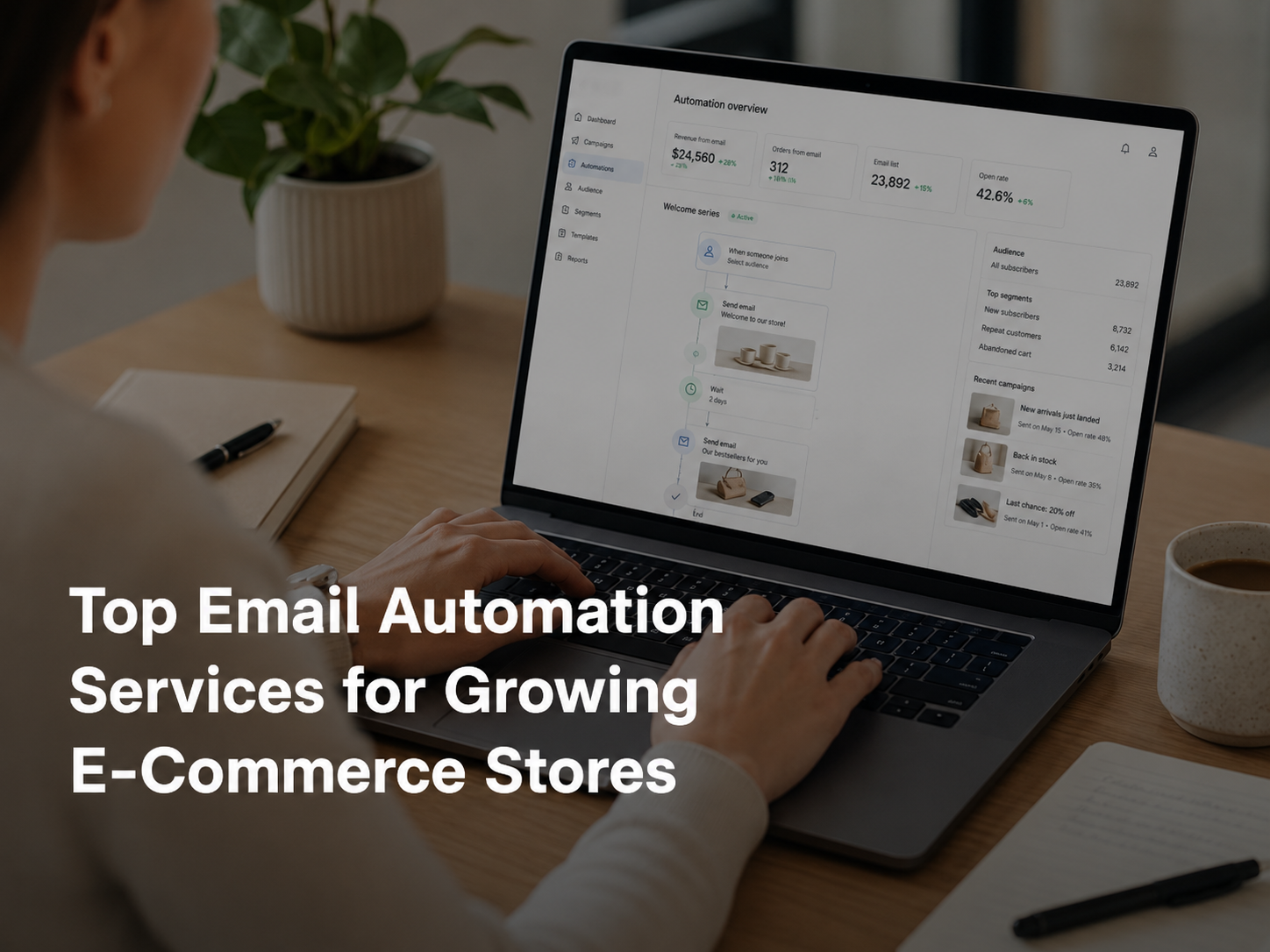
Email Personalization & Automation: Connect with your audience through customized email campaigns that reflect onsite behavior and product availability. The win is consistency: the products you promote in email should match what the shopper sees when they click through.
Audience Analytics & Insights: Use Clerk’s audience analytics and insights to segment by intent and value (new vs. returning, category affinity, discount sensitivity). That segmentation is what makes merchandising decisions defensible—especially when you’re balancing acquisition with profitability and planning retargeting.
How Does Clerk Impact E-Commerce Businesses’ Bottom Line?
Merchandising only matters if it moves the numbers you report on: conversion, AOV, and revenue per session—without creating margin or fulfillment problems downstream. The cleanest way to evaluate impact is by placement-level reporting and controlled tests (before/after with stable traffic sources, or A/B where possible).
If you’re already running experiments, treat search and recommendations as core CRO surfaces. They influence what gets clicked, what gets compared, and what ends up in the cart.
Conversion Rates
We aim to increase conversion rates by improving relevance in high-intent moments: onsite search, category browsing, and PDP decision support. When shoppers find what they meant (not what your taxonomy guessed), conversion follows.
Average Order Value
We also lift average order value (AOV) through upsell and cross-sell placements that are context-aware. The operational detail that matters: recommendations should complement the current basket, not compete with it, and they should respect price bands to avoid sticker shock.
Basket Size
Lastly, we impact basket size by making add-on decisions easier: accessories, replenishment items, and bundles that reduce the need for shoppers to “keep looking.” This is often the fastest path to incremental revenue when traffic is flat.
In summary, Clerk is designed to improve key webshop KPIs by tightening the loop between discovery and purchase. For an example of outcomes in practice, see Eva Solo’s experience with Clerk.
TL;DR
- Merchandising is a revenue control system: it decides what gets seen, by whom, and in what order.
- Optimize for profitable relevance—conversion gains don’t matter if margin and stock health collapse.
- Start with the highest-leverage surfaces: onsite search, top category pages, PDP recommendations.
- Use segmentation and personalization, but keep guardrails for inventory, margin, and brand rules.
- Measure impact by placement and run controlled tests; otherwise you’re just moving products around.
- Tools like Clerk help scale good merchandising by automating relevance and making decisions measurable.