Why Future Purchase Prediction Matters in E-Commerce
Customer behavior often follows recognizable patterns. Past browsing activity, purchases, and engagement signals can provide valuable insight into what a shopper may want next.
Most marketing and personalization strategies react to customer actions after they occur. Brands respond when a shopper returns to browse products or begins searching again.
Future purchase prediction introduces a more proactive approach.
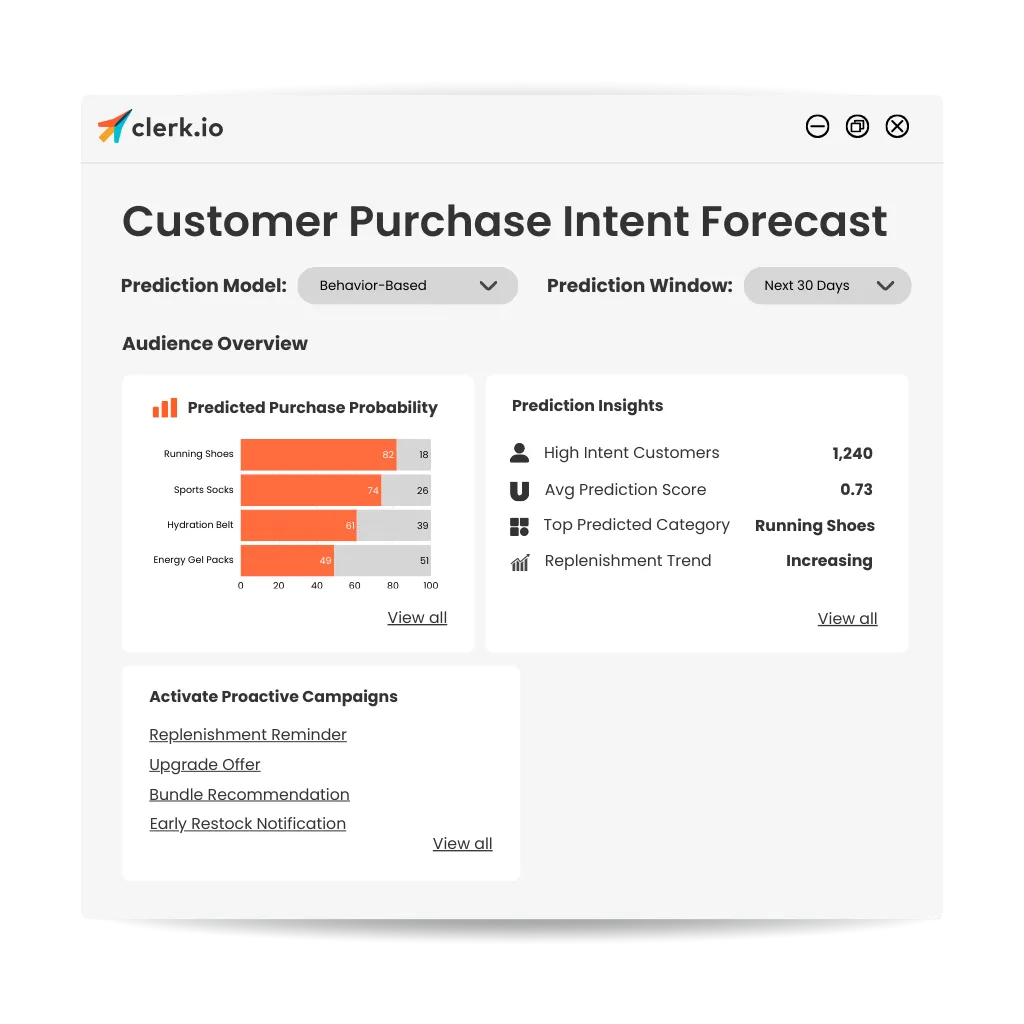
By analyzing behavioral data, predictive models estimate which products or categories a customer is most likely to purchase in the near future. Instead of waiting for the next browsing session, brands can engage customers earlier with relevant recommendations or campaigns.
This allows businesses to reach shoppers at the right moment with products that align with their likely needs.
From Historical Behavior to Predictive Insights
Many e-commerce strategies rely on reacting to customer activity after it happens.
Predictive models shift this approach by analyzing patterns in both historical and real-time behavior. Signals such as browsing patterns, purchase history, and engagement trends can indicate what a customer may be interested in next.
Rather than waiting for a shopper to return and begin browsing again, businesses can anticipate upcoming needs based on these signals.
This creates opportunities for proactive engagement through product recommendations, targeted campaigns, or personalized messaging that feels timely and relevant.
How Future Purchase Prediction Works
Behavioral Signals Analyze browsing activity, purchases, and engagement patterns to identify customer preferences.
Probability-Based Segmentation Group customers by their likelihood to purchase specific products or categories.
Continuous Learning Predictions improve over time as the system observes new customer behavior.
Clerk.io analyzes historical and real-time customer activity to identify which products or categories shoppers are most likely to purchase next.
Use Case: Reaching Customers Before They Buy
An e-commerce brand wants to promote replenishment products and potential upgrades to existing customers.
Without predictive insights, marketing campaigns may arrive too late or target customers who are not currently interested.
With future purchase prediction, customers receive recommendations aligned with their likely upcoming needs. This helps brands reach shoppers at the right time and increases the likelihood of engagement and conversion.
Key Benefits of Future Purchase Prediction
- Proactive targeting based on predicted customer intent
- More relevant product recommendations
- Better timing for marketing campaigns
- Stronger engagement through predictive insights
- Increased opportunities for repeat purchases
By identifying likely future needs, e-commerce brands can engage customers earlier and increase the chances of conversion.