Why Lifecycle Segmentation Matters in E-Commerce
Customers behave differently depending on where they are in their relationship with a brand. New visitors, first-time buyers, loyal customers, and inactive shoppers all have different expectations and motivations.
When all customers receive the same messaging or experiences, communication can feel generic or poorly timed. New customers may need guidance and onboarding, while loyal shoppers may respond better to exclusive offers or personalized recommendations.
Lifecycle segmentation helps businesses adapt communication to match each stage of the customer journey.
By grouping customers based on their level of engagement, brands can deliver more relevant experiences that reflect how each customer interacts with the store.
This approach allows businesses to guide new customers, strengthen relationships with active buyers, and re-engage shoppers who have become inactive.
From Generic Messaging to Stage-Based Experiences
Many e-commerce campaigns target broad audiences without considering how customers interact with the brand over time.
Lifecycle segmentation introduces structure by organizing customers into meaningful stages such as new, active, loyal, or lapsed.
As customer behavior evolves, individuals automatically move between these stages. This ensures communication stays relevant as relationships with the brand develop.
For example, new customers may receive onboarding content or product guidance, while loyal buyers may receive tailored recommendations or exclusive promotions. Inactive shoppers can be targeted with re-engagement campaigns designed to bring them back.
By aligning messaging with each stage of the customer journey, businesses can create more meaningful and effective customer interactions.
How Lifecycle Segmentation Works
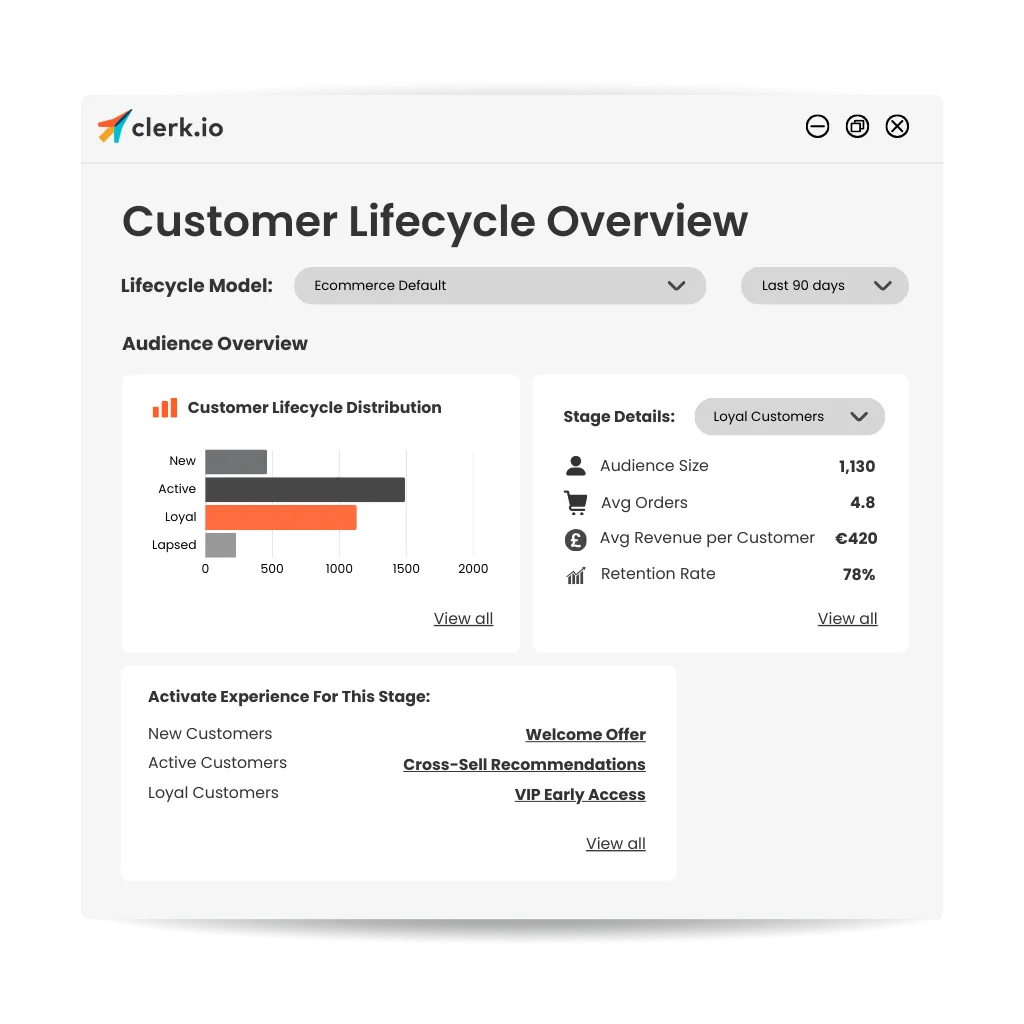
Lifecycle Stages Identify customers as new, active, loyal, or lapsed based on their behavior and purchase history.
Dynamic Transitions Customers move between lifecycle stages automatically as their behavior changes.
Stage-Based Activation Personalize messaging, campaigns, and experiences based on each customer’s lifecycle stage.
Clerk.io tracks customer behavior over time to assign and update lifecycle stages dynamically.
Use Case: Matching Experience to Customer Stage
An e-commerce brand wants to onboard new customers while also re-engaging inactive shoppers.
Without lifecycle segmentation, campaigns target all customers in the same way, reducing their effectiveness.
With lifecycle segmentation, each customer receives communication aligned with their current relationship with the brand. New customers receive onboarding guidance, while inactive shoppers receive targeted messages designed to encourage them to return.
Key Benefits of Lifecycle Segmentation
- Targeting based on customer journey stage
- More relevant messaging and personalization
- Improved onboarding for new customers
- Stronger retention of active and loyal customers
- More effective re-engagement of inactive shoppers
By aligning experiences with the customer lifecycle, e-commerce brands can improve engagement, retention, and long-term customer value.