
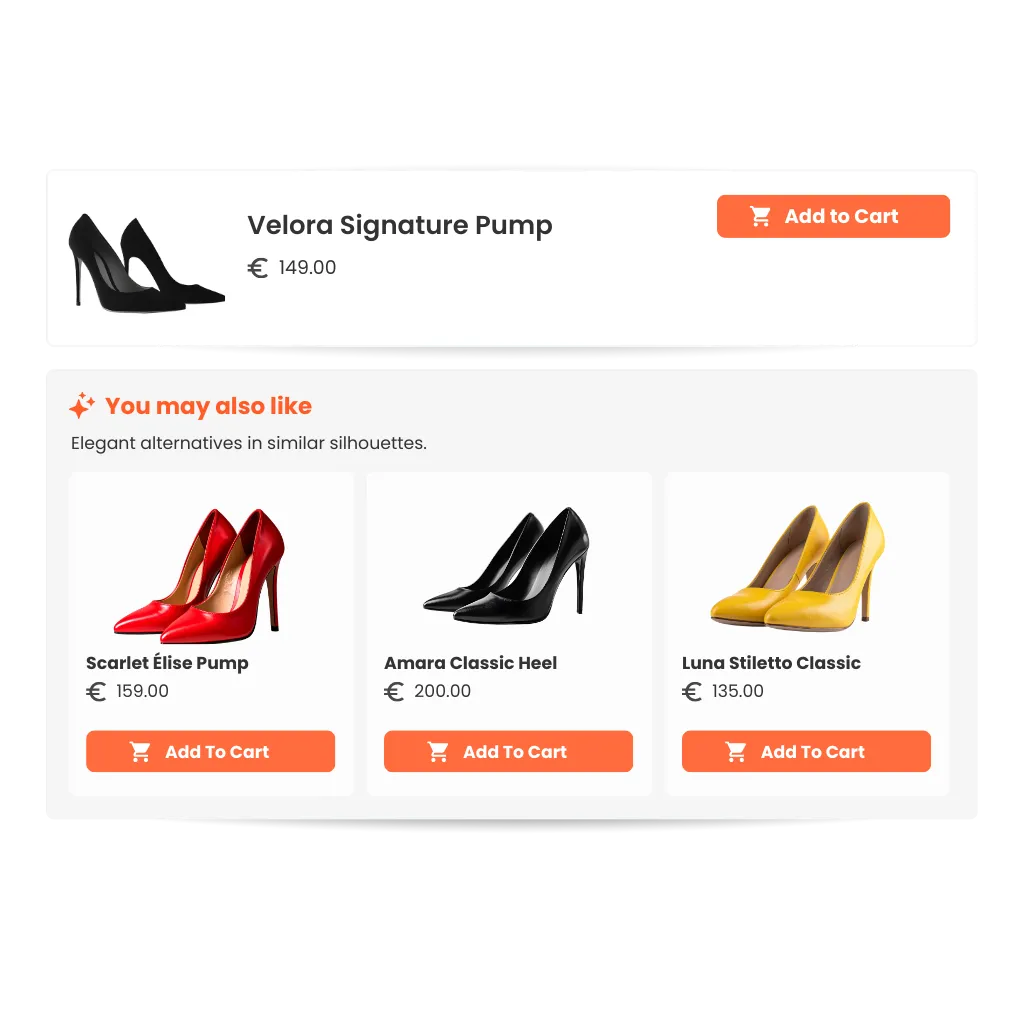
Why Product Alternative Recommendations Matter in E-Commerce
Not every shopper is ready to purchase the first product they see. Many customers prefer to compare features, prices, or styles before making a final decision.
When comparison options are not easily available, shoppers often leave the site to research alternatives elsewhere. This interrupts the shopping journey and can result in lost sales.
Product alternative recommendations support this natural comparison behavior by presenting similar products directly on the page.
Instead of forcing customers to search elsewhere, the store provides relevant alternatives that help shoppers evaluate options without leaving the site. This keeps visitors engaged and increases the likelihood that they will complete their purchase.
By offering comparable options within the same browsing experience, brands can guide shoppers toward a confident purchase decision.
From Single Products to Meaningful Comparisons
Product pages typically focus on a single item, but shoppers often want to evaluate several options before choosing the right one.
Without clear alternatives, it can be difficult for customers to compare products within the same store. This may encourage them to leave the site and continue their research elsewhere.
Product alternative recommendations address this by presenting comparable items that share similar attributes or use cases.
These alternatives allow shoppers to quickly compare options based on features, price points, or styles. By supporting this comparison process directly on the product page, stores make it easier for customers to evaluate choices and stay engaged with the site.
How Product Alternative Recommendations Work
Attribute-Based Similarity Alternative products share key characteristics with the item currently being viewed.
Behavior-Informed Relevance Recommendation quality improves based on shopper clicks, purchases, and engagement signals.
Natural Comparison Shoppers can evaluate similar options without leaving the product page.
Clerk.io identifies products closely related to the viewed item and presents them as relevant alternatives.
Use Case: Supporting Confident Purchase Decisions
A shopper views a product such as a laptop or household appliance and wants to compare similar options.
Without visible alternatives, they may leave the site to research comparable products elsewhere.
With product alternative recommendations, similar items appear directly on the page. This allows the shopper to evaluate options easily while staying within the store’s browsing experience.
Key Benefits of Product Alternative Recommendations
- Support natural product comparison behavior
- Reduce drop-off during the evaluation stage
- Keep shoppers on-site during product research
- Improve engagement on product pages
- Increase the likelihood of conversion
By presenting relevant alternatives, e-commerce brands help shoppers compare options more easily and move toward confident purchase decisions.