
 January 14, 2026
 11 min read
.webp)

Not all ecommerce chatbots play the same role
One reason comparisons go wrong is that “AI chatbot” covers very different products.
In practice, most ecommerce chat tools fall into three categories.
Support chat focuses on order status, returns, and post-purchase questions. These tools reduce support load but rarely influence revenue directly.
Generic AI chat uses large language models to answer questions conversationally. Without store data, answers often rely on guesses, which slows or misguides decisions.
Sales-focused ecommerce AI is built around the shopping journey. It understands products, categories, variants, and intent, and responds based on what the shopper is doing in that moment.
Before comparing vendors, it helps to be clear about which role you actually need filled.
What separates ecommerce AI from general chat
The difference between general AI chat and ecommerce AI is context.
Sales-focused ecommerce AI connects directly to store data, including product catalogs, variants, pricing, availability, delivery rules, and policies.
That connection changes answer quality.
When a shopper asks how two products differ, the chatbot compares real attributes instead of improvising.
When delivery timing comes up, responses reflect inventory and location rather than assumptions.
Without this context, chat may sound helpful but still slow decisions or send shoppers in the wrong direction.
Features that actually influence sales
Long feature lists make comparison harder, not easier.
A small set of capabilities consistently separates tools that drive sales from those that don’t.
Context awareness keeps answers relevant to the page and product being viewed.
Product comparison explains meaningful differences between similar products.
Decision guidance helps shoppers choose by clarifying trade-offs and confirming fit.
Checkout reassurance resolves delivery, returns, and payment questions without breaking flow.
Clean escalation hands complex conversations to humans with full context.
If a tool performs well here, it’s likely to influence conversions.
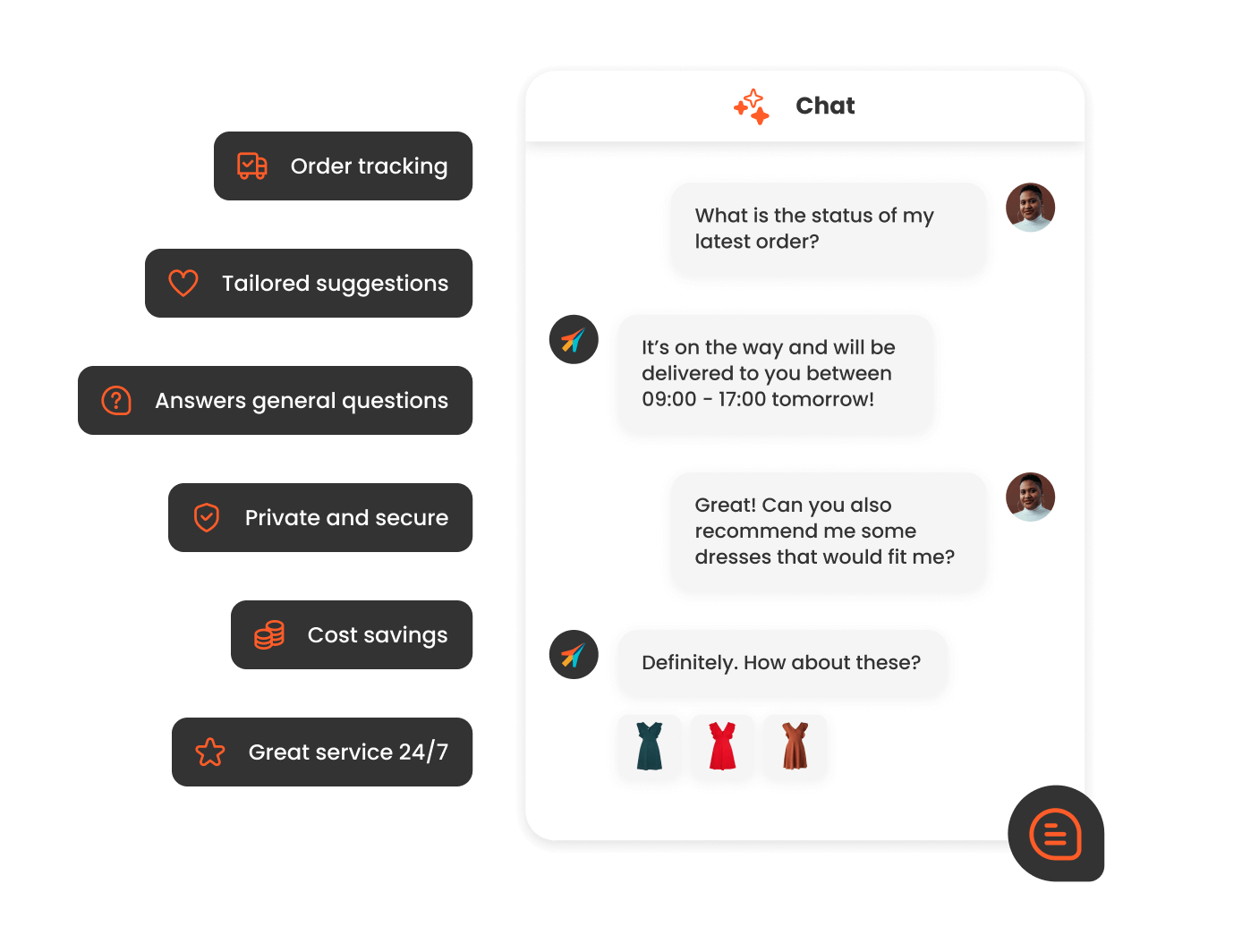
Where AI chatbots actually impact conversions
AI chat doesn’t lift conversions evenly across a site.
Its impact shows up most clearly on product pages, in comparison-heavy categories, during gift shopping, and outside standard support hours.
Testing chatbots in these moments reveals far more than surface-level metrics.
Common mistakes when comparing chatbot tools
Many ecommerce teams choose chatbots based on demos.
Demos are controlled environments. Real shoppers ask incomplete questions, browse unpredictably, and change their minds.
Another mistake is overvaluing tone. A friendly response doesn’t matter if it arrives too late or misses the real concern.
What matters is whether uncertainty disappears quickly enough to keep momentum.
Why implementation matters more than brand names
Even strong tools underperform with weak setup.
Placement, timing, and escalation rules shape results more than vendor branding.
The best implementations treat AI chat as part of the buying flow, not an overlay competing for attention.
The takeaway
The best AI chatbot for ecommerce isn’t the one with the most features.
It’s the one that helps shoppers decide.
When chat answers the right questions at the right moments, sales follow.


.webp)
.webp)