 May 25, 2026
 5 min read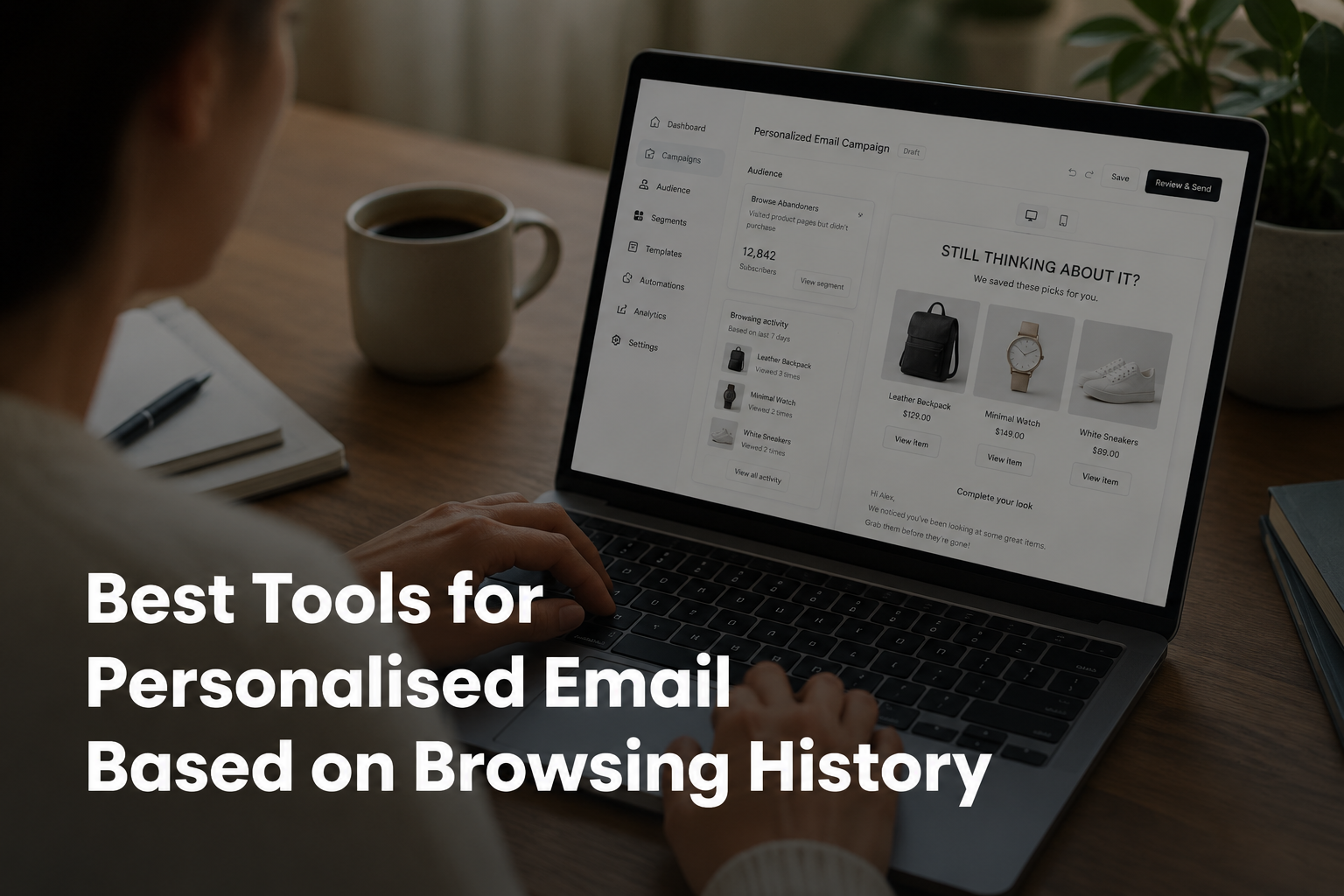
Key Takeaways
- “Browsing history personalization” only matters if the platform can act on it fast and connect it to product, stock, and margin data.
- Three flows do most of the work: browse abandonment, dynamic content refresh in campaigns, and behavior-based segments for broadcasts.
- Clerk, Klaviyo, Bloomreach, ActiveCampaign, and Omnisend each handle browse data differently. Match the tool to your catalog size and team size, not to the demo.
What Browsing-History Personalization Actually Means
Most “personalization” pitches blur together browsing, purchase, and engagement data. Browsing-history personalization specifically means using on-site browse events, things like product views, category views, search queries, and time on page, to change what an email contains or when it sends.
This sounds obvious. The reason most teams underuse it is that the data plumbing fails quietly. The platform either does not capture browse events from your store, captures them with a delay long enough that recommendations are stale, or treats every browse the same regardless of intent. The result is “personalized” emails that promote the wrong size, sold-out variants, or items the shopper already bought.
A good browse-data setup tracks views with timestamps, source pages, and product IDs, ties them to a recognized profile (anonymous or logged in), and feeds them into the email engine within minutes. If any of those break, every downstream personalization decision is guessing.
Key takeaway: Before you compare features, audit how each platform captures, refreshes, and links browse events to recipient profiles. That is where most browse-personalization programs succeed or stall.
The Three Flows Where Browse Data Earns Its Keep
You do not need twenty browse-triggered flows. You need three working well.
Browse abandonment is the highest-intent moment. A shopper viewed a product, did not add it to cart, and left. A well-timed email within 4 to 24 hours that shows the exact product they viewed plus 2 to 3 alternatives recovers a meaningful share of those sessions. Most platforms support this in name, fewer support it with current stock and price accuracy.
Dynamic content refresh in campaigns is the quiet revenue lever. When a shopper opens a campaign email, the product blocks render based on their recent browsing rather than what you set at send time. This matters more for newsletters and promo sends than for one-off flows because it works at scale across your whole list.
Behavior-based segments for broadcasts lets you send the right campaign to people who showed intent. Sending a “Spring Edit” preview only to recipients who browsed spring categories in the last 14 days lifts engagement and protects your sender reputation. Generic blasts to people with no recent browse activity quietly degrade deliverability over time.
For a broader view of how these flows fit into a complete email program, see our piece on email automation services for ecommerce.
Five Tools to Consider
A note on this list. These are the platforms that show up most often in evaluations for browse-triggered email work. The right pick depends on catalog size, ESP setup, and how much engineering support you have.
Clerk
Best for ecommerce stores that want browse data, product recommendations, and email triggers running on one product feed. Built specifically for ecommerce, so Shopify, BigCommerce, WooCommerce, Magento, and Prestashop browse events come in without custom tracking. Recommendations in browse-abandon emails respect stock, margin, and seasonality automatically. Strong fit for teams that want browse-personalization without standing up a separate data layer. See the Clerk email product page for more.
Klaviyo
The default for many Shopify stores. Native browse events for major platforms, strong segmentation, large template library. Pure email focus means recommendations rely on Klaviyo’s own product feed handling, which is solid for catalogs under a few thousand SKUs and gets noisier as the catalog grows. Often paired with a dedicated recommendations engine for larger catalogs.
Bloomreach
Enterprise-scale with a built-in CDP that unifies browse, purchase, and offline data. Fits larger retailers with a dedicated CRM team that can take advantage of the deeper data model. Heavier implementation than most mid-market teams need. If you are weighing it, our Bloomreach alternative page lays out the trade-offs.
ActiveCampaign
Marketing automation platform with site tracking and event-based triggers. Strong for B2C brands that need both ecommerce flows and broader nurture journeys. Browse personalization works but the product-data side is lighter than ecommerce-native tools. Better fit when email is part of a wider CRM motion than when it is purely revenue-driven ecommerce.
Omnisend
Ecommerce-focused alternative to Klaviyo with browse abandonment, cart recovery, and SMS in one stack. Lower price point and a simpler builder. Strong for smaller stores that want browse triggers without managing a more complex tool. Recommendation logic is more rule-based than AI-driven, which matters as catalogs grow.
Honorable mentions worth a look depending on stack: Iterable, Drip, Brevo, and Listrak. Iterable for enterprise messaging, Drip for niche ecommerce, Brevo for cost-conscious smaller stores, Listrak for retail-specialty teams.
How to Evaluate Them
Most demos make every platform look like the right answer. The questions that actually separate them:
Browse data quality. Does the platform capture browse events natively from your ecommerce platform, or does it need custom tagging? Ask for the exact integration and look at the event payload. If product IDs, categories, and timestamps are not clean, downstream personalization will not be either.
Latency. How long between a browse event and the platform being able to act on it in an email send? Real-time is the marketing answer. Practical answer is usually minutes to tens of minutes, which is fine for most use cases. If it is hours, browse abandon flows will fire on the wrong product.
Stock and price awareness. Will the platform suppress an out-of-stock or price-changed product before sending the email, or will it ship the wrong thing? This is where browse-abandon flows quietly damage trust.
Merchandising control. Can a marketer add rules, like “do not show clearance items in browse-abandon emails to new subscribers” or “bias toward higher-margin recommendations”? If every rule needs developer support, the program will stall.
Reporting. Per-flow revenue, AOV, and conversion. Holdout tests. If the only number on offer is total email revenue, you cannot defend the spend in a budget review.
For more on the broader buyer’s framework when evaluating personalization tools, see our piece on the best email marketing software with AI product recommendations.
TL;DR
- Browse-history personalization is only as good as the underlying data layer. Audit capture, latency, and stock awareness before evaluating features.
- Three flows do most of the work: browse abandonment, dynamic content refresh in campaigns, and behavior-based segments for broadcasts.
- Clerk, Klaviyo, Bloomreach, ActiveCampaign, and Omnisend each handle browse data differently. Match the tool to your catalog and team, not to the marketing language.
- Evaluate on data quality, latency, stock awareness, merchandising control, and per-flow attribution. Skip the rest.