 June 3, 2026
 5 min read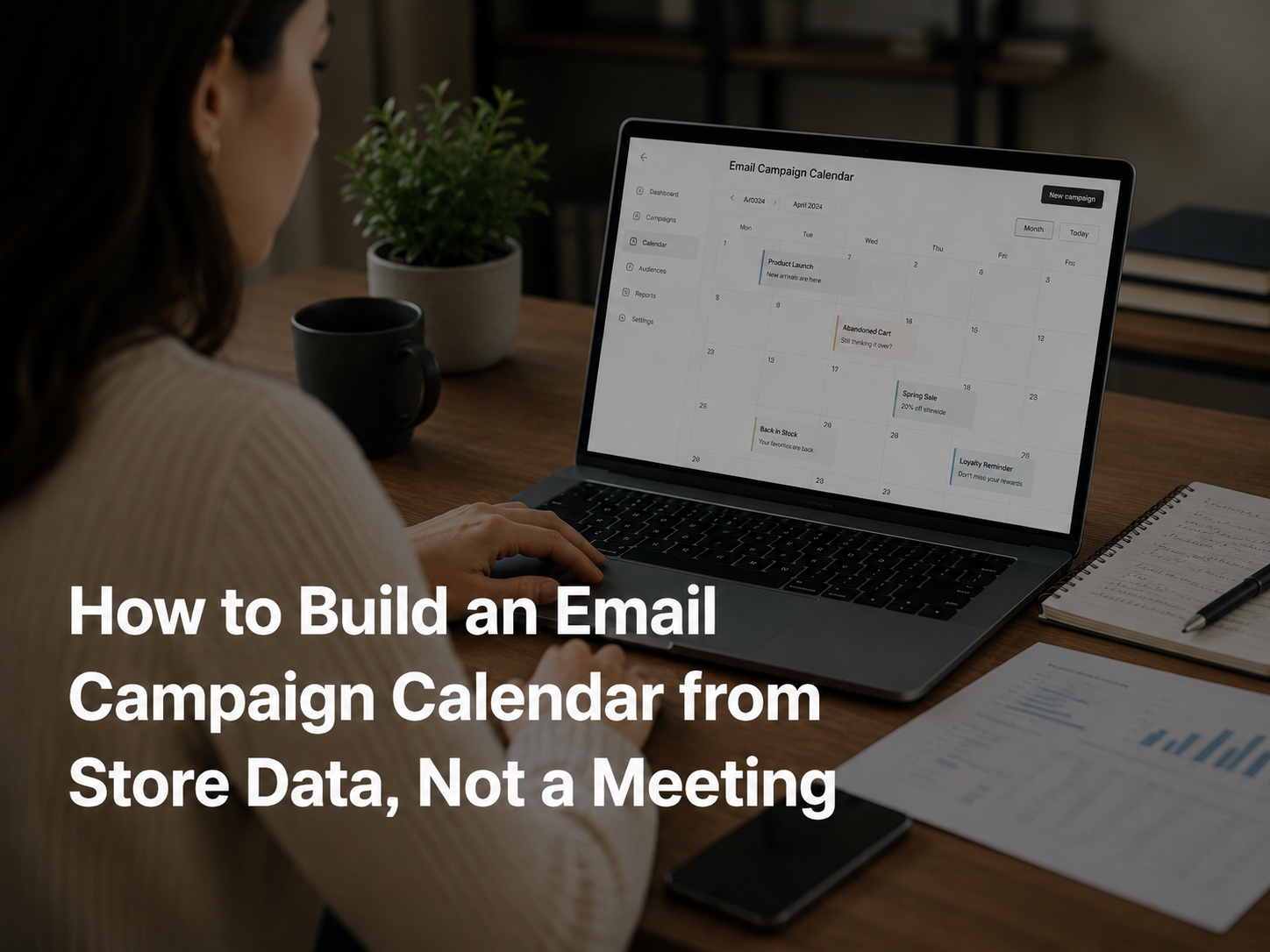
Key Takeaways
- The campaign-calendar-in-a-meeting workflow is where most ecommerce email planning still lives. It is also where most of the bad decisions get made.
- An AI email agent uses your catalog, segments, bestsellers, slow-movers, seasonal data, and previous campaign performance as the starting point, not as a post-meeting check.
- The marketer still approves every step. The first draft is no longer a blank spreadsheet.
The Blank Spreadsheet Problem
Most ecommerce email calendars are still built like this. Someone opens a spreadsheet. The team meets. The room starts brainstorming.
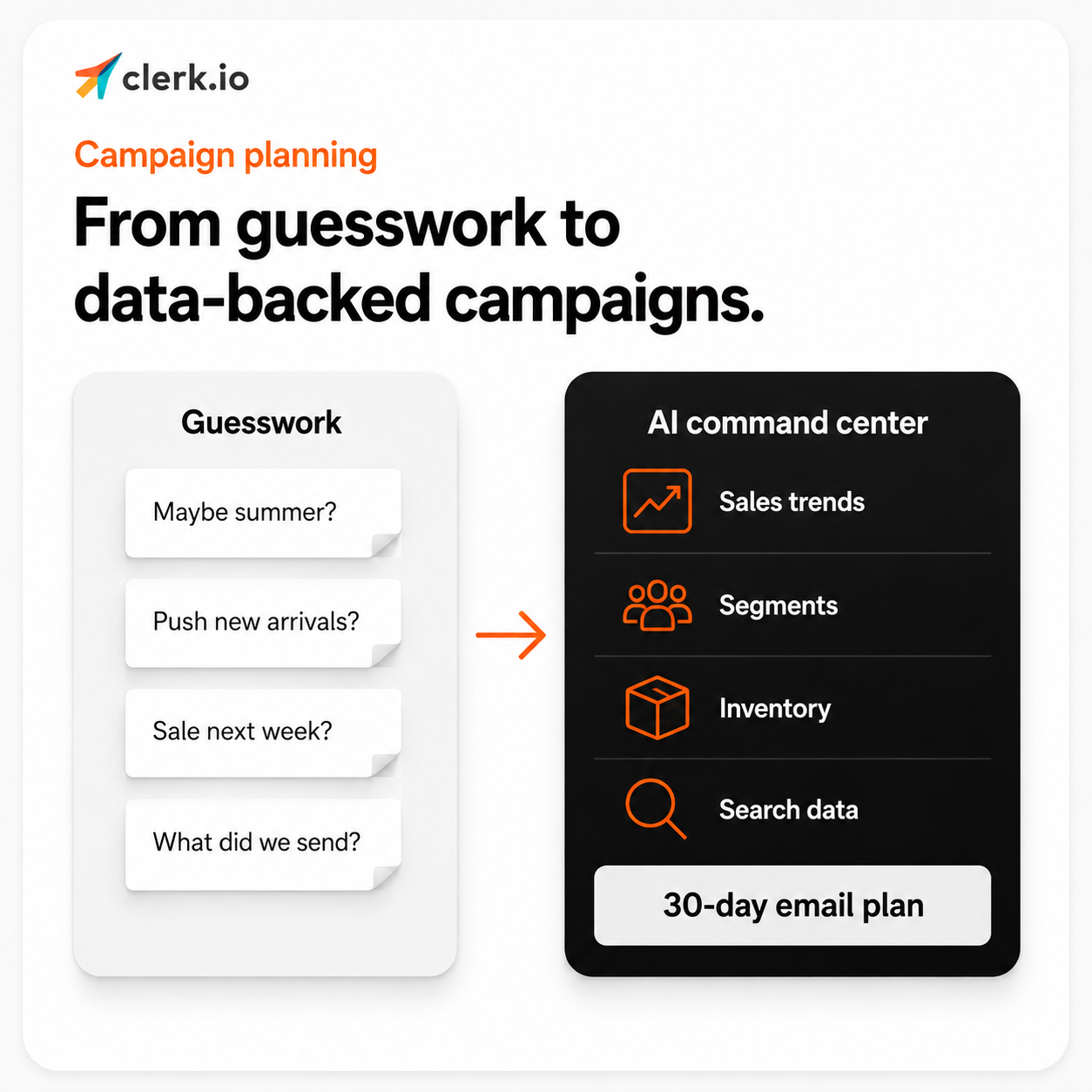
“We should probably do a summer campaign.” “Let’s push new arrivals.” “Maybe a sale next week?” “What did we send last year?” “Which products should we feature?”
That is how a lot of email marketing still gets planned. The problem is not the meeting. The problem is that store data enters the conversation too late, usually after the calendar is already drafted. Whatever the spreadsheet captures becomes the plan, and the data shows up afterward to either confirm or quietly contradict it.
The result is campaigns built around the team’s intuition, the brand calendar, and last year’s sends. Useful inputs, but not the only ones that matter. Slow-moving inventory, drifting segments, seasonal demand shifts, and recent campaign performance get folded in late or not at all.
Key takeaway: The campaign-calendar-in-a-meeting workflow does not produce bad plans because the team is wrong. It produces bad plans because the data is late.
What “Data-Informed Planning” Actually Looks Like
The phrase gets overused. In practice, a data-informed campaign calendar starts from a different question.
Instead of “what should we send this month,” the question becomes “what does the store data suggest we should be sending this month, and which of those campaigns are worth running?”
That reframing matters. The marketer is still in charge of which campaigns ship. But the first draft of the calendar comes from store signals, not from a blank cell.
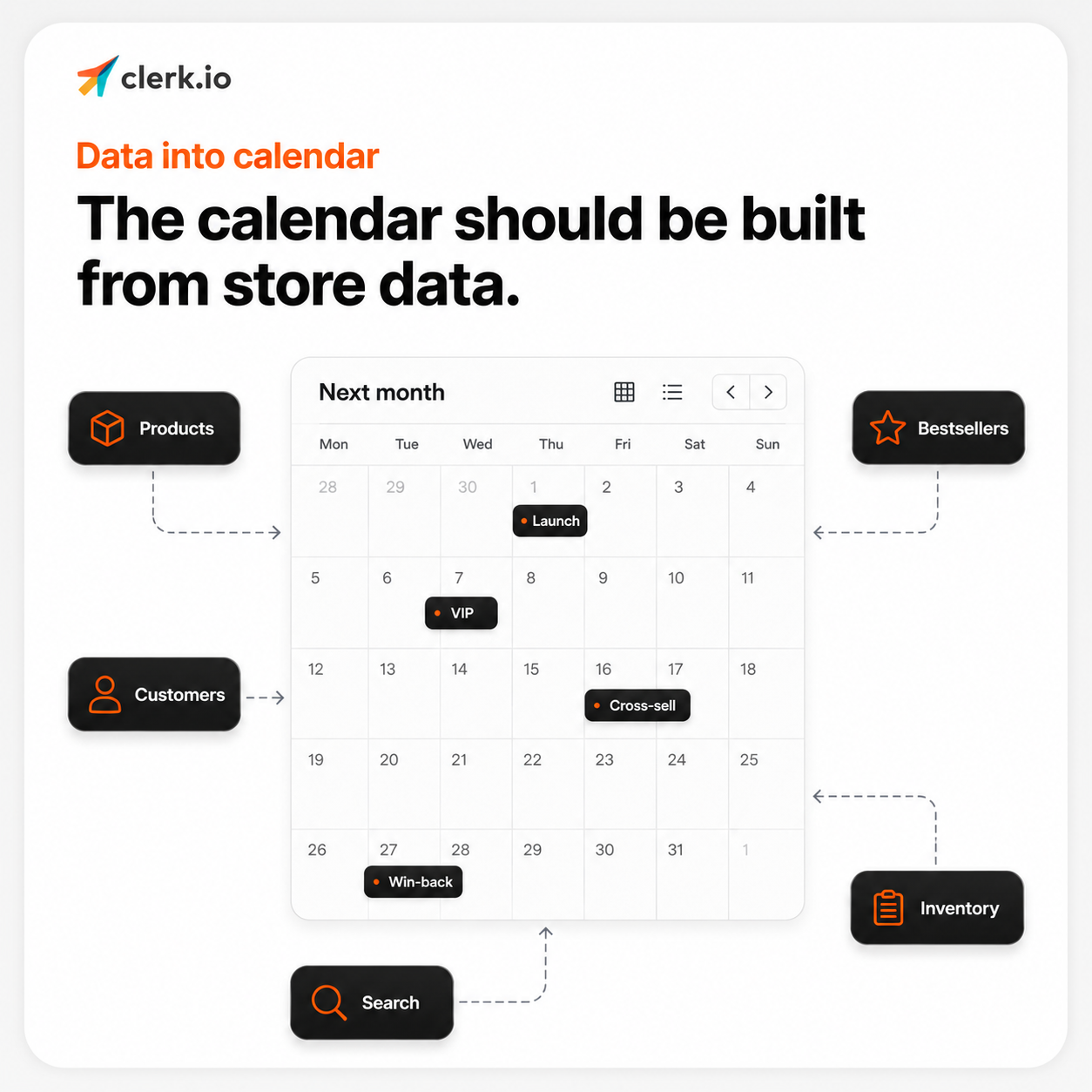
The signals worth pulling in:
- Product catalogue. Bestsellers, recent arrivals, slow-movers, seasonal inventory, items with stock pressure.
- Customer segments. Drifting VIPs, lapsed buyers, new subscribers, high-AOV customers, category-loyal cohorts.
- Behavioral signals. Recent browse spikes, search trends, abandoned cart and search volumes by category.
- Previous campaign performance. Which themes and segments produced revenue, which underperformed, which had high unsubscribes.
- Always-on flows. Where cart, browse, and search abandonment are firing, so campaigns do not overlap or compete with them. That is the input for a useful first-draft calendar. Not a brainstorm, a synthesis.
An Example 30-Day Plan
Here is what a data-informed calendar can look like for a typical mid-market ecommerce brand.
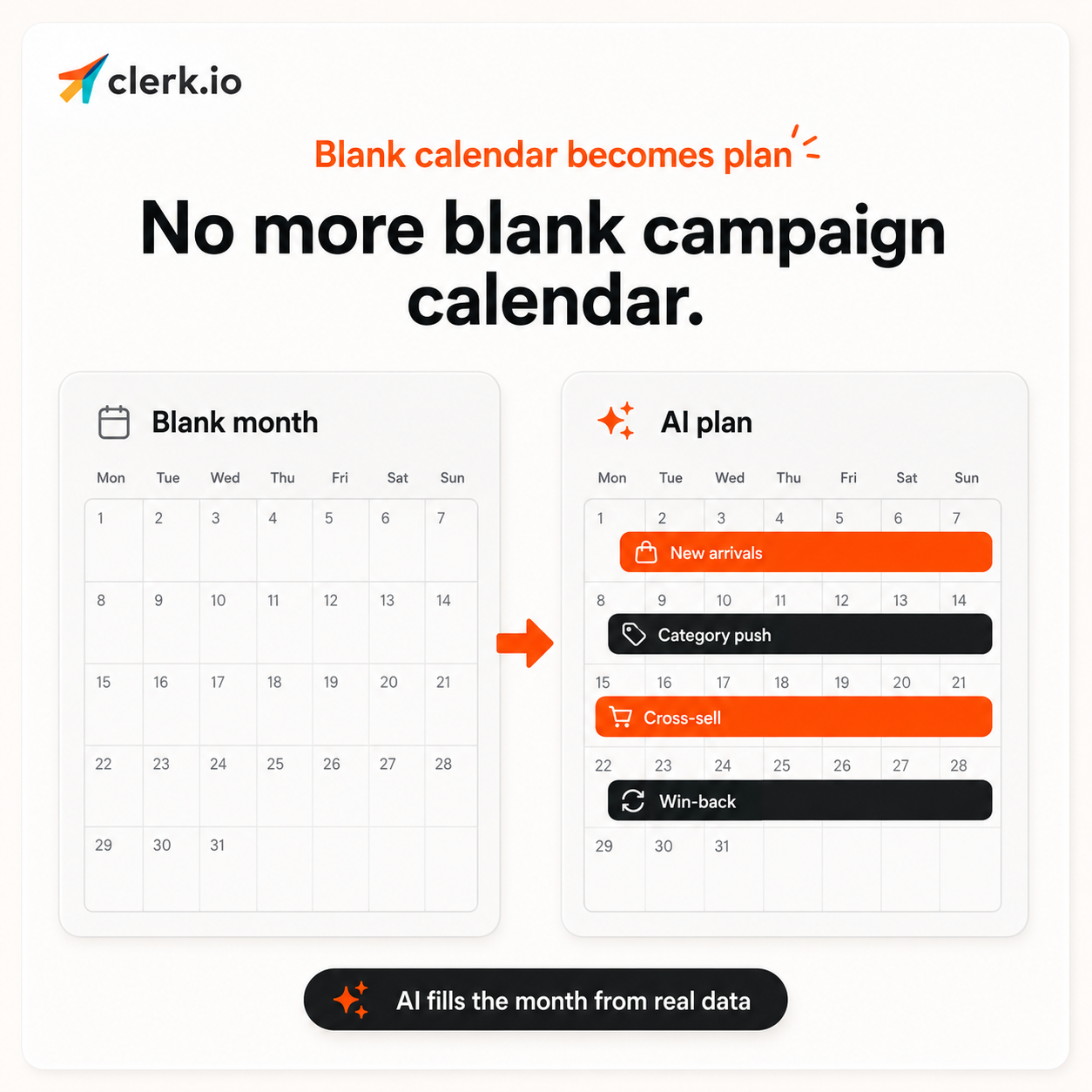
Week 1: New arrivals for high-intent subscribers. Target segment is recently engaged subscribers who browsed in the last 14 days. Product block: the new arrivals in the categories they showed interest in.
Week 2: Category campaign for shoppers browsing summer products. Target segment is customers who have viewed summer SKUs but not purchased. Product block: bestsellers in that category, filtered by what is in stock.
Week 3: Cross-sell campaign for recent buyers. Target segment is customers who purchased in the last 30 days. Product block: complementary products to what they bought.
Week 4: Win-back campaign for slipping VIPs. Target segment is high-LTV customers whose purchase interval has stretched. Product block: relevant items based on previous behavior, not a generic discount.
Always-on, throughout the month: abandoned cart, abandoned search, browse abandonment flows running in the background.
That is a 30-day plan built from signals, not from a meeting. The marketer reviews, edits the angle on a campaign, swaps a segment, or kills a week. The first draft is data-informed; the final calendar is approved by the team.
Where the Marketer Still Owns the Decision
The agent is not running the brand. Voice, brand calendar, partnership campaigns, seasonal hero campaigns, and editorial decisions still belong to the marketing team. The agent handles the synthesis work that humans should not be doing manually: which segments are large enough to send to, which products have inventory available, which categories are showing browse momentum, which previous campaigns are worth repeating.
The trade is: marketers spend more time on the decisions that matter (positioning, creative, brand) and less time on the work that should never have been manual in the first place (cross-referencing segments and inventory in a spreadsheet).
For more on how this fits with the broader email automation stack, see our piece on email automation services for ecommerce.
How to Measure the Shift
Two numbers tell you whether the new approach is working.
Time to first draft. How long does it take from “we need a plan for next month” to “here is a calendar I can edit”? Going from a multi-day meeting cycle to a same-day first draft is the operational gain.
Revenue per send. If the new calendar produces higher revenue per email than the previous one, the data-informed planning is paying for itself. Track this campaign by campaign, not in aggregate, so you can see which themes are working.
TL;DR
- The blank-spreadsheet campaign meeting is where most ecommerce email planning still happens. It is also where the data enters too late.
- An AI email agent uses your catalog, segments, behavioral signals, and previous performance to produce a first-draft calendar. The marketer approves and edits.
- The result is faster planning cycles and campaigns built around what the store is actually doing, not around what the team remembers doing last year.
- Measure time to first draft and revenue per send. Both should improve.