 June 4, 2026
 5 min read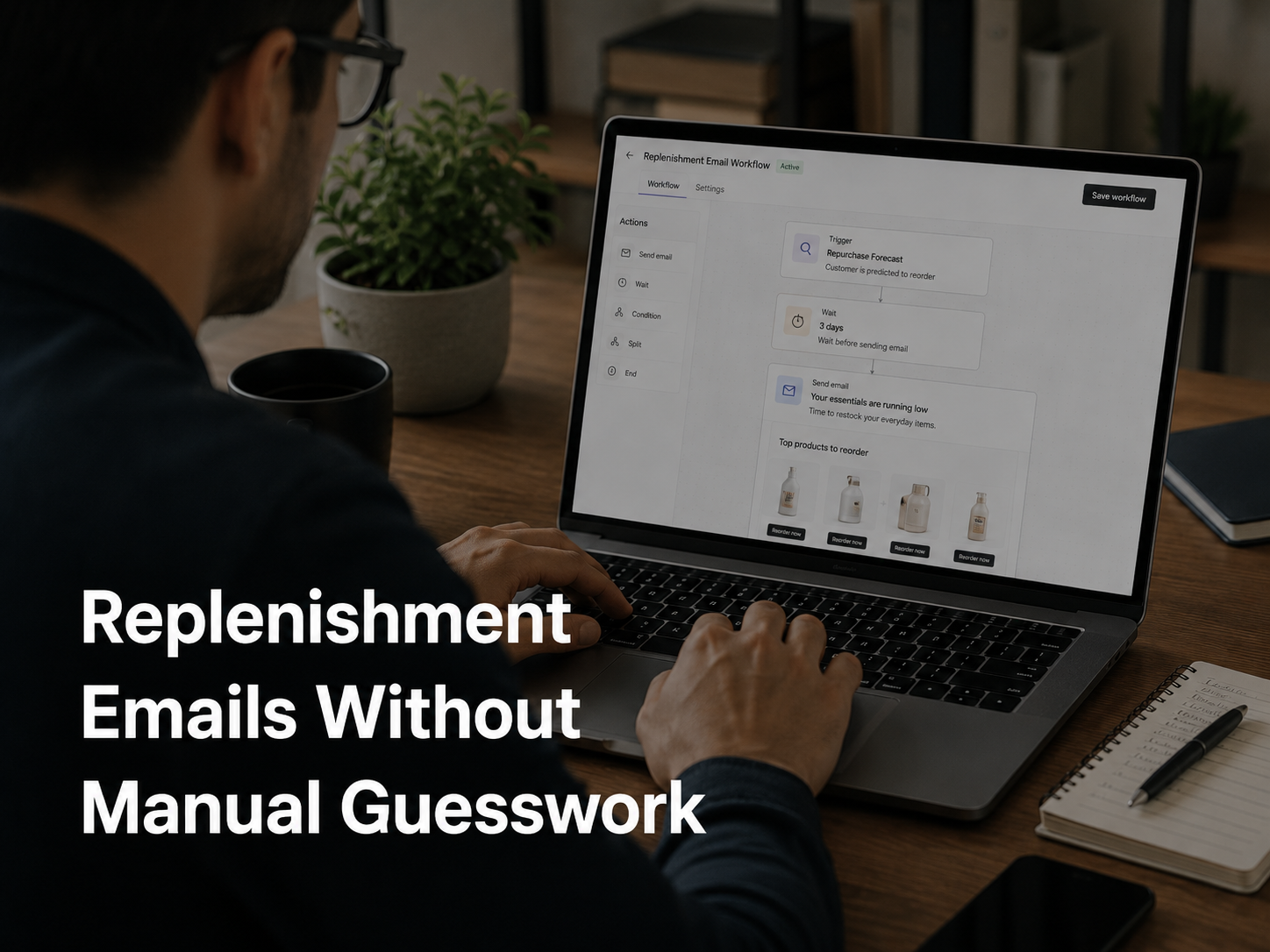
Key Takeaways
- Replenishment is a timing flow, not a campaign flow. The trigger is the customer’s buying pattern, not your calendar.
- Generic reminders sent too early, too late, or to everyone at the same time waste the moment. Real replenishment is per-customer.
- An AI email agent identifies the right timing, builds the email, recommends the right products, and adapts per customer.
Why Replenishment Is Different From Campaigns
Most email marketing runs on a campaign calendar. You decide what to send, you pick the audience, you ship it. Replenishment does not work that way.
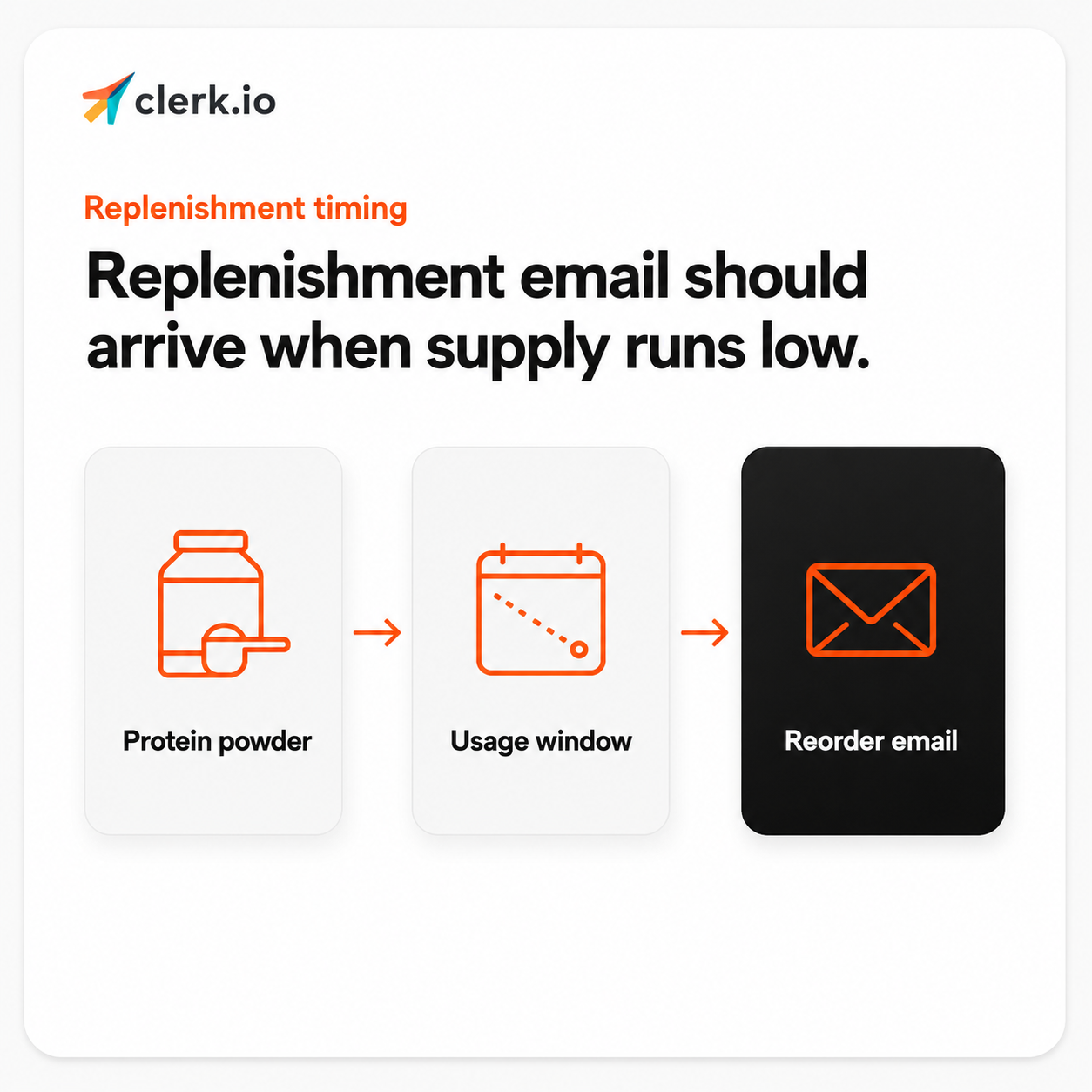
Replenishment is a timing flow. The customer bought something with a predictable consumption window: protein powder, dog food, skincare, printer cartridges, vitamins. At some point they need more. The email needs to land at the right moment for that specific customer, not at the right moment for your calendar.
Most stores either ignore that moment entirely or send a generic “You may need a refill” email to everyone at the same fixed interval. Both leave most of the revenue on the table.
Key takeaway: Replenishment is one of the highest-converting email flows in ecommerce, but only if the timing is per-customer. A flat 30-day reminder to your entire purchase list is not a replenishment program. It is a sale email with a useful subject line.
Why Generic Reminders Fail
Three failure modes show up in most generic replenishment setups.
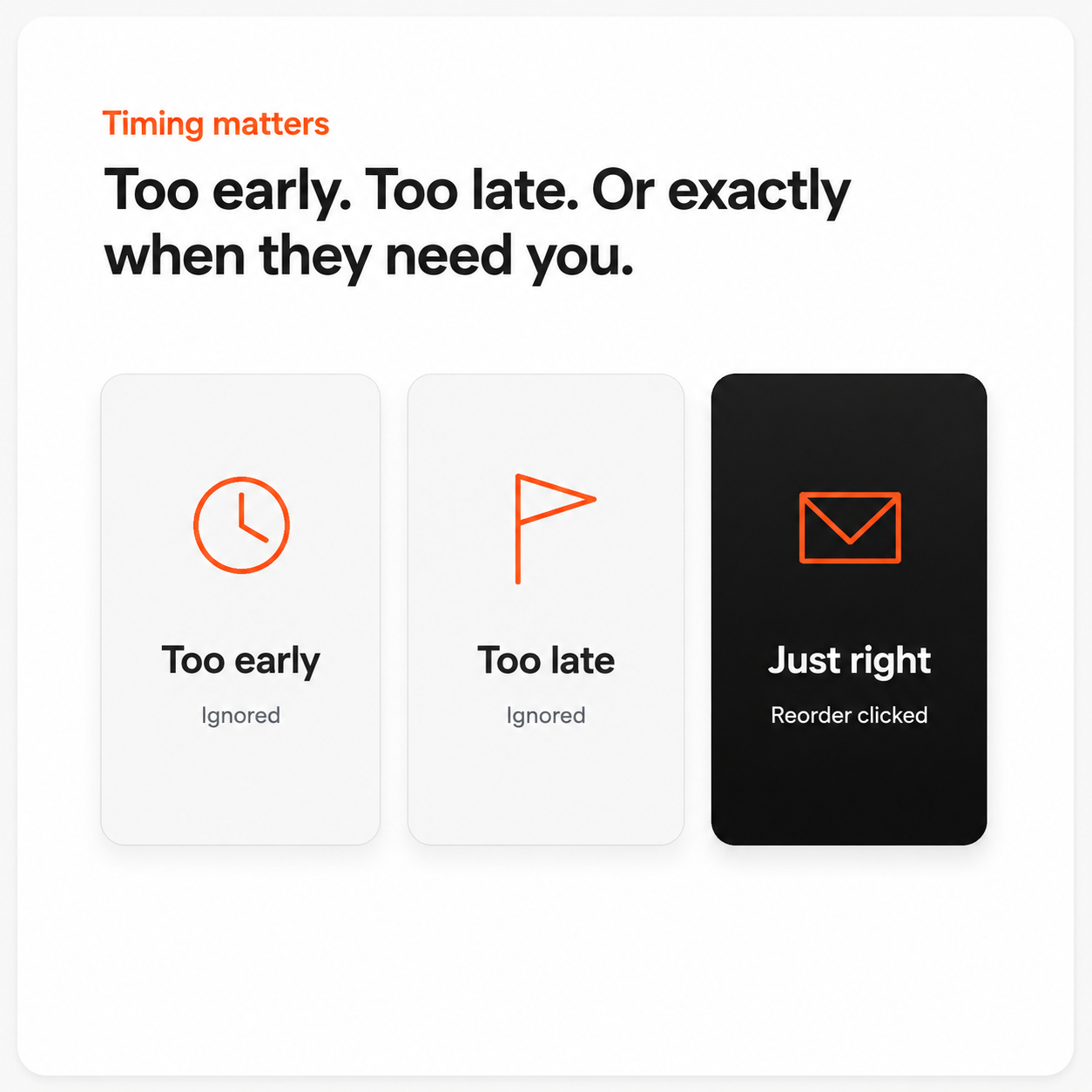
Too early. The customer has not used up the product yet. The email asks them to buy something they already have. Best case: ignored. Worst case: unsubscribe.
Too late. The customer already ran out and bought somewhere else. The email lands after the moment, and the win is gone.
Wrong size or bundle. The customer bought the large size. The reminder offers the small size. Or the customer bought a bundle. The reminder offers a single item.
All three are the result of treating replenishment as a static rule (“send a reminder 30 days after purchase to everyone”) instead of a per-customer behavioral trigger.
What a Real Replenishment Email Looks Like
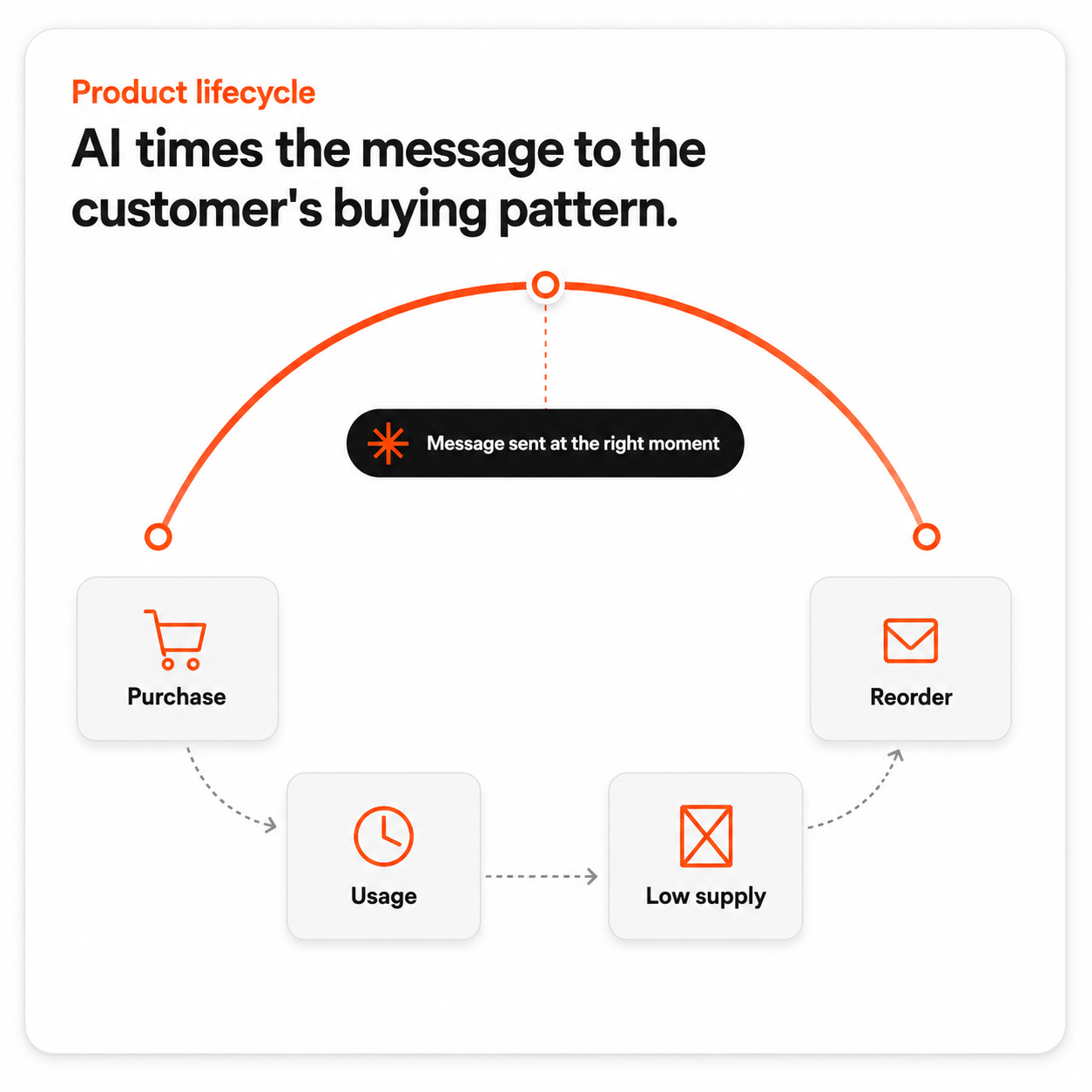
A working replenishment email is built around the actual buying pattern of the specific customer. The agent looks at:
- How often the customer reorders this category
- What size they last bought
- Whether they bought a single item or a bundle
- What similar customers do next (often a related item, not the exact same one)
- Current stock and price on the product they bought
- Whether the customer might be ready for a related upgrade or accessory From those signals, the agent builds an email like this.
Subject: “Running low?”
Body: the exact product they bought before, in the size they bought, plus relevant add-ons, plus a bundle option if it makes sense. Optional: a related product the agent has seen similar customers move to (an upgrade, a complementary item, a higher-margin alternative).
The customer scans the email and the next click is obvious. The email is not shouting for attention. It is showing up at the moment the customer is probably already thinking about reordering.
The Signals an AI Email Agent Uses
To make per-customer replenishment work, the agent needs more than a purchase date. The useful inputs are:
- Historical reorder interval. What the customer’s actual buying cycle is for the product, not the category average.
- Cohort timing. What similar customers do (how often they reorder, what they buy next).
- Product attributes. Pack size, consumption rate, whether the product is replenishable at all.
- Inventory. Whether the product is in stock; if not, what to recommend instead.
- Recent activity. Has the customer browsed in the last week? Have they bought a competing product recently? With those inputs, the agent picks a per-customer send time and builds the email content. Marketers set the broad rules (which categories to run replenishment for, frequency caps, discount limits). The agent runs them per customer.
Where Replenishment Fits in the Lifecycle Stack
Replenishment sits in the retention bucket, alongside win-back and VIP nurture. It is the highest-leverage retention flow for any catalog with consumable or repeatable products.
If you run cart abandonment but not replenishment, you are recovering pre-purchase sessions but missing post-purchase revenue. The same customer who bought a 30-day supply six weeks ago is now buying from someone else because nobody reminded them.
For context on how the broader email automation stack fits together, see our piece on email automation services for ecommerce.
How to Measure It
Three numbers matter for replenishment performance.
Repeat purchase rate on the replenished category. The headline metric. If your repeat rate is up after launching replenishment, the flow is doing its job.
Time between purchases. If the cycle is shrinking (customers reordering sooner), the timing is right. If it is lengthening, the email is firing too late.
Send-to-open ratio for replenishment specifically. Higher than your campaign average is normal; replenishment hits at a moment the customer cares about. If it drops below campaign open rates, the targeting is off.
Three failure modes to avoid:
- Sending the same product back when stock is gone. The agent should swap in alternatives automatically.
- Ignoring upsell opportunities. The customer who reorders the small size three times in a row is a candidate for the larger pack.
- Treating non-replenishable categories as replenishable. A one-time furniture buy does not need a 60-day refill email.
TL;DR
- Replenishment is a timing flow, not a campaign flow. Build it around per-customer buying patterns.
- The right email lands at the moment the customer is already thinking about reordering, with the exact product they bought, in the size they bought, plus a smart cross-sell or upgrade.
- An AI email agent identifies the timing, picks the product, and adapts per customer. The marketer sets the rules.
- Measure repeat purchase rate, time between purchases, and replenishment open rate. Cap frequency and respect stock.