 June 5, 2026
 5 min read
Key Takeaways
- The discount blast is the lazy fix for slow inventory. It eats margin, trains your list to wait for sales, and ignores most of your data.
- A targeted approach finds customers most likely to care about those specific SKUs, based on browse and purchase history, then sends a relevant email before any discount.
- An AI email agent identifies the segment, picks the products, and assembles the email. Margin gets protected, irrelevant sends drop, and slow stock gets a fair chance with the right buyers.
The Usual Fix and What It Costs
Every ecommerce team has products that need help. Slow movers. Overstock. Seasonal items past their peak. High-margin SKUs with low visibility. End-of-line stock that needs to clear before the new season.
The default response is consistent. Discount the items. Put them in a sale email. Send the email to everyone. Hope for the best.
That is a blunt tool. It eats margin on every item sold. It trains your list to wait for sales, which damages full-price conversion on the next launch. And it ignores most of your customer data, which already tells you which customers would buy these products without needing a discount.
The pattern repeats every quarter. The team knows the cost. They do it anyway because it is the only mechanism they have built to clear inventory.
Key takeaway: The discount blast is rarely the only option. It is just the only one most teams have set up. A targeted segmentation flow is harder to build the first time and cheaper every time after.

Why Segmentation Beats Discount
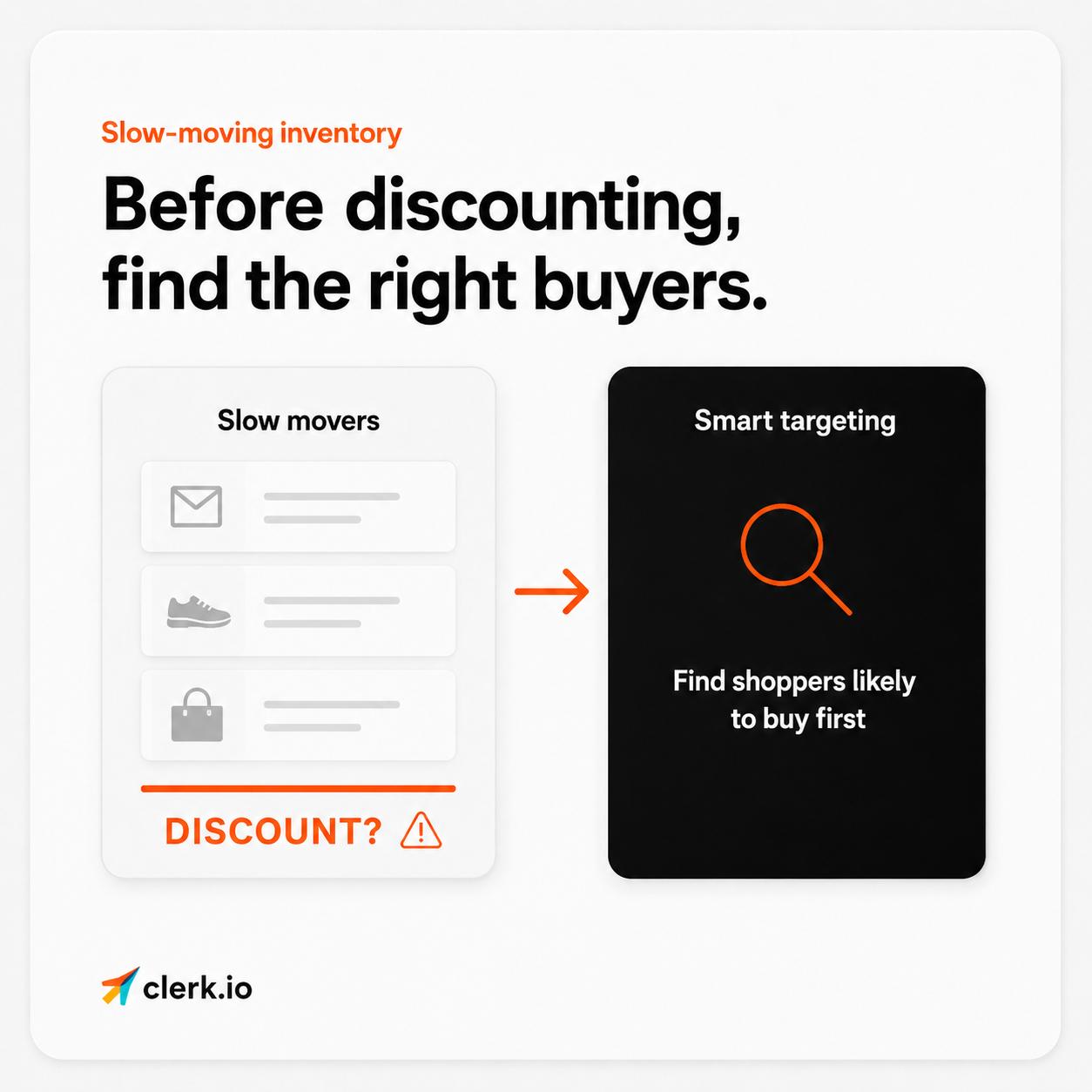
For most slow-moving inventory, there is a segment of customers who would have bought the product at full price if they had seen it. They never did, because it never made it into a relevant placement or a relevant email.
Finding that segment changes the equation. Instead of cutting the price for everyone who happens to open the sale email, you put the product in front of the people most likely to buy it without a discount at all. The ones who do buy contribute full margin. The ones who do not are no worse off than before.
The segmentation logic is simpler than it looks. Customers who recently browsed the category, customers who bought adjacent products, customers whose preference signals overlap with the slow-moving SKU. The data already exists; it just needs to be used.
Real Examples
The pattern works the same way across verticals. Three concrete examples:
Homeware store with too many outdoor lamps. Target customers who recently browsed garden furniture, bought patio products, or engaged with outdoor content. No discount in the first email; just relevance. If the product moves at full price, the margin is protected. If it does not, a smaller discount to a tighter segment outperforms a deep discount to the whole list.
Sports store with slow premium helmets. Target shoppers who browsed protective gear, bought bikes recently, or usually buy higher-priced equipment. Premium customers are usually under-served by sale blasts; they get pushed entry-level items instead of premium ones. Reverse it.
Beauty store with excess stock in a specific skincare line. Target customers who bought compatible products, browsed adjacent categories, or showed interest in the same skin concern. The product fits naturally into their routine; the email reads as a recommendation, not a clearance push.
In each case, the team protected margin, reduced irrelevant sends, and gave the slow-moving product a fair chance with the right buyers.
The Signals an AI Email Agent Uses
To identify the right segment per slow-moving SKU, the agent uses signals the marketing team would not have time to pull manually for every clearance candidate.
- Browse history on the product itself or on adjacent SKUs in the same category
- Purchase history for related or complementary items
- Brand and price-band affinity from the customer’s previous orders
- Recent searches that touched the category
- Wishlist or back-in-stock data if available
- Stock pressure on the SKU (how aggressively the team needs to move it) The agent assembles a segment per slow-moving product, builds the email, picks the product block (often the slow-mover paired with two or three faster-moving complements so the email feels like merchandising, not clearance), and schedules the send.
Marketers set the rules: minimum margin per send, max discount cap, frequency limits per customer, brand exclusions. The agent runs everything within those rules.
For broader framing on how merchandising data drives email decisions, see our piece on ecommerce merchandising strategies.
How to Measure It
Three numbers tell you whether the segmented approach is working better than the discount blast.
Margin per sold unit. If you cleared the same stock at higher margin, you won.
Unsubscribe rate compared to your usual clearance email. Targeted sends to relevant segments should produce dramatically lower unsubscribes than discount blasts to the whole list.
Sell-through speed. Time from “this SKU needs help” to “this SKU is at target stock level.” If targeted sends move stock faster than discount blasts did, the approach is working.
Three failure modes to avoid:
- Targeting too narrowly. A segment of fifty customers will not move five hundred units. Test segment size against stock target.
- Sending the same slow-mover to the same customers repeatedly. Cap exposure per SKU.
- Ignoring discounting completely. Sometimes the product genuinely needs a discount to move; the targeted approach reduces how often that is true, but does not eliminate it.
TL;DR
- The discount blast is the default fix for slow inventory. It eats margin, trains your list to wait for sales, and ignores most of your data.
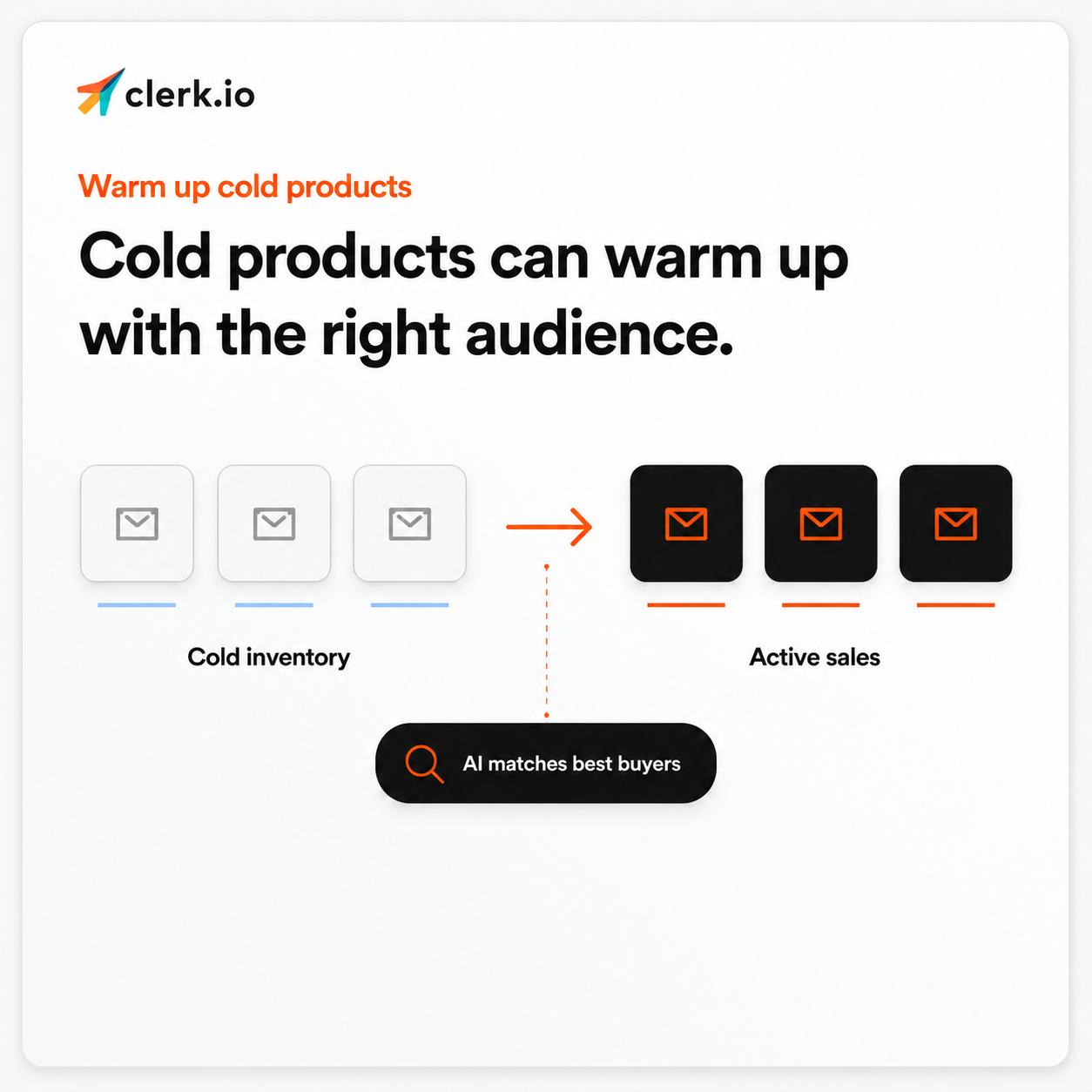
- A better approach: identify customers most likely to care about the specific slow-moving SKU, then send a relevant email before any discount.
- An AI email agent does the segmentation and assembly per SKU. Marketers set the rules; the agent runs them.
- Measure margin per unit, unsubscribe rate, and sell-through speed. Cap segment size to match stock targets and avoid over-exposing the same customers.