 June 1, 2026
 5 min read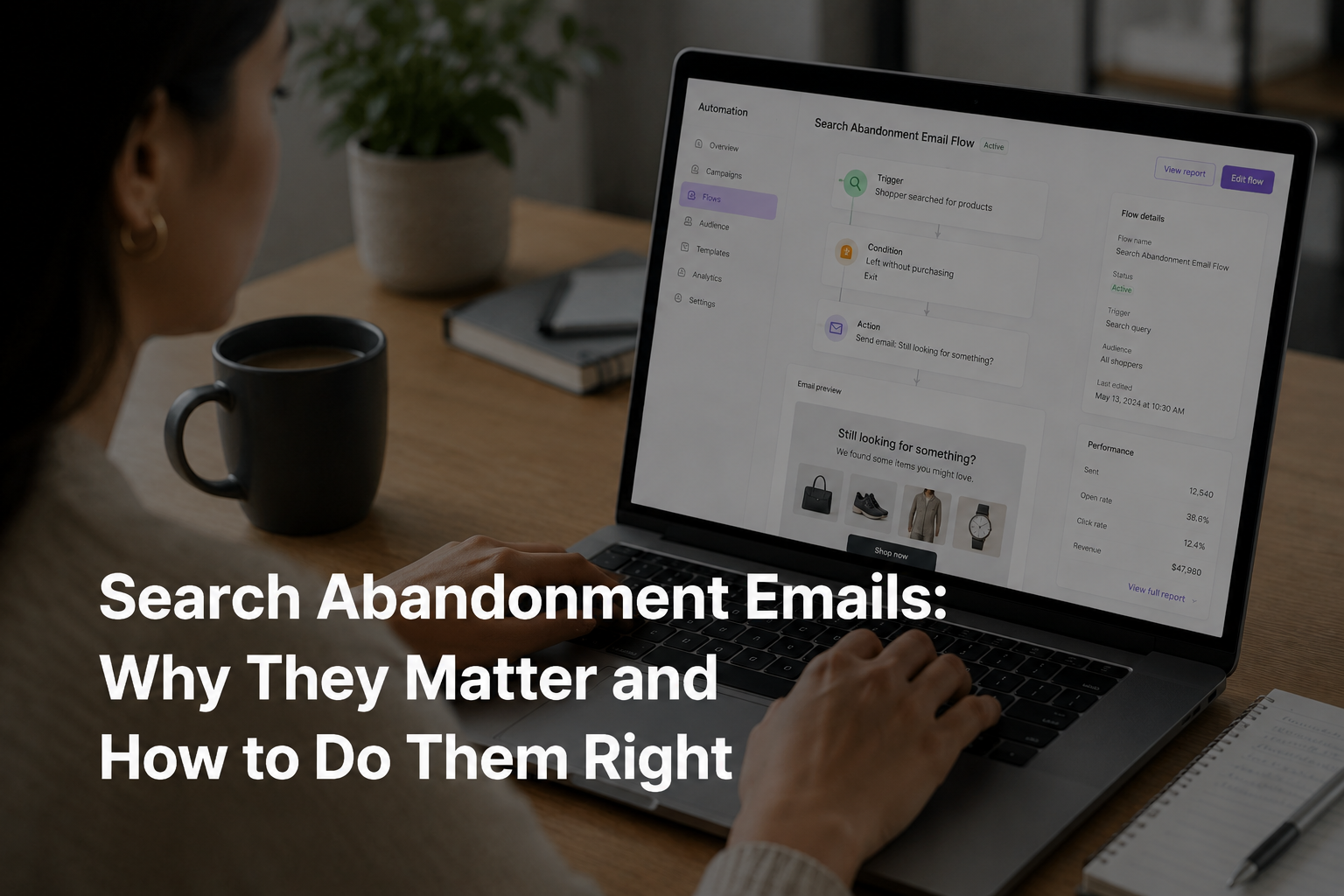

Key Takeaways
- Search is the highest-intent signal a shopper hands you. They literally told you what they wanted. Most stores ignore it.
- A working search abandonment email is not a generic “come back” message. It is a flow that uses the query, click behavior, stock, and similar-shopper data to assemble a relevant product block.
- Search abandonment belongs alongside cart and browse abandonment as a core behavioral trigger. It is the one most teams have not built yet.
Search Tells You What the Shopper Actually Wants
A shopper visits your webshop. They type “black running jacket.” They click two or three results. Then they leave.
Most stores do nothing with that signal. Which is strange, because a search query is one of the clearest buying-intent signals a shopper can give you. They told you the color, the use case, the category, and roughly the price band they expected. That is more concrete than most paid acquisition data.
Browse signals are useful. Cart signals are stronger. But search sits at the top of the intent stack because the shopper translated their want into words. You do not have to infer anything. They handed you the brief.
The reason most stores ignore it is operational, not strategic. Search data lives in one tool, email lives in another, and stitching the two together requires either custom work or a platform that already does it. So the moment passes, the shopper leaves, and the most valuable signal of the session goes in the bin.
Key takeaway: Search queries are higher-intent than browse and easier to act on than cart. If your email program does not have a search abandonment trigger, you are leaving the cleanest revenue signal in your funnel on the table.
What an Abandoned Search Email Should Actually Do
A working search abandonment email is not a generic “we noticed you left” send. It is a recall message tied to the specific query the shopper made.
Subject line example: “Still looking for a black running jacket?”
Inside the email, the product block is not manually chosen. It should not be the same bestsellers every shopper sees. It should be assembled from the actual context of the search session:
- The exact products that matched the query
- Which results the shopper clicked
- Which sizes and variants are still in stock
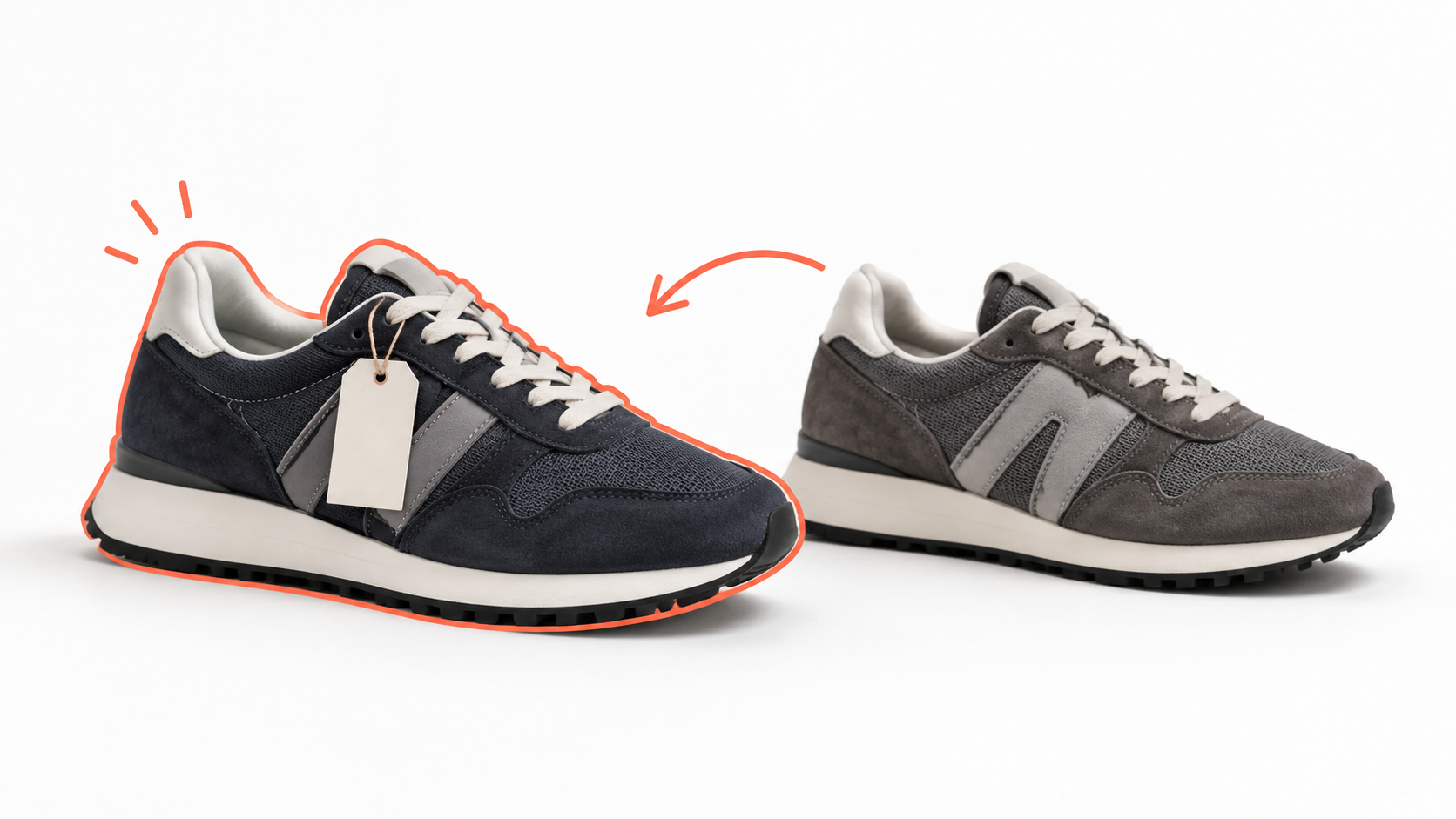
- Alternatives that fit the same intent but might match better (different brand, better availability, similar price)
- What similar shoppers bought next The tone is recall, not sales. The shopper already showed intent. They do not need a discount banner or a five-product carousel of unrelated items. They need a clean nudge back to the thing they were looking for, with a few smart alternatives if the original picks did not land.
Done well, the email reads as helpful, not pushy. Done badly, it feels like spam because the products in the email do not match what the shopper searched for.
How an AI Email Agent Builds the Right Email
This is where an AI email agent earns its keep. Picking products manually for every abandoned search would be impossible at any real catalog scale. Hardcoded rules collapse the moment a shopper searches for something the rules did not anticipate.
An AI email agent looks at the full context of the session and assembles the email automatically. It can pull from:
- The search query itself
- The result set the query produced
- The products the shopper actually clicked
- Available stock and price changes since the search
- Similar shoppers’ downstream purchase behavior
- Margin, brand, and merchandising rules you have set The agent assembles the subject line, the primary product block, and the secondary recommendation block without anyone on the marketing team picking items. Marketers still own the guardrails: which categories to exclude, which brands to bias toward, which audience segments to suppress. The AI handles the per-shopper work.
The result is an email that is relevant for the specific search and ships at scale across every search session in a day, not just the ones your team had time to set up flows for.
For more on how AI personalization fits into email broadly, see our piece on personalised email tools based on browsing history.
Where Search Abandonment Fits in Your Lifecycle Stack
Most ecommerce email programs run two behavioral triggers: cart abandonment and browse abandonment. They are the obvious ones, and most platforms support them out of the box.
Search abandonment is the third trigger in this set, and it is the one most teams have not built yet. The intent hierarchy goes:
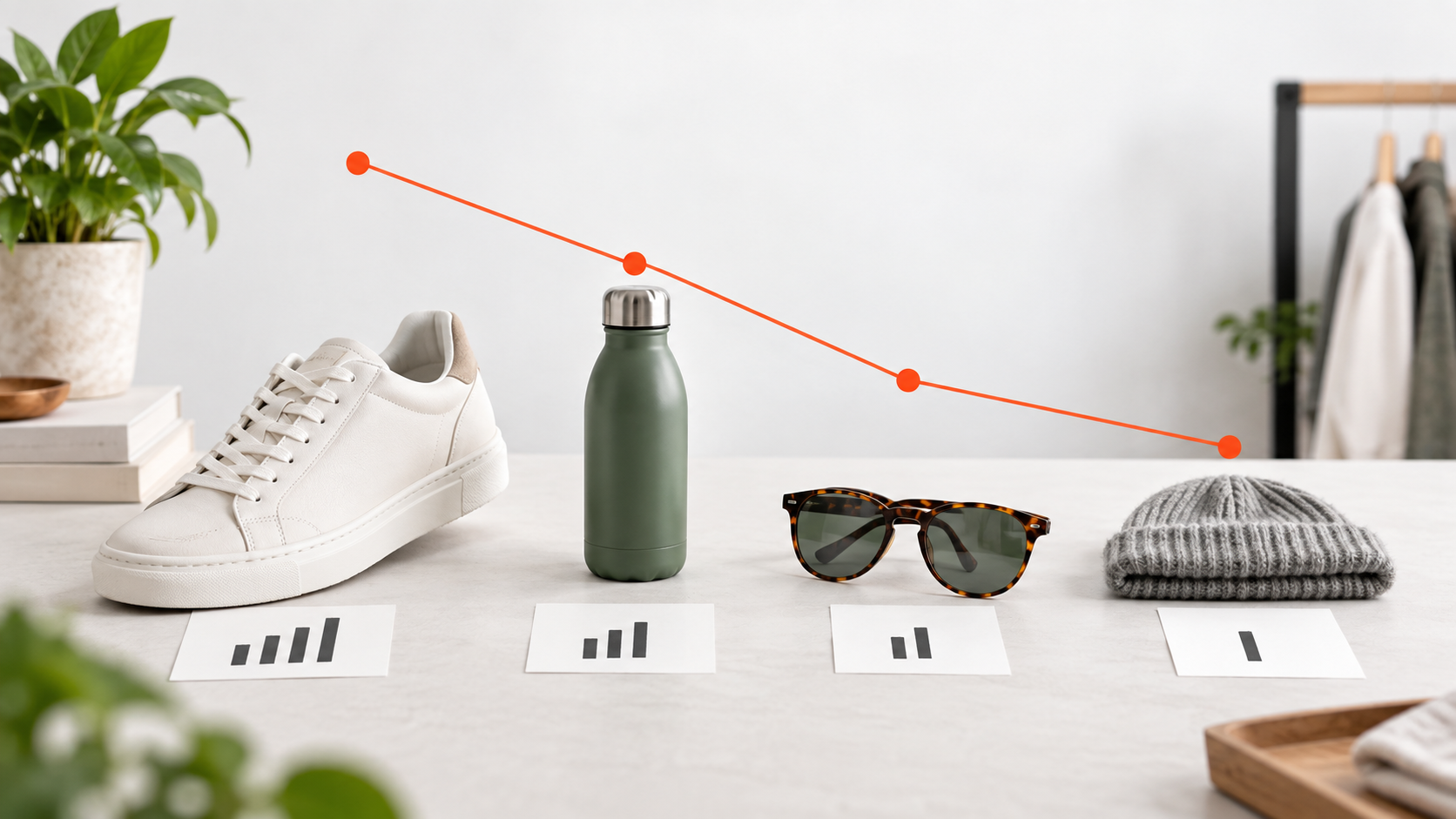
- Cart abandonment. Shopper added to cart, did not check out. Highest intent, smallest absolute volume.
- Browse abandonment. Shopper viewed a PDP, did not add to cart. Strong intent, mid-volume.
- Search abandonment. Shopper searched, may or may not have clicked, did not add to cart. Clear intent, high volume. The volume matters. Many more shoppers search than reach a cart. If you only run cart abandonment, you are recovering the smallest part of your high-intent traffic. Add browse abandonment and you catch more. Add search abandonment and you catch the moment closest to the original want.
The three flows do not compete. They handle different points in the session. A well-built lifecycle program runs all three, with logic to suppress duplicate sends to the same shopper in the same window. For context on the broader stack, see our piece on email automation services for ecommerce.
How to Measure It and What to Avoid
Two numbers matter most for search abandonment performance.
Recovery rate. Of the shoppers who get the email, how many return to the site and complete a purchase within a defined window (usually 72 hours)? This is the headline metric.
Match rate. Of the emails that go out, how many actually contained products related to what the shopper searched? If the search was for “black running jacket” and the email showed sandals, the recovery rate will be low for reasons the AI agent should be solving. Track this and fix it before optimizing anything else.
Three failure modes to avoid:
- Sending search abandonment to the same shopper after every visit. Cap frequency or you will train them to ignore the emails.
- Ignoring stock at send time. If the product that matched the search is sold out by the time the email lands, the shopper bounces. The agent should swap in alternatives automatically.
- Overlapping with cart abandonment. If the same shopper hits both triggers, the cart email should win. Build suppression logic on day one.
TL;DR
- Search is the clearest buying-intent signal a shopper gives you. Most stores do nothing with it.
- A proper search abandonment email is recall, not sales. The product block should be assembled from the query, click data, stock, and similar-shopper behavior, not picked manually.
- An AI email agent makes this work at catalog scale. Marketers set guardrails, the agent does the per-shopper work.
- Search abandonment is the third behavioral trigger, alongside cart and browse. Most teams have not built it yet. It is the one with the most untouched revenue.
- Measure recovery rate and match rate. Avoid spamming the same shopper, sending sold-out products, and overlapping with cart abandonment.