 July 21, 2026
 7 min read
1. Zone and climate confusion
A gardener wants to plant something beautiful that will survive their winters. They search ‘hardy perennials.’ They get results for Zone 10 plants. Their zone is 5. They’ll freeze. Cart abandoned. They buy nothing instead.
Every garden buyer experiences:
- Search results that ignore their USDA hardiness zone
- ‘Hardy’ recommendations that aren’t hardy where they live
- No indication of which plants thrive in their specific climate
- Conflicting information (one source says hardy to Zone 6, another says Zone 5)
What winning brands do differently
They make zone-specific recommendations automatic:
- Hardiness zone filtering that works (real USDA zones, not vague ‘cold hardy’)
- Climate-adapted recommendations (watering needs, frost dates, seasonal timing)
- Regional plant suggestions based on location and zone
- Clear ‘thrives in your zone’ badges on every product
Why this matters more than ever
A plant that dies after one season creates buyer regret. A plant that thrives creates loyalty. Garden buyers know their zone. A site that respects it becomes their trusted source.
How Clerk.io fixes it with AI Search and Audience
Clerk.io learns USDA zones and builds personalized search around them. It recommends plants that thrive in each buyer’s specific climate.
- Zone-based filtering and sorting (show Zone 5 plants first to Zone 5 gardeners)
- Climate-specific recommendations (choose your zone, see what thrives)
- Seasonal timing for your zone (frost dates, planting windows)
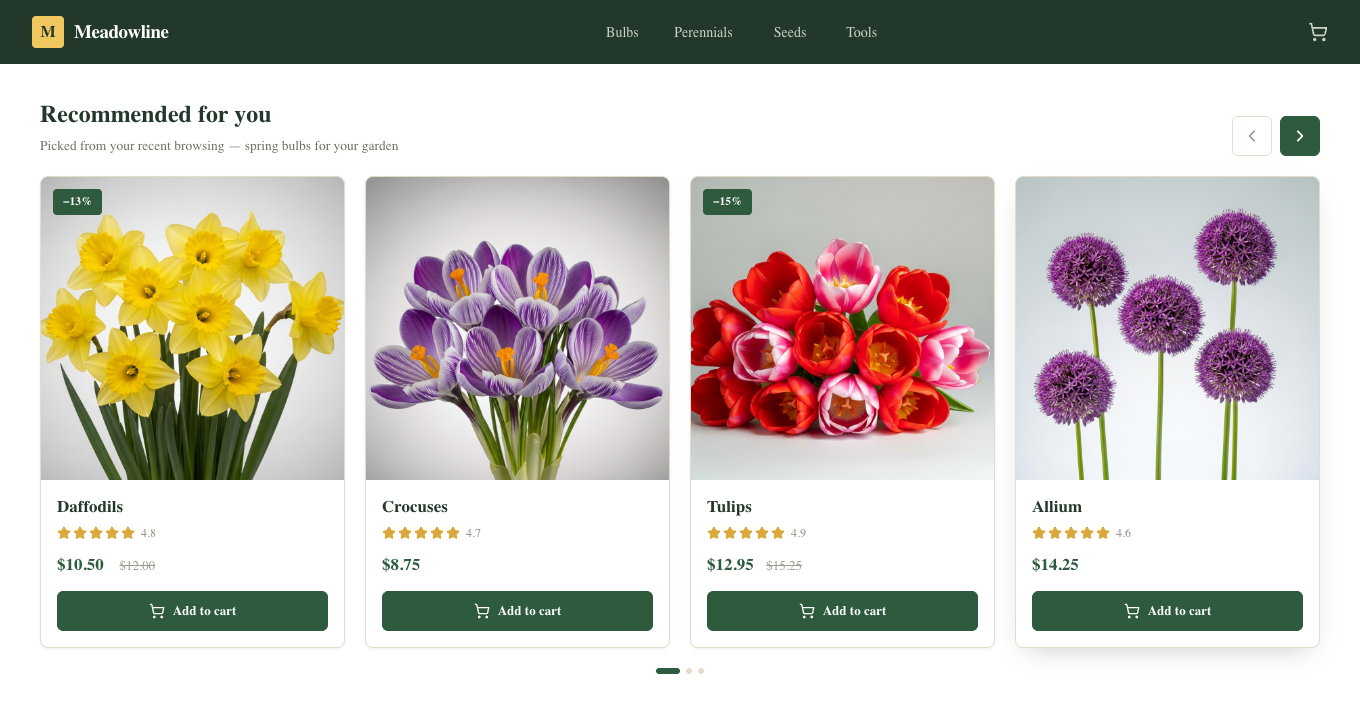
- Regional variety suggestions based on proven success in your area Example: A gardener in Minnesota (Zone 4) searches ‘spring bulbs.’ Results show only Zone 4-5 bulbs. Tulips, daffodils, crocuses that will actually survive the winter. Sorted by bloom time. Add to cart. Confidence.
2. Project-based buying invisibility
A homeowner is doing a backyard renovation. They need a tree, shrubs, mulch, fertilizer, and tools. They don’t think of these as separate categories. They think ‘backyard project.’ But your site sells them individually. No project bundles. No guided kits. The buyer pieces together a solution from 5 different sites instead.
Every garden project buyer hits:
- No ‘complete your project’ recommendations
- Project-specific bundles don’t exist (tree + shrubs + mulch bundles)
- No guidance on quantities (how many plants for a 12x8 border?)
- Tools, soil, and plants sold separately with no bundling
What winning brands do differently
They organize around projects, not categories:
- Project-focused bundles (shade garden kit, pollinator garden kit, low-maintenance border kit)
- Guided recommendations that ask about space and goals
- Bundled pricing that rewards project purchases
- Tool + plant + soil combos recommended together
Why this matters more than ever
Garden projects are emotional and ambitious. Buyers want confidence they’re buying enough and the right combination. A site that bundles by project removes guesswork and increases order value by 40-60%.
How Clerk.io fixes it with AI Recommendations
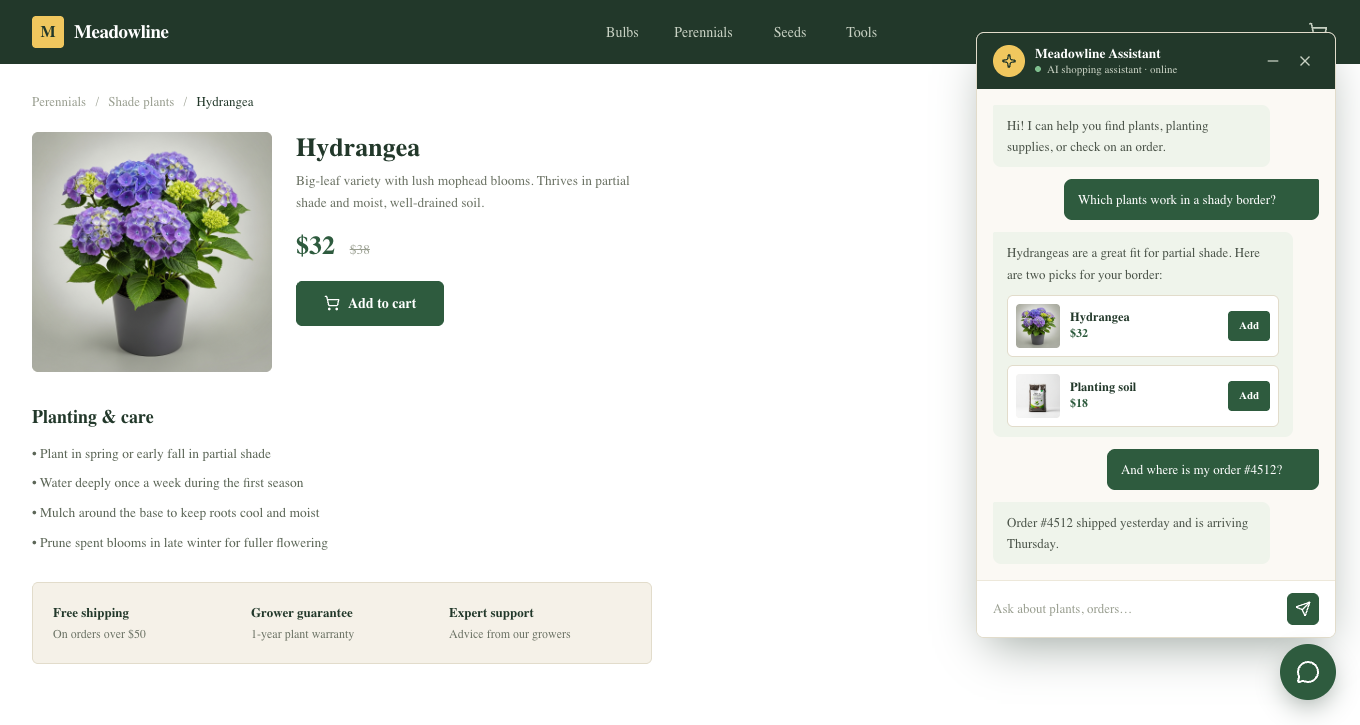
Clerk.io understands garden projects. It recommends complete solutions, not individual items.
- Project-based bundles (shade garden, pollinator garden, privacy hedge, low-maintenance border)
- Smart quantity recommendations (‘Your space needs 6-8 plants, here’s the combo’)
- Tool + plant + soil bundles that work together
- Project upsells (adding ground cover to a shrub planting) Example: A homeowner is buying a Hydrangea. Clerk.io recommends: ‘Complete shade garden bundle: 3 Hydrangeas + Hostas + Ferns + Mulch + Soil + Pruners = $240 (save 20% vs. separate items).’ They add it. Project completed. AOV jumped $180.
3. Impulse add-on blindness
A gardener is buying Roses. They’re about to spend $40 on the plant. But you don’t recommend rose food, stakes, or companion plants. They’d have bought all three if you’d suggested them. You left $60 on the table.
Every garden buyer misses add-ons because:
- No recommendations shown at all
- Generic add-ons (showing fertilizer to someone buying seeds)
- Plant care products aren’t suggested with plants
- Seasonal add-ons aren’t visible (shovels at planting time, mulch at spring prep)
What winning brands do differently
They make complementary products obvious:
- Plant-specific care product recommendations (Roses = rose food, stakes, gloves)
- Seasonal add-ons recommended with seasonal plants
- Tool recommendations based on what’s being planted
- Bundle deals that combine plants with their care products
Why this matters more than ever
Garden buyers often don’t know what they need. A homeowner might buy a new tree but forget about tree stakes or mulch. A well-timed recommendation feels helpful. It increases AOV naturally.
How Clerk.io fixes it with AI Recommendations
Clerk.io learns what complements every plant and recommends care products, tools, and companion plants automatically.
- Plant-specific care recommendations (Roses + rose food + stakes + pruners bundle)
- Seasonal tool recommendations (pruners during spring, rakes for leaf season)
- Companion plant suggestions (plant Roses with perennials, recommend both together)
- Quantity-based bundles (more tools for bigger projects) Example: A buyer adds a Japanese Maple tree. Clerk.io shows: ‘Complete planting kit: Tree + Planting soil + Mulch + Stakes + Tree food + Gloves for $15 less than separate purchases.’ They add bundle. Impulse purchase. AOV jumps 3x.
4. Spring rush inventory pressure
Spring hits. Every garden site’s inventory is crushed. Popular plants sell out. Slower sites run out. Faster sites pre-sell. You have no way to predict demand by zone or manage stock. Customers see ‘out of stock’ and leave. You lose revenue you could have captured with better pre-ordering or zone-specific stock.
Every spring rush creates:
- Popular items selling out before the season peaks
- No way to pre-order or reserve plants
- Stock imbalance (too much inventory in wrong zones, not enough in high-demand zones)
- Regional shortage visibility issues (Florida overstocked, Minnesota understocked)
What winning brands do differently
They manage spring demand intelligently:
- Pre-order and waitlist systems that build demand visibility
- Zone-specific stock recommendations (allocate more cold-hardy plants to Zone 4)
- Demand forecasting based on region and zone
- Notification systems when popular items restock
Why this matters more than ever
Spring is your peak season. Managing demand visibility through pre-orders and zone-aware recommendations can increase spring revenue by 20-30%. Customers get what they want. You optimize stock.
How Clerk.io fixes it with AI Audience and Personalization
Clerk.io segments customers by zone and season, forecasting demand to optimize stock and capture pre-orders.
- Zone-based demand forecasting (predict what sells in each zone)
- Pre-order capture for anticipated items before spring peak
- Waitlist and notification systems for out-of-stock plants
- Early access notifications for returning customers in high-demand zones Example: It’s February in Zone 5. Clerk.io sends email: ‘Early spring preview: Peonies, Daylilies, and Bleeding Hearts available for pre-order. Reserve yours now before spring rush.’ Early orders come in. Revenue captured before peak competition.
5. Cold season re-engagement failure
A gardener bought heavily in spring. Now it’s October. They’re mulching, preparing for winter. But you haven’t contacted them. No fall planting recommendations. No winter prep supplies. No dormant season care products. A competitor is emailing them weekly. You’re silent. Repeat revenue escapes.
Every off-season gardener sees:
- No seasonal product recommendations (fall bulbs, dormant pruning spray)
- Missing winter care products for their existing plants
- No planning reminders for next season
- Cold re-engagement campaigns that feel generic
What winning brands do differently
They stay in touch year-round with seasonal relevance:
- Fall bulb recommendations to spring gardeners
- Winter care product alerts (dormant oil, snow-protection materials)
- Season-specific reminders (divide perennials in fall, prep beds in spring)
- Next-season planning emails based on what they grew
Why this matters more than ever
Garden seasons are predictable. A spring buyer is a fall buyer. A fall buyer is a spring buyer. Smart seasonal reminders build habit and routine. A gardener who hears from you in off-season becomes a two-season customer, then three-season customer.
How Clerk.io fixes it with AI Email and Audience
Clerk.io segments gardeners by season and zone, sending smart seasonal recommendations and care reminders.
- Seasonal recommendations based on their zone and past purchases (spring gardener = fall bulb alerts)
- Care reminders timed to their zone (dormant pruning in November, spring prep in March)
- Next-season planning emails (summer gardener = fall planting preview)
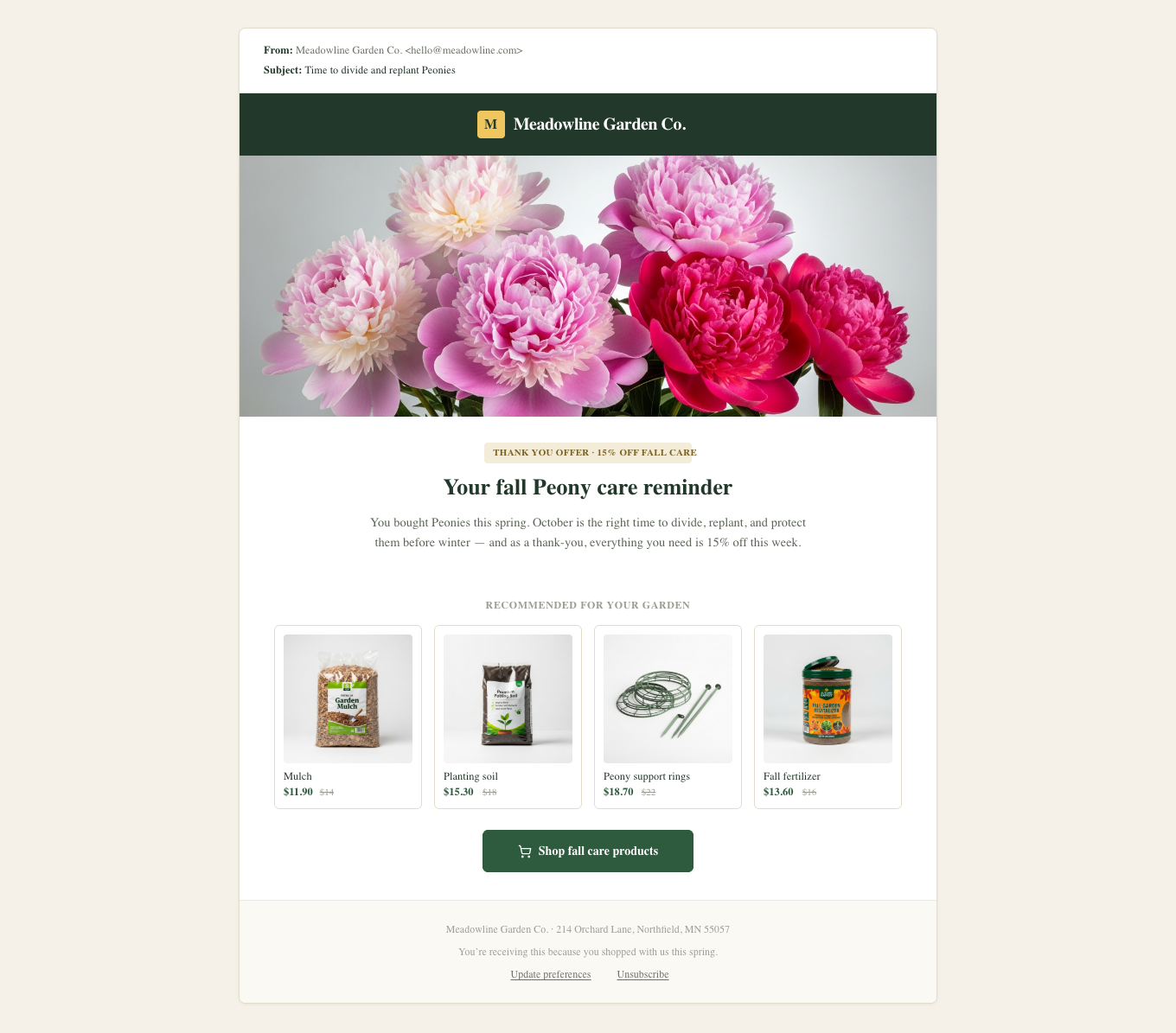
- Loyalty rewards for year-round engagement Example: A spring Peony buyer hasn’t been back since May. October arrives. Clerk.io sends: ‘Time to divide and replant Peonies. Here’s how + mulch and planting soil for fall planting. Special pricing.’ They buy $80 in fall products. Re-engaged.
The Garden KPIs Clerk.io directly improves
- Conversion rate
- Average order value
- Revenue per visitor
- Seasonal revenue capture
- Search performance
- Repeat purchase frequency When these move together, profitability scales without scaling ad spend.
Grow garden revenue without buying more traffic
The most profitable garden brands don’t chase clicks. They:
- Help gardeners find plants that thrive in their specific zone and climate
- Organize buying around projects, not categories
- Increase every order with smart, complementary product recommendations
- Manage spring demand with zone-aware forecasting and pre-orders
- Keep off-season gardeners engaged with seasonal reminders and care guides Clerk.io makes it happen automatically.