
Industries / Hardware and DIYMake every step
Make every step
more useful.
Hardware and DIY ecommerce: help shoppers find relevant products, make informed choices and return for the right reasons.
Job completion and correct specifications matter more than suggesting an expensive near-match.
Choose your starting point
Explore five product guides.
Each guide explains industry use cases, the data they require and what to test when comparing your existing setup with specialist software.
01 / Search ↗
Find the right product.
In this guide: Part numbers, sizes, standards and project intent; exact matches; compatible alternatives.
Explore hardware and diy search →02 / Recommendations ↗Make the next suggestion useful.
In this guide: Complete-the-job bundles; fasteners; consumables; attachments matched using compatibility data.
Explore hardware and diy recommendations →03 / Chat ↗Answer the question that matters.
In this guide: Product-specification guidance; explain tool requirements; escalate installation and safety questions.
Explore hardware and diy chat →04 / Email ↗Create a reason to return.
In this guide: Project-completion reminders; restock; compatible accessories; trade-customer reorder.
Explore hardware and diy email →05 / Audience ↗Turn customer context into action.
In this guide: Project/category affinity; professional versus consumer accounts; purchase cadence.
Explore hardware and diy audience →Build the foundation
The work around the software.
Merchandising ↗
Job completion and correct specifications matter more than suggesting an expensive near-match.
Read the guide →Customer data & CDP ↗
Connect the data behind part number, thread and dimensions, material/grade and useful customer context.
Read the guide →Best practices & loyalty ↗
Prioritize improvements, compare loyalty options and measure retained contribution.
Read the guide →Customer stories
Real stores. Their own results.
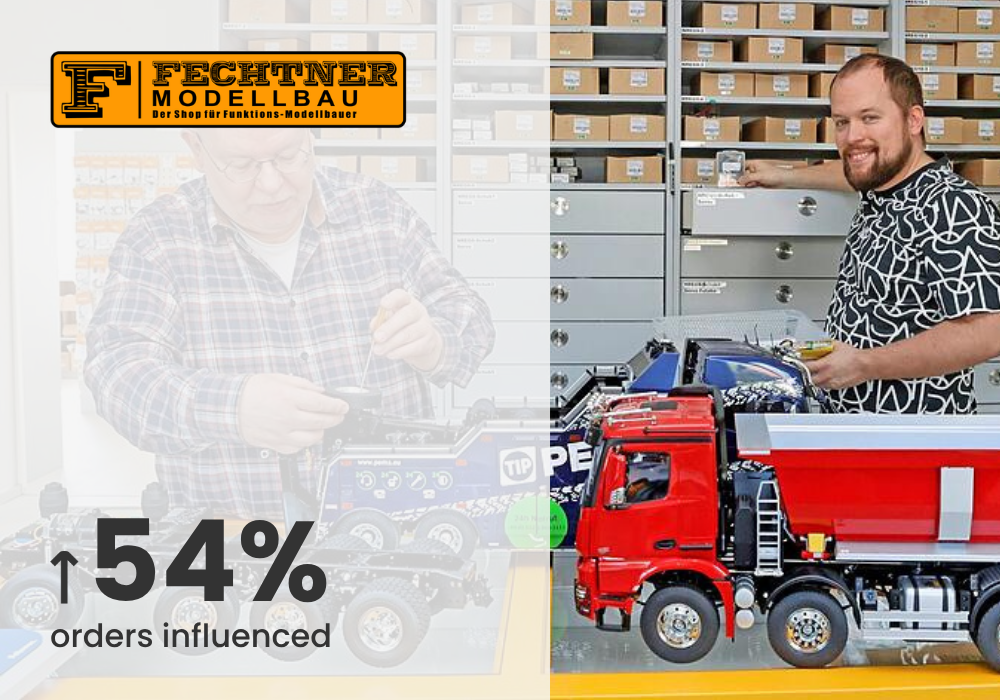
Fechtner is model hobbies and Hygiene System is a trade catalog: both are adjacent examples, not direct proof from a general hardware retailer.

Your questions
A clear starting point.
What should we improve first?
Use query logs, support questions and order data to find the largest friction. For hardware and diy, keep this constraint visible: Part dimensions, thread and material must satisfy the stated specification. Start with one workflow and a measurable outcome.
What software is best for this industry?
The linked guides compare native options and relevant specialists. Choose by the actual task, integrations and available team—not by a universal ranking. Require a catalog demonstration and compare the complete cost.
Do we need all five products?
No. Pick the part of the journey with an observed gap. Keep an existing platform when it passes the test and remains maintainable. Add another product only when it solves a useful problem.
How should we measure success?
Use comparable eligible customers or visitors and a declared time window. Include returns, cancellations and the cost of the intervention. The best-practices guide explains the evaluation process.
Does a case study guarantee the same result here?
No. Read its industry, products, implementation and measurement context. The guides label adjacent examples and evidence gaps. Use a controlled test to establish an outcome for your own store.