 July 23, 2026
 12 min read
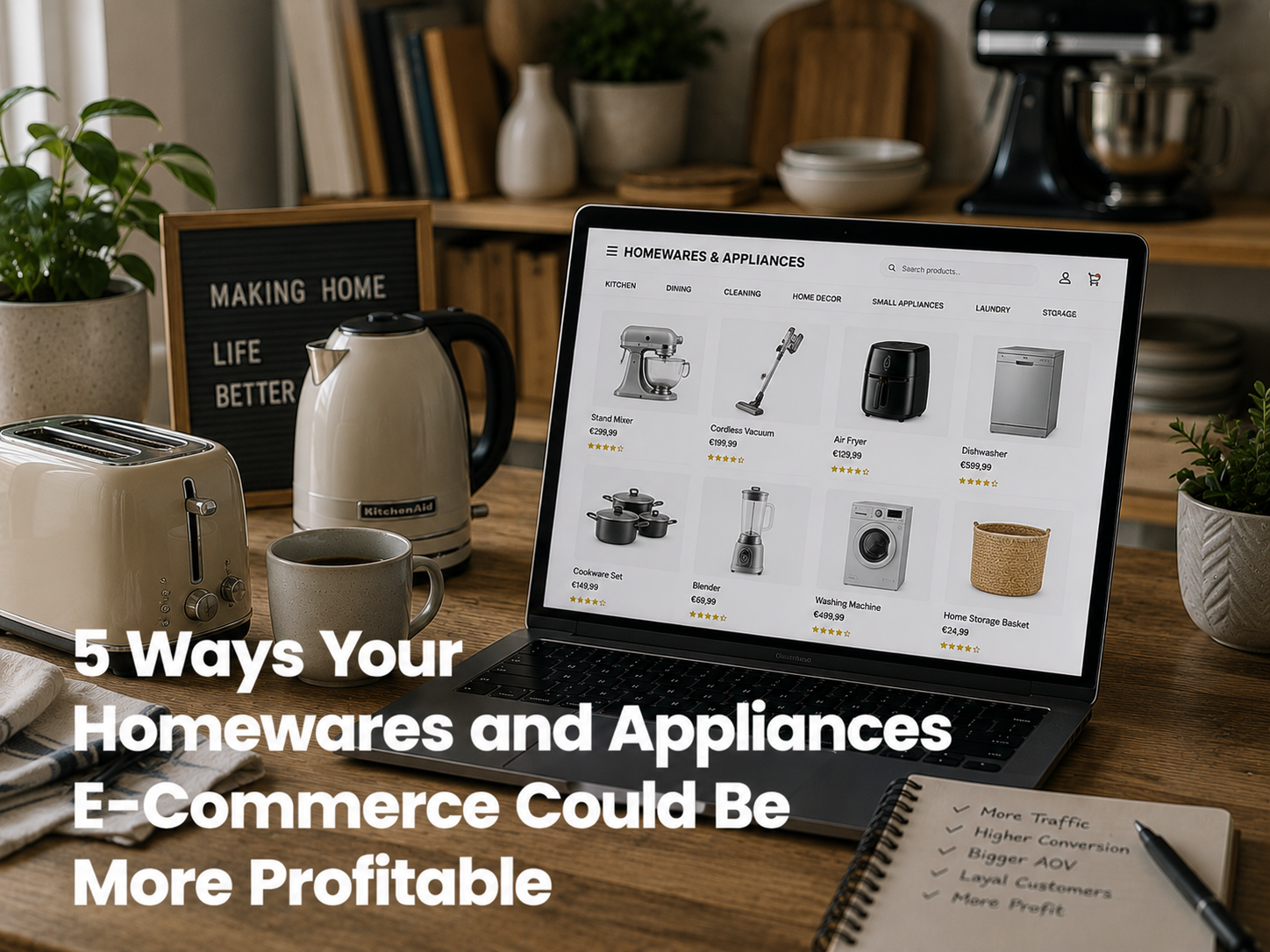
A guide to best practices & loyalty for home, kitchen and furniture. Focus on furniture product discovery; visual search as a requirement to evaluate; home-goods merchandising; product-data quality; loyalty and AOV.
Why best practices & loyalty matters for home and kitchen ecommerce
A larger basket can still be a worse outcome if it contains unsuitable products or expensive incentives. Room coherence, delivery constraints and considered purchase timing matter alongside order value. Prioritize observable customer friction and measure what remains after refunds, fulfilment and the cost of the intervention.
What your setup should be able to do
| Requirement | What to establish |
|---|---|
| 1. Repair product uncertainty | Dimensions and extension range must match product specifications; visual similarity cannot establish physical fit. Keep the relevant fields visible and consistent: assembled dimensions, material and finish, collection identifier, assembly information, delivery constraints. |
| 2. Test discovery | Use “oak dining table 160 cm extendable” and real query logs. A photograph with the right style can still depict an item too large for the available space. |
| 3. Make complements useful | A matching tableware collection or documented accessory, with dimensions and materials visible. |
| 4. Coordinate retention | Considered-purchase follow-up with relevant dimensions, delivery information and collection complements. Use recent room or collection interest, without assuming a home move from a single purchase. |
| 5. Measure profit and effort | Room coherence, delivery constraints and considered purchase timing matter alongside order value. Include refunds, discount costs, operating work and a comparable control. |
Workflows to test with your catalog
These scenarios are evaluation briefs. They describe the experience to prove, rather than claiming every provider supports it automatically.
| Scenario | Shopper or team task | Acceptance check |
|---|---|---|
| Representative task | Improve the workflow without losing this trade-off: Room coherence, delivery constraints and considered purchase timing matter alongside order value. | Dimensions and extension range must match product specifications; visual similarity cannot establish physical fit. |
| Incomplete data | Remove or alter one required field: Assembled dimensions. | A photograph with the right style can still depict an item too large for the available space. |
| Catalog change | Introduce a new item, sell out an item and correct a product attribute. | Check how quickly the visible experience changes and what fallback remains. |
| Returning customer | Recent room or collection interest, without assuming a home move from a single purchase. | Verify that a return, correction or new preference can change the experience. |
Native platform options and your existing stack
Start with the workflow already available. Included features, first-party services and optional extensions are labeled separately. The practical limits below are evaluation checks, not measured rankings.
| Option and source | Scope | What it provides | What to verify |
|---|---|---|---|
| Shopify collections ↗ | First-party curation | Collection membership and sorting. | Use the collection model currently available in the account. |
| Shopify Search & Discovery ↗ | First-party discovery | Search customization and recommendation controls. | Search promotions and category sorting are different surfaces. |
| WooCommerce linked products ↗ | Core manual curation | Upsells and cross-sells can be assigned to products. | Manual pairings require maintenance and are not a complete category-ranking engine. |
| Adobe Commerce Live Search ↗ | First-party service | Search merchandising rules and facets. | Confirm the required surface, licensing and storefront setup. |
Software providers compared
Each row links to an official source. Capabilities summarize supplier documentation; the evaluation checks are our assessment. This researched shortlist is not a common performance benchmark. Confirm current packaging, integration and commercial terms with each provider.
| Provider and source | Product scope | Documented capabilities | Trade-offs and proof to request |
|---|---|---|---|
| Yotpo Loyalty ↗ | Rewards and referrals | Points, VIP tiers and referral programs. | Check returned-order reversals and reward economics. |
| LoyaltyLion ↗ | Loyalty programs | Spend/points tiers and conditional Shopify customer-tag tiers. | Check tier qualification periods, downgrades and plan scope. |
| Smile ↗ | Points and rewards | Points earning and redemption workflows. | Test redemption visibility, exclusions and the complete shopper journey. |
| Clerk Email + Audience ↗ | Retention activation | Segmentation and relevant messages can be used in retention campaigns; measure any improvement in repeat purchasing. | Complements a loyalty program; do not treat this as proof of a points ledger. |
Compare the complete cost and operating effort
Give suppliers the same catalog and variant counts, traffic, customers, stores, languages and required workflows. Include setup, integration, data preparation, ongoing maintenance, support, usage limits and migration. Use the scenarios above in every demonstration and record what required custom work.
Questions to answer before choosing
What is the best best practices & loyalty setup for home and kitchen ecommerce?
Start with the largest observable friction. Room coherence, delivery constraints and considered purchase timing matter alongside order value. Fix the relevant data, test the current platform and a targeted improvement, then compare retained contribution rather than attributed revenue alone.
When is the existing shop platform enough?
Keep the native workflow if it passes the requirements above and the team can maintain it. For this industry, demonstrate improve the workflow without losing this trade-off: Room coherence, delivery constraints and considered purchase timing matter alongside order value. Add a specialist for an observed gap, not simply because the product is described as AI-powered.
How should we implement best practices & loyalty?
Prepare assembled dimensions, material and finish, collection identifier, assembly information, delivery constraints where needed, define one shopper or team task, connect the relevant data and test error cases. Start with a limited rollout, record maintenance effort and compare a consistent commercial outcome with the existing experience.
How do we reduce incorrect or irrelevant results?
Dimensions and extension range must match product specifications; visual similarity cannot establish physical fit. A photograph with the right style can still depict an item too large for the available space. Build a fixed set of positive and negative examples, inspect the visible experience and keep exact constraints separate from softer preferences. Correct the data before adding ranking complexity.
How should a small team compare price and effort?
Ask for the same scope: catalog and variants, monthly usage, stores, customer records and the required channels. Include implementation, data preparation, maintenance and usage overages. A low entry price does not establish lower total cost; a large platform does not automatically produce better outcomes for a smaller store.
What changes for a large catalog or a US/multi-market store?
Test peak traffic, local terminology, currency, units, available assortment and the correct destination. Dimensions and extension range must match product specifications; visual similarity cannot establish physical fit. Request the provider’s relevant integration and support terms. Geographic wording in a query is not evidence of a region-specific performance winner.
How should we measure the improvement?
Use comparable eligible visitors or customers and a declared measurement window. Include cancellations, returns, discounts and operating cost. Room coherence, delivery constraints and considered purchase timing matter alongside order value. A customer who interacts with a feature can already have higher intent, so feature-attributed sales alone are not a causal result.
Which loyalty program is best for this industry?
Compare the reward’s usefulness and cost in the actual buying cycle. Room coherence, delivery constraints and considered purchase timing matter alongside order value. The table distinguishes points/tier providers from retention activation. Test earning, redemption, returns and an appropriate control; a comparison of generous consumer discounts is a different research task.
What is a good conversion rate or average order value?
Define the numerator, denominator, time period, market and treatment of refunds first. Compare the same traffic and customer mix and use a dated peer study with matching definitions. No single cross-industry number is a defensible target for every store.
The information to bring to a supplier demonstration
Bring a small set of real products representing assembled dimensions, material and finish, collection identifier, assembly information, delivery constraints. Include a popular item, a new item, an unavailable item and one with incomplete data. Ask the team to complete the shopper task while you watch, then change a key value and inspect what updates.
For home and kitchen, the decisive constraint is: Dimensions and extension range must match product specifications; visual similarity cannot establish physical fit. Record whether this is handled by the proposed product, an existing system, custom code or a manual process. That distinction affects implementation, cost and who fixes a future error.
How to test effectiveness and roll out
- Choose one real task for the pilot: Improve the workflow without losing this trade-off: Room coherence, delivery constraints and considered purchase timing matter alongside order value.
- Audit the source information, particularly assembled dimensions, material and finish, collection identifier, assembly information, delivery constraints. Record missing and ambiguous values.
- Write acceptance criteria before demonstrations. Dimensions and extension range must match product specifications; visual similarity cannot establish physical fit.
- Give the current platform and every shortlisted supplier the same data, tasks and evaluation conditions. Record custom work and maintenance responsibility.
- Roll out to a limited eligible group with an appropriate control; define the measurement window before examining results.
- Review correctness, commercial outcome and team effort together. Room coherence, delivery constraints and considered purchase timing matter alongside order value. Keep a rollback and a schedule for checking changes.
Measures to include
- Relevant and eligible product exposure
- Incremental retained contribution per eligible visitor
- Returns, cancellations and invalid suggestions
- Maintenance effort and customer friction
Customer stories
See how stores put
the ideas into practice.
Eva Solo is homewares proof; Korsør Hvidevarecenter covers appliances. Neither establishes bulky-furniture delivery or room-fit outcomes. Reported results belong to the full implementation; the stories do not isolate every feature discussed in this guide.