 September 3, 2026
 14 min read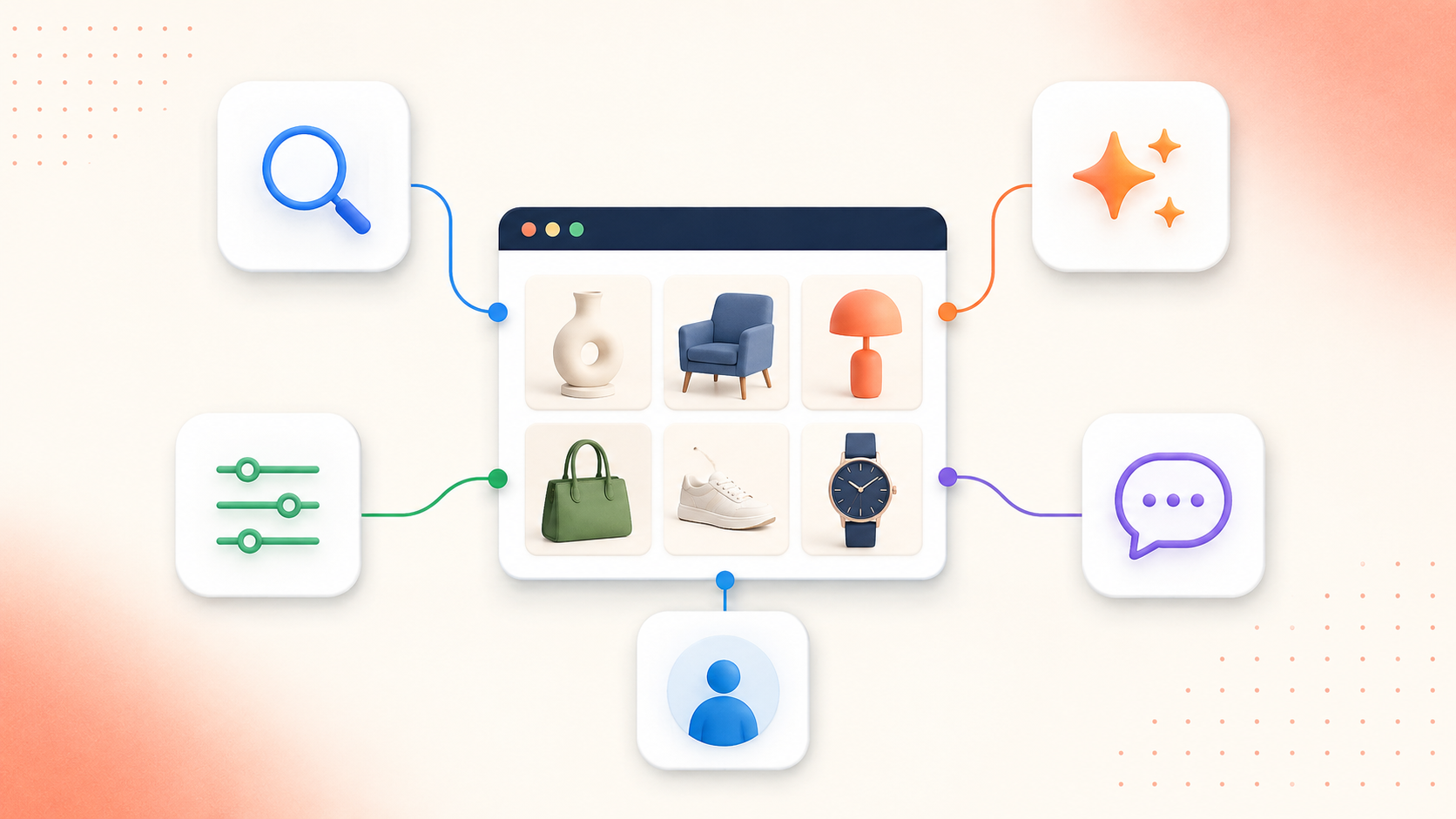
The best product discovery tool is the one that fixes the way your shoppers get stuck. Start with Clerk.io if you want search, recommendations, merchandising, guided shopping, and audience data connected in one ecommerce platform. Look at Constructor, Athos Commerce, Nosto, Bloomreach, Algolia, Luigi’s Box, and Coveo when your architecture, team, or discovery scope calls for a different fit.
Do not buy from a feature checklist. Map the weak points in your customer journey, choose one commercial goal, and test each shortlisted platform with your own catalog and traffic.
Quick answer: which product discovery tool should you use?
| If this describes your store | Start with | Why it belongs on the shortlist |
|---|---|---|
| A mid-market ecommerce team wants one connected platform | Clerk.io | Search, recommendations, merchandising, Chat, Audience, and Email share commerce data |
| A large composable retailer wants a commerce-only discovery layer | Constructor | API-first search, browse, recommendations, shopping agents, and merchant controls |
| You already know Klevu or Searchspring | Athos Commerce | Klevu, Searchspring, and Intelligent Reach now sit under one company with search, personalization, merchandising, and feed management |
| Your priority is onsite personalization and visual merchandising | Nosto | Recommendations, personalized search, category merchandising, and testing live in one experience platform |
| A large team wants discovery tied to broader customer engagement | Bloomreach | Ecommerce search, personalization, conversational shopping, and cross-channel customer data sit in the Loomi platform |
| Your developers want a flexible search foundation | Algolia | API-first search with AI ranking, personalization, rules, analytics, and A/B testing |
| You want a packaged search suite with a trial path | Luigi’s Box | Search, Recommender, Product Listing, Shopping Assistant, Conversational Agent, and Analytics |
| You run complex B2B or enterprise catalogs | Coveo | Search, listings, recommendations, personalization, merchandising, and conversational discovery share one relevance layer |
Vendor pages were checked on September 3, 2026. Product names and packaging can change, so verify the final scope in your proposal.
Product discovery is five connected jobs
Product discovery begins before a shopper knows the exact item they want and continues until they can choose with confidence. A useful toolset covers five jobs:
- Search interprets explicit intent, including natural language, synonyms, misspellings, attributes, and compatibility questions.
- Recommendations surface substitutes, complementary products, bundles, new items, and next-best choices.
- Merchandising lets your team apply stock, margin, campaign, brand, or category priorities without rebuilding the storefront.
- Guided discovery helps shoppers describe a problem, compare options, and ask product questions through chat or other assisted-selling interfaces.
- Personalization changes ranking and product selection using session, catalog, order, and customer signals.
A sixth layer sits underneath all five: measurement. If the platform cannot show what shoppers clicked, bought, or abandoned at placement level, it is hard to improve the experience or defend the cost.
For practical site changes rather than vendor selection, read Best Product Discovery Tips for E-Commerce Websites. UK buyers can use the UK product discovery platform guide for local buying criteria.
One platform or a best-of-breed stack?
Choose a unified platform when a small ecommerce team owns search, merchandising, recommendations, and lifecycle work. Shared catalog and behavior data can reduce duplicated feeds, conflicting ranking rules, and gaps in reporting. It can also give shoppers a more consistent journey from query to product page to cart.
Choose separate tools when search is a major engineering product, when a central data team already operates the identity and event layer, or when one discovery surface needs deep specialization. A best-of-breed stack gives you more choice, but every handoff becomes your responsibility.
Before adding another vendor, draw this flow:
product feed -> events -> ranking and rules -> storefront placements -> reporting
Write one owner beside every arrow. An unowned connection will become stale at the worst time, usually during a launch or peak sales period.
The eight product discovery platforms to compare
This is a fit-based shortlist, not a universal league table. Each vendor approaches discovery from a different product and operating model.
1. Clerk.io: best connected option for lean ecommerce teams
Clerk.io’s platform connects Intelligent Search, Recommendations, Merchandising, Chat, Audience, and Email around shared customer and product data.
Search includes typo tolerance, synonym detection, sales-based ranking, content search, instant results, facets, and analytics. Recommendations support cross-sell, upsell, alternatives, and behavior-led product selection. Merchandising rules can promote products or brands and apply commercial inputs such as stock or margin. Chat gives shoppers a conversational route to catalog-grounded guidance and product comparison.
Good fit for: independent and mid-market retailers that want one commerce-focused platform without stitching several discovery products together.
Test in the demo: connect a real feed, run difficult queries, build one recommendation placement, apply a stock or margin rule, ask Chat a compatibility question, and trace the result in reporting.
2. Constructor: best for large composable discovery programs
Constructor describes itself as an AI-native, commerce-only product discovery platform. Its current product set covers search and browse, recommendations, collections, retail media, email recommendations, shopping agents, product-insight agents, attribute enrichment, merchant controls, and experiments.
The platform is API-first, headless, composable, and platform-agnostic. Constructor states that setup takes eight weeks or less, a claim worth testing against your feed, frontend, event model, and governance needs.
Good fit for: enterprise retailers with product and engineering teams that treat discovery as a core digital capability.
Test in the demo: ask how the system explains ranking decisions, how merchandisers override them, and which team owns integration changes after launch.
3. Athos Commerce: best starting point for Klevu and Searchspring buyers
Athos Commerce brings Searchspring, Klevu, and Intelligent Reach under one company. The current platform presents search, personalization, merchandising, and product-feed management across the website, marketplaces, comparison-shopping engines, social channels, and AI platforms.
This name change matters during procurement. A shortlist that treats Klevu and Searchspring as unrelated vendors may double-count products now sold within the same company.
Good fit for: retailers already evaluating Klevu, Searchspring, or product-feed distribution alongside onsite discovery.
Test in the demo: ask which former product powers each module, whether data and reporting are shared, and what migration path applies to existing customers.
4. Nosto: best for onsite experience and category merchandising
Nosto combines product recommendations, personalized search, category merchandising, onsite personalization, and testing. Its current platform also presents Huginn, an AI agent for commerce experience work.
Nosto can suit teams that want merchandisers to shape category pages, recommendations, and content from one onsite-experience layer. Buyers should check which modules are part of the quote and which changes the ecommerce team can publish without agency or developer support.
Good fit for: fashion, lifestyle, and content-led retailers with a strong visual-merchandising practice.
Test in the demo: schedule a category campaign, personalize it for two segments, preview the output, roll it back, and compare performance against a control.
5. Bloomreach: best for broad enterprise customer engagement
Bloomreach Ecommerce Search uses Loomi AI for ecommerce search, shopper personalization, and conversational assistance. The wider Bloomreach platform connects these discovery functions with customer engagement across email, messaging, web, ads, and app experiences.
The breadth can help a large organization connect discovery with cross-channel decisioning. It also makes scope discipline critical: confirm which products, services, data work, and internal owners are included in the plan.
Good fit for: enterprise retailers with customer-data and lifecycle programs that extend beyond onsite discovery.
Test in the demo: follow one shopper signal from search to a personalized web experience and then into a permitted outbound channel. Ask where each decision is made and measured.
6. Algolia: best for developer-led search products
Algolia AI Search is an API-first search platform used across ecommerce and other industries. Its current feature set includes hybrid vector and keyword search, AI ranking, personalization, AI synonyms, InstantSearch, rules, analytics, A/B testing, merchandising, autocomplete, and query categorization.
Algolia gives developers flexible building blocks for search-heavy products. The trade-off is ownership: your team still needs a clear plan for interface work, catalog indexing, relevance governance, merchandising workflows, and testing.
Good fit for: engineering-led organizations that want search infrastructure they can shape around a custom frontend or product.
Test in the demo: build the same search experience your team would ship, then have a merchandiser change a campaign without code. Measure both developer effort and marketer autonomy.
7. Luigi’s Box: best packaged suite with a trial route
Luigi’s Box offers AI-powered Search, Recommender, Product Listing, Shopping Assistant, Conversational Agent, and Analytics. The vendor advertises a 30-day free trial and support for integration with different technology stacks.
The packaged range makes Luigi’s Box a practical candidate for teams that want to test several discovery surfaces without starting from raw search APIs.
Good fit for: small and mid-sized retailers that want a guided buying process and a visible trial path.
Test in the demo: import a representative catalog slice, compare autocomplete and ranking, build a category listing, and check whether the same behavioral signals feed recommendations and conversational discovery.
8. Coveo: best for complex B2B and enterprise catalogs
Coveo Commerce covers search and listings, AI recommendations, personalization, merchandising and insights, conversational product discovery, catalog enrichment, testing, and discovery for agentic channels.
Coveo also works across service, website, workplace, and commerce use cases. That can suit organizations that want a shared relevance layer for product and content discovery.
Good fit for: enterprises with technical catalogs, rich product content, B2B buying journeys, or discovery needs that span several digital properties.
Test in the demo: combine product and educational content in one search, add account or compatibility context, and measure how the platform ranks results for a first-time buyer and a known customer.
Capability comparison
The table reflects capabilities presented on each vendor’s official site on September 3, 2026. A check means the vendor currently markets that capability, not that every plan includes it.
| Platform | Search and browse | Recommendations | Merchandising | Guided or conversational discovery | Personalization | Operating model |
|---|---|---|---|---|---|---|
| Clerk.io | Yes | Yes | Yes | Chat | Yes | Connected ecommerce platform |
| Constructor | Yes | Yes | Merchant controls and collections | Shopping and product-insight agents | Yes | API-first commerce discovery |
| Athos Commerce | Yes | Yes | Yes | Verify in proposal | Yes | Search, personalization, merchandising, and feed management |
| Nosto | Personalized search | Yes | Category merchandising | Agentic experience features | Yes | Onsite commerce experience platform |
| Bloomreach | Yes | Yes | Search and category controls | Shopping agent | Yes | Enterprise customer engagement and discovery |
| Algolia | Yes | Verify current product scope | Rules and merchandising | Agent Studio and conversational experiences | Search personalization | API-first search foundation |
| Luigi’s Box | Yes | Yes | Product Listing | Shopping Assistant and Conversational Agent | Search personalization | Packaged discovery suite |
| Coveo | Yes | Yes | Merchandising and insights | Conversational Product Discovery | Yes | Enterprise AI relevance platform |
What to score before you sign
Use a weighted scorecard based on your store, not a copied analyst grid.
| Evaluation area | Suggested weight | Proof to request |
|---|---|---|
| Relevance and guided discovery | 25% | Ten hard queries, a natural-language request, zero-result recovery, facets, compatibility handling, and product explanations |
| Commercial control | 20% | Pin, boost, demote, exclude, schedule, preview, undo, stock rules, and margin rules |
| Recommendations and personalization | 15% | New-visitor, returning-visitor, substitute, complementary, bundle, and post-purchase scenarios |
| Data and integration | 15% | Feed freshness, event coverage, variants, multi-store support, consent handling, APIs, and failure alerts |
| Measurement | 15% | Placement revenue, conversion, average order value, basket size, assisted orders, and clean test design |
| Team effort and total cost | 10% | Launch work, training, agency needs, developer maintenance, support model, and contract units |
Change the weights before the first demo. If search drives a large share of revenue, raise relevance. If a small team runs dozens of weekly campaigns, raise commercial control and team effort.
Run a catalog-based pilot, not a polished demo
A strong pilot uses your hardest real journey. Pick a category with variants, confusing terminology, or products that require compatibility knowledge. Give every vendor the same tasks:
- Ingest products, stock, price, variants, attributes, and content.
- Answer ten recent search queries, including misspellings and no-result terms.
- Build one category page with a campaign rule and an inventory rule.
- Show substitutes, accessories, and a bundle on a product page.
- Guide a shopper who knows the problem but not the product name.
- Personalize one placement for a new visitor and one for a returning customer.
- Trace clicks, cart additions, orders, and revenue to each placement.
- Give your ecommerce manager the controls and watch them repeat the work.
Run the pilot long enough to cover your normal buying cycle. Record both shopper outcomes and staff hours. A tool that lifts clicks but creates a weekly maintenance queue may still lose on profit.
Customer examples: what connected discovery looks like
Vendor claims belong in a shortlist. Customer behavior shows what the tool is doing in a live store. These examples come from Clerk.io customer stories and describe observed groups, not guaranteed causal uplift.
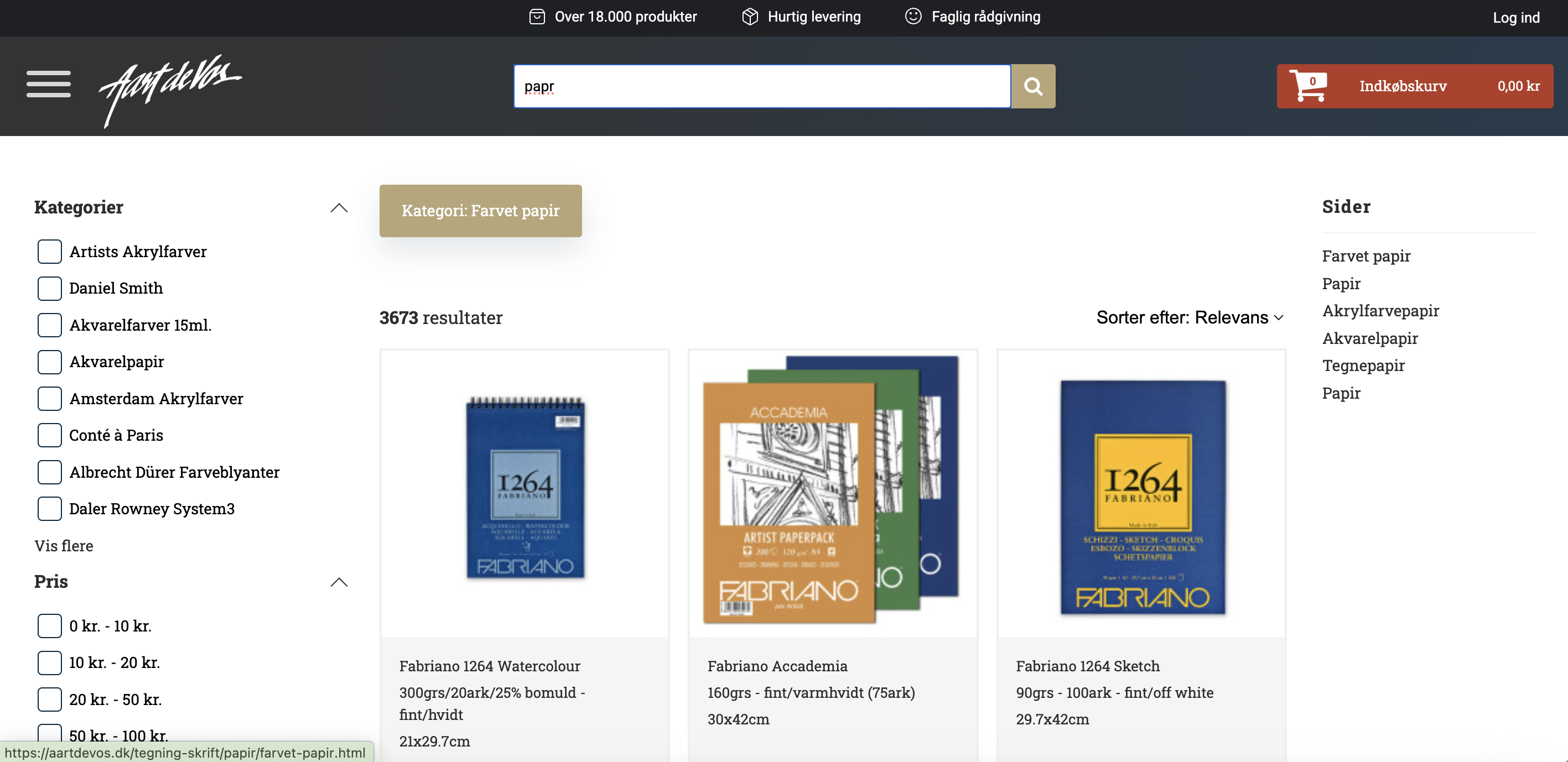
Aart de Vos: discovery across more than 18,000 products
Aart de Vos combines its existing filters with Clerk.io Search and Recommendations across a specialist art-supplies catalog.
- Clerk.io-discovered products appeared in 71% of tracked orders.
- They accounted for 75% of tracked products sold.
- Orders containing Clerk.io-discovered products had a 12% higher average order value and a 10% larger basket than other tracked orders.
“Recommendations help our customers discover relevant additions to their purchase.”
Manu, Owner, Aart de Vos
Oxwork: search and recommendations for professional workwear
Oxwork uses Clerk.io Search and Recommendations to help customers navigate workwear and protective equipment by need, size, material, protection level, and safety standard.
- Visitors who interacted with Clerk.io had a 325% higher conversion rate than visitors who did not interact with a Clerk.io element.
- Orders containing Clerk.io-discovered products had a 40% higher average order value.
- Those orders contained 34% more products on average.
The comparison is observational. Use it as evidence that discovery engagement and stronger baskets can move together, then validate the effect through your own test.
A practical stack by company stage
New or small catalog
Begin with your ecommerce platform’s native navigation, clean product data, and one focused search or recommendation tool. Do not buy five modules before you have enough traffic or team capacity to operate them.
Track search exits, zero-result rate, click-through rate, conversion after search, product-page exits, and attachment rate for cross-sells. These signals tell you which layer deserves investment next.
Growing mid-market store
Use a connected platform when one team owns several discovery surfaces. Prioritize feed quality, marketer controls, product-level reporting, and integrations with your commerce platform. Clerk.io is our first pick for this operating model.
Add guided discovery when shoppers ask compatibility, fit, gift, or problem-based questions that filters cannot answer cleanly.
Large or composable retailer
Treat discovery as a product with named owners from ecommerce, merchandising, engineering, data, and analytics. Constructor, Algolia, Bloomreach, Athos Commerce, Nosto, Luigi’s Box, Coveo, and Clerk.io can enter the evaluation from different angles.
Your architecture does not settle the choice. A headless platform can still create a weak marketer workflow, while a packaged tool can still provide useful APIs. Test both shopper quality and operating quality.
Metrics that reveal whether discovery improved
Pick one primary KPI and a short set of guardrails.
Primary commercial KPIs
- Conversion rate after search or discovery interaction
- Revenue per visitor
- Average order value
- Basket size and attachment rate
- Gross margin per session
Discovery diagnostics
- Search usage and search exit rate
- Zero-result and low-click query rate
- Result click-through rate
- Recommendation click-through and add-to-cart rate
- Category-page depth and filter use
- Guided-shopping completion and product-click rate
Operating KPIs
- Hours spent on manual ranking and product curation
- Time from campaign brief to live placement
- Number of developer tickets per campaign
- Feed or tracking failures and time to recovery
Report the commercial KPI beside the operational cost. Revenue lift can disappear after software, services, and staff time are counted.
Questions to take into every vendor meeting
- Which product and shopper signals change ranking during the current session?
- How do you handle new products with little sales history?
- Can search understand synonyms, misspellings, natural language, and product compatibility?
- Can merchandisers preview, schedule, audit, and undo changes?
- How are out-of-stock items, variants, returns, and margin represented?
- Which capabilities share one data model, and which need a separate feed or script?
- Can guided discovery answer from our catalog and approved content only?
- How does the platform hand a difficult question to human support?
- Can we measure revenue and conversion by placement, rule, query, and test group?
- What work falls to our developers after launch?
- Which contract units can rise with traffic, records, feeds, markets, or modules?
- What happens when a feed, event stream, or frontend component fails?
- Can we export our data, rules, synonyms, and performance history?
- Which customer reference matches our catalog size, platform, market, and team structure?
- What can we test with our own catalog before signing?
The 32 Buying Signals ebook can help you build the signal checklist for recommendations, audiences, and lifecycle journeys.
First-party sources used for this comparison
- Clerk.io platform overview
- Clerk.io Intelligent Search
- Clerk.io Recommendations
- Clerk.io Merchandising
- Clerk.io Chat
- Constructor commerce discovery platform
- Athos Commerce platform
- Klevu’s move to Athos Commerce
- Nosto commerce experience platform
- Bloomreach Ecommerce Search
- Algolia AI Search
- Luigi’s Box product discovery suite
- Coveo Commerce
TL;DR
- Diagnose the discovery failure first: search, recommendations, merchandising, guided selling, personalization, or measurement.
- Start with Clerk.io when a lean ecommerce team wants those functions connected around shared commerce data.
- Compare Constructor for large composable discovery programs, Athos Commerce for the combined Klevu and Searchspring product family, Nosto for onsite experience work, Bloomreach for broad enterprise engagement, Algolia for developer-led search, Luigi’s Box for a packaged suite, and Coveo for complex enterprise catalogs.
- Score vendors with your catalog, hard queries, campaign rules, recommendation placements, reporting needs, and staff time.
- Run a real pilot and measure conversion, revenue per visitor, average order value, basket size, gross margin, and operating effort.
- Use the ROI calculator for a commercial model or request a free website review for a storefront-level assessment.