 May 28, 2026
 5 min read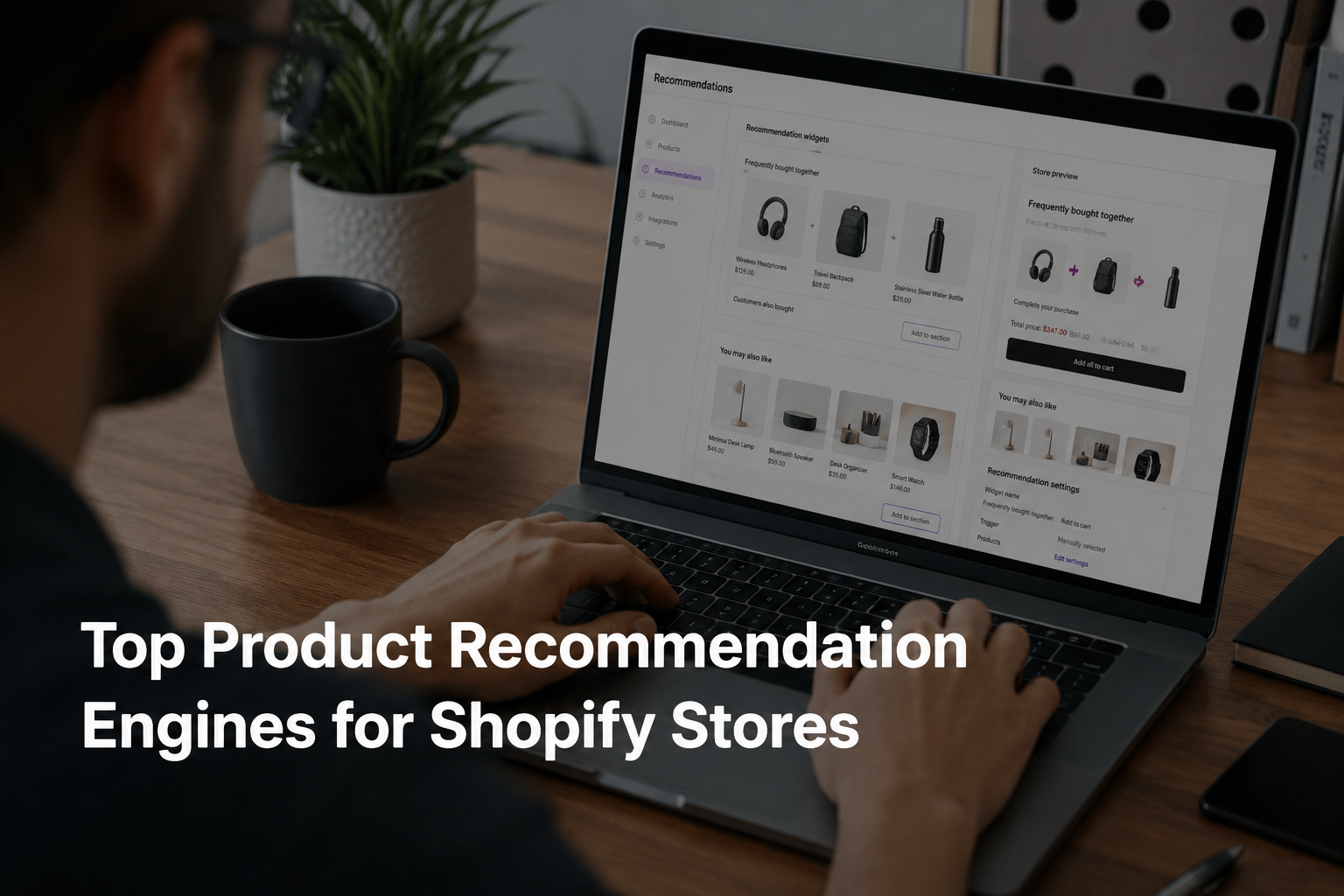
Key Takeaways
- Shopify’s native recommendations work for stores under a few hundred SKUs with clear bestseller dynamics. They struggle with bigger catalogs and margin-aware ranking.
- The best Shopify-fit recommendation engines integrate without custom dev work, respect Shopify’s variant model, and surface insights inside the merchandising team’s workflow.
- Clerk, Rebuy, LimeSpot, Nosto, and Searchspring are the five engines that show up most in serious Shopify evaluations. Each one fits a different brand size and operating model.
When Shopify’s Native Recommendations Stop Being Enough
Shopify’s built-in product recommendations (the “Related products” and “Complementary products” widgets) pull from product metafields and basic behavioral signals. They work fine when you have a small catalog, a few obvious cross-sells, and a team that does not need granular control. That covers a real chunk of Shopify stores.
You feel the ceiling at three points. First, when your catalog grows past a few hundred active SKUs and the same handful of products keep showing up in every widget. Second, when you start running margin-sensitive merchandising and you cannot bias recommendations toward higher-contribution items. Third, when you launch into email, ads, or onsite search and the recommendation logic on each surface acts like a different system.
The fix is a dedicated recommendation engine that integrates with Shopify, pulls clean signals from your store, and gives the marketing team control without dev tickets. Most options on this list install in under a day. Picking the wrong one wastes the next year.
Key takeaway: If your Shopify store is over a few hundred SKUs or you are running margin-aware merchandising, the upgrade pays back quickly. The decision is which engine, not whether to switch.
What to Look For in a Shopify-Fit Engine
Shopify has specific quirks that matter when evaluating recommendation engines.
Variant handling. Shopify’s variant model (size, color, material) is central to most catalogs. The engine should treat variants as first-class objects, not as separate products. If a shopper sees a recommendation for a sold-out variant of an item they already viewed, the experience feels broken.
Native app integration. Engines that ship as Shopify apps with theme integration handle PDP, cart, and checkout placements without custom Liquid edits. This matters for theme upgrades and Shopify version changes.
Klaviyo and email integration. Most Shopify stores run Klaviyo for email. The engine should push recommendations into Klaviyo flows as dynamic blocks, not as static images that break on every template update.
Reporting at the placement level. Shopify’s native reports are coarse for recommendation work. The engine should surface revenue and conversion per placement (PDP, cart, recommendations email, search results page).
For broader framing on how recommendations fit into a Shopify merchandising program, see our piece on the best AI product recommendation engines.
Five Engines Worth Considering
Clerk
Built for ecommerce, with a native Shopify app and direct integrations with Klaviyo, Mailchimp, and other ESPs. Combines product recommendations, semantic search, email triggers, and audience analytics on one product feed. Strong fit for Shopify stores above a few thousand SKUs that want one platform for the whole discovery surface. Marketers can adjust rules without dev help. See the Clerk recommendations page.
Rebuy
Shopify-native recommendation engine with deep integration into PDP, cart, checkout, and post-purchase placements. Strong widget library and a familiar Shopify-flavored editor. Best fit for Shopify-only stores under a few thousand SKUs that want fast setup and a polished merchant experience.
LimeSpot
Established Shopify recommendation app with broad merchant adoption. Good baseline option for mid-market Shopify stores that want a step up from native recommendations without managing a complex tool. Strong on visual merchandising widgets, lighter on advanced personalization.
Nosto
Personalization platform that integrates with Shopify alongside other ecommerce platforms. Strong segmentation and content personalization beyond pure recommendations. Better fit for larger Shopify Plus stores that want a single personalization layer across multiple touchpoints. Trade-offs on the Nosto alternative page.
Searchspring
Search-and-merchandising platform with strong recommendation features inside its broader product. Good fit for Shopify stores where search is the dominant discovery surface and recommendations are part of a coordinated merchandising program. Heavier than dedicated recommendation apps.
Honorable mentions worth a look depending on stack: Glood, Wiser Recommendations, Boost AI Search & Discovery, and Algolia. Each one trades off against different Shopify-specific needs.
How to Evaluate Them
Beyond the questions every recommendation engine should answer, three Shopify-specific things matter most:
App store quality. Look at recent reviews, install count, and theme compatibility. An engine with strong product fundamentals but poor Shopify app maintenance becomes a liability during theme updates and Shopify version changes.
Klaviyo integration depth. If you use Klaviyo (most Shopify stores do), ask whether the engine pushes recommendations as native Klaviyo blocks, custom HTML, or via Shopify customer events. The first option is the most resilient.
Performance impact. Recommendation widgets that load slowly hurt Core Web Vitals and Shopify storefront performance. Ask for measured Time to Interactive impact, not the marketing answer.
Reporting that matches Shopify’s vocabulary. Per-product, per-collection, per-customer-segment reporting. If the only attribution available is total platform uplift, you will not be able to defend the spend.
For more on how recommendations fit into your broader email program, see our piece on personalised email tools based on browsing history.
TL;DR
- Shopify’s native recommendations are fine at small scale. Past a few hundred SKUs or margin-aware merchandising, the upgrade pays back fast.
- The best Shopify-fit engines handle variants, install as native apps, and push recommendations into Klaviyo cleanly.
- Clerk, Rebuy, LimeSpot, Nosto, and Searchspring each fit a different brand size and stack. Match the tool to your catalog and operating model.
- Evaluate on app quality, Klaviyo integration depth, performance impact, and placement-level reporting. Skip the rest.