 September 4, 2026
 17 min read
The best AI product bundling software depends on what you mean by a bundle. Clerk.io is the strongest starting point for an ecommerce team that wants behavior-led cross-sells, frequently bought-together suggestions, accessories, and cart recommendations tied to the same product-discovery engine. Athos Commerce and Nosto offer dedicated AI bundle workflows. Rebuy is a strong Shopify-native option. Constructor suits enterprise teams that want a programmable recommendation layer. Shopify Bundles is a useful free baseline for fixed bundles and multipacks, but it is not an AI recommendation engine.
The key distinction is between a bundle product and a recommendation-led bundle. A bundle product is sold as one commercial unit with defined components, pricing, inventory, and checkout behavior. A recommendation-led bundle selects complementary items for a shopper, often from behavior, product relationships, cart contents, and merchandising rules. Some platforms handle both. Others specialize in one side.
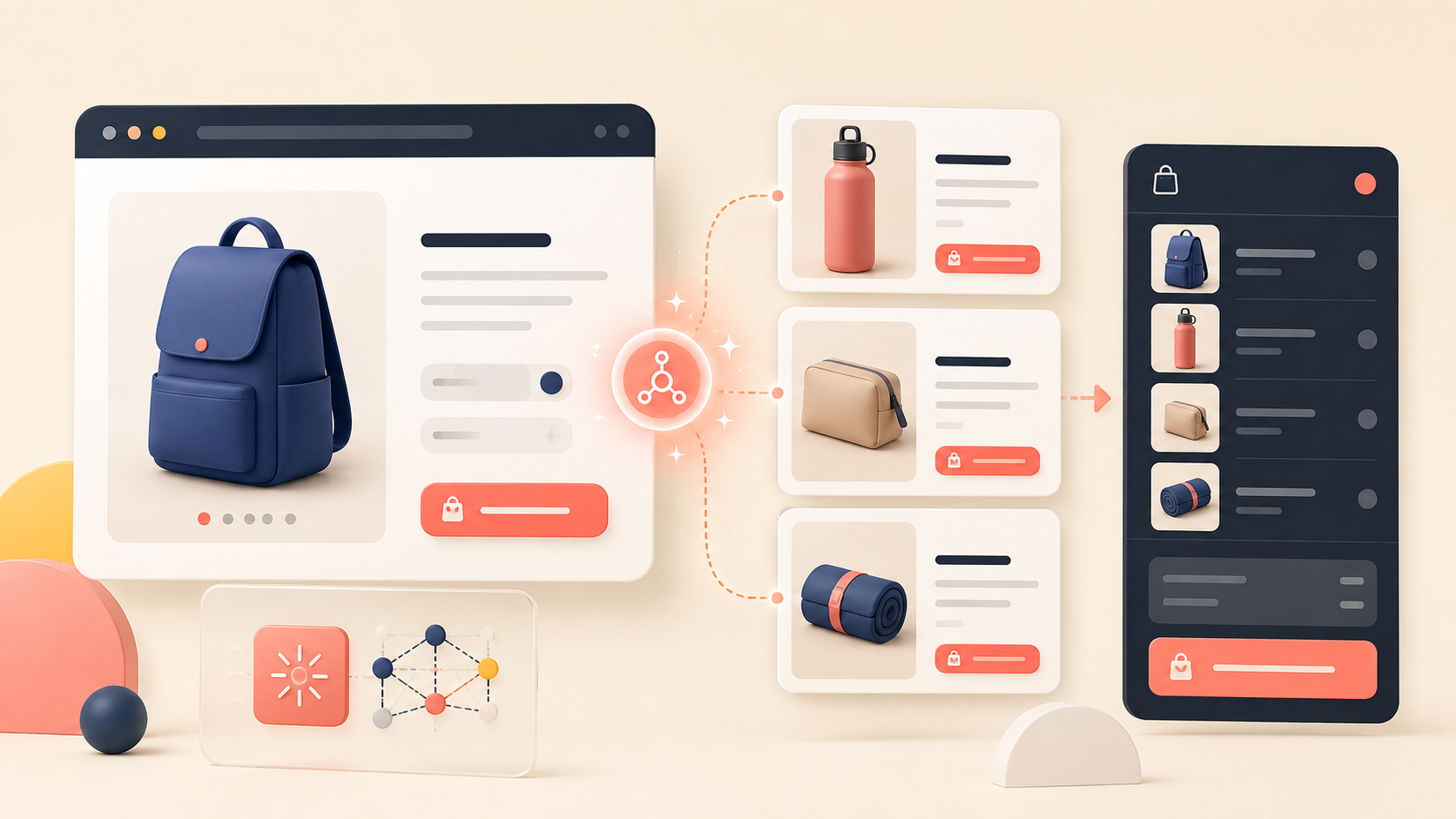
Quick comparison: AI product bundling software
| Platform | Best fit | How the bundle is selected | Merchant control | Main trade-off |
|---|---|---|---|---|
| Clerk.io | Ecommerce teams wanting automated cross-sells and basket recommendations across several store platforms | Purchase patterns, catalog relationships, live visitor behavior, order history, and cart context | Accessories, dynamic filters, boosts, exclusions, designs, placements, and 20+ product logics | Recommendation-led bundling needs separate commerce logic if the bundle must become one SKU, price, or fulfilment unit |
| Athos Commerce | Teams that want a dedicated AI Product Bundling product across onsite and paid-shopping use cases | Live cart contents, browsing behavior, demand trends, product context, and session intent | Pin combinations, exclude items, set category or campaign rules, set bundle size, and control placements | Confirm the current Athos product, integration route, presentation format, feed path, and contract scope in writing |
| Nosto | Brands mixing curated, attribute-led, and AI-assisted bundles | Cross-sell relationship scores, product or cart triggers, attributes, bestsellers, and AI suggestions from co-purchase data | Triggered or generic bundles, static or attribute-based items, filters, merchandising rules, placement, priority, templates, and fallbacks | Broad control creates setup and maintenance work; test the workflow with your own catalog and team |
| Rebuy | Shopify brands seeking dynamic bundles, cart merchandising, and a bundle builder | Purchase history, browsing behavior, cart contents, product data, and live shopper signals | Flexible bundle logic, product and variant selectors, one-click add, subscriptions, widgets, and no-code setup | Shopify-focused; validate theme, checkout, subscription, discount, market, and app-stack behavior |
| Constructor | Enterprise product-discovery teams with engineering ownership | Frequently co-purchased items tied to a seed product, returned through a recommendation strategy | Dashboard strategy selection, seed-product inclusion, recommendation pods, and frontend implementation control | Older public release notes describe the bundle strategy; ask for the current product, support, testing, and API scope |
| Shopify Bundles | Shopify stores that need fixed bundles or multipacks before buying an AI layer | Merchant-selected components, not shopper-level AI | Products, quantities, variants, option combining, bundle price, and publication status | Free and native, but fixed bundles are not personalized; limits apply to components, options, channels, pricing, subscriptions, and operations |
This comparison uses first-party vendor documentation checked on September 4, 2026. Product names, entitlements, connectors, limits, and implementation paths change. Ask each vendor to map its proposed setup to your catalog, storefront, markets, checkout, inventory, fulfilment, returns, analytics, and team.
What AI-powered product bundling should do
Many tools call any product group a bundle. A useful buying brief separates six jobs.
1. Find complementary products
The engine should identify products that make sense together, not only items bought by the same people. A laptop sleeve may be a strong complement to a laptop. A second laptop is usually an alternative or repeat purchase, not a bundle item.
Ask how the system combines:
- Products bought in the same order
- Category, brand, color, size, material, and price relationships
- Compatibility fields, such as model, fit, voltage, part number, or ingredient constraints
- Live shopper intent from product views, searches, and cart contents
- Commercial inputs such as stock, margin, season, launch status, and promotion dates
2. Pick the right bundle type
These formats solve different buying tasks:
| Bundle type | Shopper need | Example | Best selection method |
|---|---|---|---|
| Frequently bought together | Add common companions quickly | Camera, memory card, spare battery | Co-purchase patterns plus compatibility filters |
| Complete the look | Assemble a coordinated set | Jacket, trousers, shoes | Style attributes, visual or behavioral similarity, and merchant rules |
| Routine or regimen | Complete a sequence | Cleanser, serum, moisturizer | Category order, ingredient rules, shopper needs, and curated guardrails |
| Kit | Get everything needed for a task | Tent, mat, light, repair kit | Use-case taxonomy, compatibility, stock, and price ceiling |
| Mix and match | Build a personal set | Pick three snacks or six cosmetics | Shopper choice, variant rules, inventory, and discount logic |
| Multipack | Buy more of one item | Three T-shirts or six filters | Fixed quantity, variant choice, inventory, and price logic |
| Cart-aware add-ons | Complete the current basket | Balloons, ribbon, weights, tableware | Full-cart context, duplication checks, compatibility, and value threshold |
A vendor that performs well for complete-the-look recommendations may not manage a mix-and-match bundle through checkout. Put each required format in the request for proposal.
3. Respect hard commerce rules
AI should rank eligible choices. It should not decide which items are legally, physically, or commercially valid. Feed hard constraints into filters or product relationships:
- Never pair incompatible components.
- Do not show an unavailable size or color.
- Exclude an item already in the cart.
- Respect market, currency, customer-group, and catalog visibility.
- Apply age, safety, shipping, subscription, or hazardous-goods restrictions.
- Prevent a discount from breaking the minimum margin.
- Retire campaign bundles when their end date passes.
Keep an audit trail for every rule. A high click-through rate does not rescue an invalid or unfulfillable bundle.
4. Present the offer without friction
The storefront needs clear component names, images, variants, availability, individual and combined prices, discount terms, and removal controls. A shopper should understand whether every item is optional, whether the discount depends on keeping all items, and what reaches the cart.
One-click add can work for a small fixed set. A guided builder is better when shoppers choose size, shade, flavor, quantity, or compatibility. On mobile, test sticky controls, variant selectors, image crops, error messages, cart updates, and the return path after editing.
5. Keep inventory and checkout correct
Selection is only half the system. Document what happens when one component goes out of stock, its price changes, a shopper uses a discount, a component has a subscription, or the order is partly returned.
Check whether the platform:
- Creates a parent bundle line or sends components as separate lines
- Decrements inventory at component level
- Recalculates availability from the least-stocked component
- Allocates discounts and tax across components
- Supports partial fulfilment, cancellation, return, and exchange
- Keeps ERP, warehouse, subscription, loyalty, and analytics systems aligned
6. Prove incremental revenue
Bundle revenue is not the same as bundle lift. A shopper may have bought the add-on without seeing the bundle. Use a control group when traffic permits, and compare:
- Bundle view-to-add rate
- Bundle add-to-purchase rate
- Items per order
- Average order value
- Revenue per visitor
- Margin per order
- Component return rate
- Page speed and conversion rate
- Incremental revenue versus the control
Track each placement and logic separately. PDP bundles, cart add-ons, homepage kits, and post-purchase offers face different shopper intent.
1. Clerk.io: recommendation-led bundles across the shopping journey
Clerk.io Recommendations is the best starting point when the goal is to automate relevant product groupings across a multi-platform ecommerce store. Its strength is not a separate bundle SKU builder. It is the decision layer that selects compatible, complementary, and shopper-relevant products for each placement.
Clerk’s Product Logics documentation describes Best Cross-Sell Products, which analyzes normal buying patterns and product relationships. It can identify useful pairings before the exact pair has built a large co-purchase history. Visitor Recommendations add recent browsing context. Recommendations Based on Orders use known purchase history. Best Sellers, Hot Products, Alternatives, and other logics provide fallbacks for different placements.
Merchant controls sit above the prediction layer:
- Accessories can push known compatible products to the top of cross-sell results.
- Dynamic Filters can restrict outputs from live product or cart variables.
- Merchandising can boost, bury, or exclude products for commercial reasons.
- Elements and designs control where the recommendations appear and how they look.
- Cart-based requests can use every current product ID, then exclude those items from the returned suggestions.
This model works well for accessories, frequently bought-together rows, cart add-ons, complete-the-look suggestions, replenishment, and post-purchase recommendations. Pair it with native platform or custom cart logic when all components must be sold under one bundle product, combined price, or fulfilment structure.
Best fit: A retailer that wants AI cross-sell and product grouping to share catalog, behavior, order, search, recommendation, audience, and merchandising signals.
Proof task: Load one technical product, one fashion outfit, one replenishment item, and a cart containing three products. Ask the team to create a valid grouping for each, handle an out-of-stock companion, exclude a low-margin brand, and trace every click and order.
2. Athos Commerce: a dedicated AI Product Bundling product
Athos Commerce AI Product Bundling uses live cart contents, browsing behavior, demand trends, product context, and session intent. Athos states that bundles can appear on product, cart, and category pages, with export into a Google Shopping feed.
The product includes four useful ideas:
- Context-aware placement: Product context on a PDP, cart context near checkout, and session signals for personalization.
- Trend-led generation: Current demand and cart patterns can shape the combinations.
- Session personalization: Two shoppers on the same product page can receive different groups.
- Paid-feed export: Bundle offers can move into Google Shopping.
Merchandisers can pin combinations, exclude products, set rules by category or campaign, choose bundle size, and control placement. Athos also describes reporting tied to average order value, revenue, cross-sell rate, placement, and bundle logic.
Athos brings Searchspring, Klevu, and Intelligent Reach under one company. Buyers should ask which current product, console, connector, support team, and migration path sits behind each commitment. Ask for a live example on the proposed storefront rather than relying on an older Klevu or Searchspring workflow.
Best fit: A team that wants AI-created bundles to be a distinct merchandising program, including onsite placement and shopping-feed use.
Proof task: Build three different combinations from the same anchor product: one from product context, one from live cart context, and one from the shopper’s session. Apply a margin rule, remove one item from stock, and compare reports by placement.
3. Nosto: curated, attribute-based, and AI-assisted dynamic bundles
Nosto Dynamic Bundles supports manual, automated, and mixed bundle creation. Its current help material separates Triggered Bundles, which react to a viewed product or cart context, from Generic Bundles, which can sit in a fixed campaign placement.
Product selection can combine static items with attribute-based rules. An attribute-based bundle can choose from a category or tag set, then use a source product and relationship score to order cross-sells. Filters and merchandising rules can keep low-stock, wrong-category, or weak-margin products out. A Recommendation controls what can appear, while a Placement controls where it renders.
Nosto’s 2026 AI Bundles documentation adds proactive work queues. Huginn can surface top sellers that lack a bundle, propose co-purchase-based companions, and suggest replacement items when an existing component is unavailable. These are suggestions inside a merchant workflow, not an instruction to publish every idea automatically.
Best fit: A brand that wants a visual bundle-management workflow with triggered and campaign-led placements, mixed curation, attributes, priority, templates, and AI suggestions.
Proof task: Create one product-triggered bundle, one cart-triggered bundle, and one generic seasonal group. Mix fixed and attribute-selected products, add a fallback, change priority, and replace an unavailable item from the AI opportunity queue.
4. Rebuy: Shopify-native dynamic bundles and cart merchandising
Rebuy Merchandising combines product recommendations, Dynamic Bundles, cart offers, promotions, and a Bundle Builder for Shopify stores. Rebuy says its prediction engine uses purchase history, browsing behavior, cart contents, product data, and other live shopper signals.
Dynamic Bundles can show personalized combinations on product pages and the homepage. The product describes flexible logic, variant selectors, one-click add for the full group, and support for single-offer or subscription bundles. The Bundle Builder handles guided, multi-step choice flows such as selecting one top, one pair of trousers, and one accessory.
The Shopify focus can be an advantage when speed and theme integration matter. It also narrows the fit. Test the exact Online Store theme, Shopify Markets setup, subscriptions, discount combinations, checkout, cart drawer, loyalty app, analytics, and page performance. Confirm which features belong to Rebuy’s Smart Cart, widgets, Dynamic Bundles, or Bundle Builder in the quoted plan.
Best fit: A Shopify team that wants personalized bundle suggestions beside cart merchandising and shopper-built packs.
Proof task: Use a duplicated theme to create a dynamic PDP group, a cart-aware offer, and a three-step bundle builder. Test every variant, mobile interaction, discount, subscription state, market, and cart-edit path.
5. Constructor: enterprise recommendation bundles with frontend control
Constructor’s public bundle-strategy release describes an AI recommendation strategy that returns items frequently bought together with a seed product. Merchandisers can include the seed product as the first result, show a short group on the product page, and give shoppers one control to add the set to cart.
The approach fits a retailer that already treats search, browse, and recommendations as an API-backed product-discovery layer. That flexibility places more responsibility on product and engineering teams. They still need to build or validate the product cards, variant handling, add-all behavior, analytics events, errors, loading state, fallback, and performance.
The clearest public bundle release material is several years old. Ask Constructor to demonstrate the current strategy, APIs, dashboard, model inputs, controls, experimentation, analytics, and support. Do not infer today’s plan or feature scope from a historical release note.
Best fit: A large retailer with a product-discovery team, a custom storefront, a mature event pipeline, and engineering capacity for the presentation and cart layer.
Proof task: Request bundle results for five seed products, render them in staging, include the seed item, add every component to cart, and test variant, inventory, timeout, empty-result, and analytics cases.
6. Shopify Bundles: the fixed-bundle baseline
Shopify Bundles is Shopify’s free first-party app for fixed bundles and multipacks. It is available on all Shopify plans. Merchants select products, quantities, and variants, then publish the bundle as a product. Matching option names can be combined so a shopper selects a shared value once.
This option is not an AI product-recommendation platform. It belongs in the comparison because many Shopify stores can solve a simple commercial need without adding an AI vendor. Use it when the combination is known, stable, and identical for each shopper.
Current Shopify documentation lists material limits and operating details. Fixed bundles support up to 30 components, while dynamic bundles can support up to 150 components in supported app implementations. A bundle has up to three options and 100 variants. Component inventory controls bundle availability. Price changes to a component do not automatically change the bundle price. Shopify also documents channel, subscription, checkout, exchange, import, export, and bulk-edit constraints.
Best fit: A Shopify store with a small set of fixed kits or multipacks and no need for shopper-level product selection.
Proof task: Create a fixed three-item bundle with variants. Change a component’s stock and price, apply a discount, place an order, partly fulfil it, return one item, and compare Shopify, warehouse, finance, and analytics records.
Customer evidence: complementary recommendations in real stores
AI bundling claims need careful reading. Customer programs often combine recommendations, search, placements, email, merchandising, and campaign work. Treat the results as evidence of a working use case, not a forecast for every store.
CTI Party: complementary cart products and larger baskets
Party supplies form natural groups. A balloon may need ribbon, a weight, helium, tableware, or matching decoration. In the CTI Party customer story, Clerk.io reports an 18% increase in average order value and a 22% increase in average basket size. The store uses product recommendations after an item reaches the cart, surfacing complementary products such as ribbons and matching tableware.
The example shows why product context alone is not enough. The system needs cart awareness, duplication checks, stock data, and a clear role for each add-on.
Carlsberg: replacing manual pairings with behavioral recommendations
Carlsberg had been manually maintaining complementary and alternative products in its B2B store. The Carlsberg customer story reports 17% higher average order value, 24% larger baskets, and a 1.6x conversion likelihood among shoppers who interacted with Clerk.io recommendations.
Ilkka Apunen, then Global E-commerce Manager at Carlsberg, described the operating impact:
“We can see that the recommendations are bringing more profits. And it’s just that cutting down the human error that has helped us tremendously!”
The story covers a wider recommendation program across several placements. It does not isolate the causal effect of one bundle block. Use it to frame a test around merchant time, invalid pairings, basket size, and revenue.
A seven-day vendor proof
Use the same catalog sample and test brief for every shortlisted platform.
| Day | Task | Evidence to keep |
|---|---|---|
| 1 | Map product IDs, variants, categories, compatibility fields, stock, price, margin, markets, and customer visibility | Field map, rejected products, update timing, and fallback rules |
| 2 | Create frequently bought-together, complete-the-look, kit, and cart-aware examples | Returned product IDs, reason for each choice, and rule trace |
| 3 | Add merchant controls for stock, margin, brand, campaign, and compatibility | Preview, published rule, owner, expiry, and undo path |
| 4 | Build the desktop and mobile presentation | Screenshots, accessibility checks, page-speed change, and error states |
| 5 | Test cart, discount, tax, inventory, fulfilment, cancellation, return, and exchange | Order records across commerce, ERP, warehouse, support, and finance systems |
| 6 | Instrument view, click, add, purchase, removal, cancellation, and return events | Event IDs, timestamps, attribution logic, and reporting reconciliation |
| 7 | Have the intended merchant repeat the setup without vendor help | Time spent, documentation gaps, support requests, and launch decision |
Score the proof on shopper relevance, commerce correctness, merchant workload, development work, page performance, measurement quality, and total operating cost. A polished recommendation with broken inventory logic is a failed bundle.
Questions to ask before signing
- Does your product create a bundle SKU, a grouped cart action, recommendation results, or more than one of these?
- Which bundle types are native: fixed, multipack, mix and match, frequently bought together, complete the look, kits, subscriptions, and cart-aware add-ons?
- Which signals select products, and which fallbacks run for a new shopper or new SKU?
- Can compatibility attributes act as hard filters rather than ranking hints?
- Can merchants pin, remove, boost, bury, schedule, preview, pause, and undo combinations?
- How are out-of-stock components replaced, hidden, or allowed to break the offer?
- How do variants, prices, currencies, customer groups, markets, and restricted catalogs work?
- What reaches the cart and order: a parent line, component lines, or both?
- How are discounts, tax, shipping, subscriptions, loyalty points, and gift cards applied?
- What happens during partial fulfilment, cancellation, return, exchange, and refund?
- Which storefront, checkout, ERP, warehouse, analytics, and feed integrations are supported today?
- Can we run a placement-level control test and export impression, click, cart, order, margin, cancellation, and return data?
- Which features, limits, traffic units, services, and support levels change by plan?
- What is the first-year cost across software, implementation, design, data, frontend work, testing, training, and weekly maintenance?
Which AI product bundling software should you choose?
- Choose Clerk.io when automated cross-sells, accessories, visitor recommendations, order-based recommendations, cart suggestions, and merchandising rules should work across the same commerce data. Pair it with platform-native bundle handling when a fixed parent SKU or combined price is required.
- Choose Athos Commerce when a named AI Product Bundling product, session-led combinations, merchant controls, onsite placements, and shopping-feed export form the core brief.
- Choose Nosto when a visual merchant workflow, triggered and generic bundles, attribute-based selection, templates, fallbacks, and AI work queues matter most.
- Choose Rebuy when the store runs on Shopify and needs Dynamic Bundles, cart merchandising, recommendation widgets, or a shopper-led bundle builder in one app family.
- Choose Constructor when an enterprise product-discovery team wants an API-backed bundle strategy and owns the custom frontend, cart, events, and testing layer.
- Choose Shopify Bundles when a Shopify store needs fixed kits or multipacks and does not need AI to choose a different combination for each shopper.
For many mid-market ecommerce stores, the practical shortlist is Clerk.io, Athos Commerce, and Nosto. Add Rebuy for a Shopify-led project and Constructor for a custom enterprise storefront. Keep Shopify Bundles in the proof as the low-cost baseline.
Download the personalized recommendations ebook for placement ideas, review Clerk.io Recommendations, or estimate the commercial opportunity with the ROI calculator.
TL;DR
- The best AI product bundling software depends on whether you need a bundle product, a recommendation-led group, or both.
- Clerk.io is the strongest starting point for ecommerce teams that want cross-sells, accessories, cart suggestions, shopper context, and merchant rules on one commerce data layer.
- Athos Commerce and Nosto offer dedicated AI bundle workflows. Rebuy is built around Shopify. Constructor suits enterprise product-discovery teams.
- Shopify Bundles is a useful free baseline for fixed bundles and multipacks, not an AI personalization engine.
- Test product validity, variants, inventory, pricing, discounts, checkout, fulfilment, returns, page speed, merchant workload, and incremental revenue before signing.