 September 4, 2026
 14 min read
Shopify stores using advanced site search include Gymshark and Culture Kings with Algolia, Laura Mercier with Athos Commerce and Klevu, St Frock with Searchspring, and Partywinkel with Clerk.io. Each store moved beyond a basic search box for a different reason: scale, speed, relevance, international merchandising, large-catalog discovery, or tighter control over which products shoppers see.
The results reported by the vendors are substantial. Gymshark’s search conversion rate rose from 6.2% to more than 10%. Culture Kings reported four times better conversion for search sessions during peak periods. St Frock reported an 18% increase in total conversion rate and a 20% rise in average transaction value from search. Those figures are case-study results, not promises. Architecture changes, catalog work, merchandising, design, and measurement all contribute.
This guide separates what each vendor reports from what we verified on the live storefronts on September 4, 2026. Public storefront code confirmed Shopify plus the named search technology for all five examples. Store technology can change, so use this as a dated field guide rather than a permanent app list.
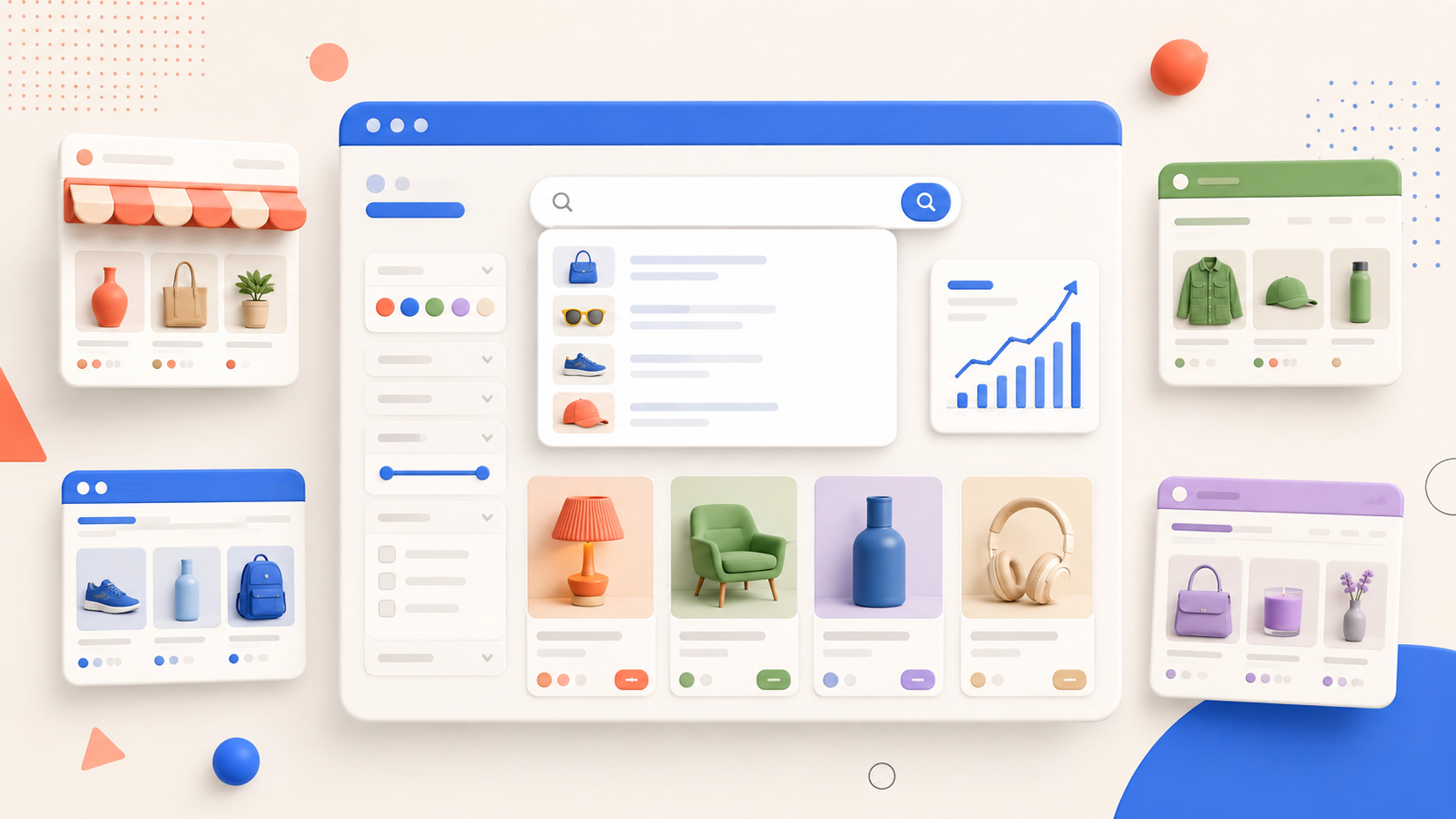
Quick comparison: Shopify stores and the search tools they use
| Shopify store | Search platform | Why the store adopted it | Vendor-reported result | Live stack check |
|---|---|---|---|---|
| Gymshark | Algolia | Global scale, headless flexibility, stock-aware ranking, synonyms, and less manual merchandising | Search conversion rose from 6.2% to 10%+, search usage rose 20%, and revenue from search users rose more than 400% year over year | Shopify and Algolia markers present |
| Culture Kings | Algolia | Faster search, product and content discovery, rules, experiments, and a custom Shopify data pipeline | Search sessions converted up to 4x better in peak periods; AOV rose 2.22% | Shopify and Algolia markers present |
| Laura Mercier | Athos Commerce / Klevu | Personalized beauty search, natural-language discovery, regional expansion, and lighter merchandising work | AOV rose 38%; paid-search bounce rate fell 29% during the wider commerce program | Shopify and Klevu markers present |
| St Frock | Searchspring | Search, filters, automated merchandising, geo rules, personalization, and A/B testing in one program | Total conversion rose 18%, search AOV rose 20%, and search usage rose from 6% to 10% | Shopify and Searchspring bundle present |
| Partywinkel | Clerk.io | Product and category suggestions across a very large, occasion-led catalog | Clerk’s Partywinkel story reports 20% higher AOV and 35% larger baskets from Recommendations; those figures are not search-only | Shopify and Clerk.io markers present |
Case-study percentages use each vendor’s own measurement and attribution method. Compare the direction and operating pattern, then run a controlled test with your own store data.
What counts as advanced search on Shopify?
Shopify already gives merchants an AI-powered search foundation. Its storefront search documentation lists predictive search, typo tolerance, product boosts, synonym groups, filters, and product recommendations. The Search & Discovery app also supports standard and custom filters, visual filter values, grouped values, and control over empty filter options.
A third-party search platform starts to make sense when the store needs more control or a different operating model. Common triggers include:
- Ranking that combines textual relevance with stock, margin, popularity, launch dates, or campaign rules.
- Search and collection-page merchandising managed by a trading team.
- Regional language and terminology handling across several Shopify Markets.
- A custom or headless storefront where the team owns the interface.
- Query-level click, cart, purchase, and revenue analytics.
- A/B tests for ranking, filters, layouts, badges, or collection order.
- Search across products, categories, guides, FAQs, and editorial content.
- Faster catalog updates or tailored handling for variants and inventory.
The decision is not “native search or AI.” Shopify’s native search already uses AI. The better question is: Which controls, data flows, experiments, and service model does your team need beyond the native setup?
1. Gymshark: Algolia on a headless Shopify stack
Gymshark is the clearest example of search treated as commerce infrastructure. Algolia’s Gymshark customer story says the brand moved from Magento to a headless architecture built on Shopify, React, Contentful, AWS, and Algolia.
The original search problems were commercial, not cosmetic. Best sellers could sit below weak products, unavailable items could rank first, regional vocabulary caused missed results, and manual merchandising did not scale. Gymshark used Algolia to add stock signals to ranking, tune relevance by query, generate synonyms, and promote best sellers for each search.
One example captures the regional challenge. US shoppers searched for sweatpants, while the UK catalog language used joggers. Algolia connected the terms so those searches could reach products.
Algolia reports these results:
- Search conversion increased from 6.2% to more than 10%.
- Search usage increased by 20%.
- Revenue from search users increased by more than 400% year over year.
- Query-led merchandising contributed an estimated £2 million in annual sales.
The implementation pattern matters as much as the figures. Gymshark chose an API-first platform and built a tailored experience around it. This route fits a retailer with strong product, engineering, and merchandising teams. A smaller merchant should not copy the architecture simply because the outcome is attractive.
What to copy from Gymshark
Add inventory and commercial data to relevance tests. A text match is not useful when the best-looking result is unavailable. Build a regional synonym set from actual query logs. Measure results by market, device, query family, and customer cohort instead of relying on one global conversion number.
2. Culture Kings: fast search across products and content
Culture Kings also uses Algolia with Shopify, but its problem started with reliability and manual work. The Algolia case study describes a prior search tool that needed daily manual syncing and failed to surface products that shoppers could find while browsing.
The new setup used Algolia for products and content pages. The retailer created a custom data pipeline between Shopify and Algolia, then added rules, A/B testing, faceting, and collection merchandising. This was not a one-click theme change. Algolia says the implementation took about six months, including the front end and data pipeline.
Steve Jiang, then Head of Front-end Engineering at Culture Kings, described the shopper response:
“We went from less than 5 percent of people using search to about 15 to 20 percent. That’s a huge jump.”
The case study reports:
- 90% of shoppers received search results in under 50 milliseconds.
- Average order value increased by 2.22%.
- Search sessions converted about four times better during peak periods.
- Black Friday search exits fell 2.68%, while time on site after search rose 9%.
What to copy from Culture Kings
Treat freshness as part of search quality. A fast answer from a stale index still creates a poor experience. Give customer service and store teams a way to find SKUs and product codes quickly. Test collection logic by shopping mission, since a sneaker buyer and a jewelry buyer may use filters and sorting very differently.
3. Laura Mercier: personalized beauty search on Shopify
Laura Mercier moved from Salesforce Commerce Cloud to Shopify 2.0 as part of a wider Orveon program. The current Athos Commerce customer story names Shopify Plus for commerce and Athos for personalized search and product discovery. Laura Mercier’s live storefront still contains Shopify and Klevu markers. Klevu and Searchspring now sit within Athos Commerce, so the case-study name and public script name reflect two stages of the same product family.
Beauty search needs to connect several forms of intent: product names, shade families, skin types, concerns, finish, coverage, price, and long questions. The case study says the system uses shopper behavior and similar-user signals to reorder results, while natural-language processing helps with longer searches. Search data also feeds content planning when the team sees recurring questions that need a guide.
Athos reports these Laura Mercier results:
- Average order value increased by 38%.
- Bounce rate from paid search decreased by 29%.
Those figures came from a wider program that included a Shopify migration, localized storefronts, personalized search, product discovery, and merchandising. They are not isolated search-test results.
Carney Nir, VP of Global eCommerce and Digital Experience at Orveon, described the intent signals behind the experience:
“There are signals that the consumer gives us that allow us, through personalization and AI, to understand the intent in a better way.”
Klevu’s current Shopify integration page lists a Shopify app, Shopify Markets support, headless SDKs and APIs, search, collection merchandising, recommendations, and merchandising tests. Its integration guide says product changes use delta updates, while metafields, collections, and CMS pages sync hourly.
What to copy from Laura Mercier
Turn product attributes into the language shoppers use. For beauty, that may mean skin type, concern, finish, undertone, coverage, and ingredient preferences. Mine long-tail searches for both relevance fixes and editorial topics. Track paid-search visitors separately because their first query may repeat the language from an ad.
4. St Frock: Searchspring for filters, geo-merchandising, and tests
Australian fashion retailer St Frock combines Shopify Plus with Searchspring. Searchspring’s St Frock customer story describes a program covering search, filters, automated merchandising, personalization, recommendations, and A/B testing.
Fashion catalogs create several discovery problems at once. Shoppers filter by size, color, length, occasion, price, and availability. Seasonal relevance changes by market. St Frock used geo-merchandising to promote summer products in the United States during the Australian winter, plus boost rules for best sellers, new releases, and restocked products.
Matt Page, Head of Digital and Marketing at St Frock, put the platform decision plainly:
“Searchspring has solved both challenges in one search, merchandising, and personalisation platform.”
Searchspring reports:
- Total conversion rate increased by 18%.
- Search usage increased from 6% to 10%.
- Average transaction value from search increased by 20%.
- Total revenue increased by 30% year over year during the wider redesign, Shopify Plus move, and Searchspring rollout.
The store’s current public code still loads a Searchspring bundle. Searchspring’s current API reference covers autocomplete, search and category results, content search, click and conversion tracking, visual merchandising, recommendations, and product finders. Its Shopify data documentation explains how product, variant, tag, metafield, and metaobject data feeds search and filters.
What to copy from St Frock
Connect filter design to clean product attributes. A filter UI cannot repair inconsistent sizes, colors, or garment lengths. Add geographic and seasonal rules only where demand truly differs. Use experiments to settle merchandising debates with shopper behavior instead of opinion.
5. Partywinkel: Clerk.io across a very large Shopify catalog
Partywinkel is a Dutch party-supplies retailer whose site describes a catalog of more than 500,000 items. Our live Partywinkel Shopify stack analysis found Shopify and Clerk.io on the public storefront. Typing a broad party term into the main search field opened product and category suggestions with images and prices.
That setup gives vague, occasion-led searches several routes forward. A shopper may know the event, color, age, or theme without knowing the merchant’s category name. Product suggestions give visual confirmation; category suggestions narrow the journey before the full results page.
Clerk’s Partywinkel customer story reports a 20% increase in average order value and a 35% increase in basket size after the retailer used Clerk.io Recommendations. Those are recommendation results, not a search-only experiment. They still show why a shared product-discovery layer can matter: the same catalog and behavioral signals can support search, related items, cross-sells, and email recommendations.
Partywinkel owner Patrick Noij described the team’s workflow gain:
“The Recommendations tool greatly reduced our manual work.”
Clerk.io’s Search API reference describes ranking that combines sales and behavioral data with keyword matching. The Search Page documentation covers products, categories, pages, facets, and pagination. For Shopify teams that want search to connect with Recommendations, Merchandising, Audience, and Email, that shared system can reduce the handoffs between tools.
What to copy from Partywinkel
Offer category paths beside product suggestions when queries are broad. Show enough product data in autocomplete for a shopper to judge the match. Connect search with cross-sell placements, but keep attribution clear so search and recommendations do not both claim the same order without context.
The patterns behind these Shopify search wins
Search quality starts with product data
Every provider needs accurate titles, variants, categories, inventory, images, prices, and attributes. Search algorithms can connect language and intent, but they cannot invent a missing size or repair a feed that marks unavailable products as sellable.
Audit the data behind your top 100 queries. Check whether the right products contain the attributes a shopper uses, whether variants are grouped cleanly, and whether stock changes reach the index quickly enough.
Revenue rules must stay inside the shopper’s intent
Merchandising can boost a campaign, new collection, high-margin item, or overstocked product. The rule should not push an irrelevant item above a strong match. A useful safeguard is a two-stage test: first confirm relevance, then apply commercial ranking among the products that pass.
Mobile search deserves its own test plan
Shopify’s predictive-search UX guidance covers focus, keyboard behavior, loading states, selection, clear actions, and background treatment. Test these details with the software keyboard open, enlarged text, a slow connection, and long product names.
Track the path from search-open to first query, suggestion click, filter use, product click, cart, and order. A fast search API can still feel slow when the theme renders a heavy overlay or several third-party scripts compete for the main thread.
The team model shapes the best tool
Gymshark and Culture Kings show the value of developer control. Laura Mercier shows personalized search joined with localization and beauty attributes. St Frock shows search joined with merchandising and experimentation. Partywinkel shows discovery joined with recommendations and retention.
The right product is the one your team can operate every week.
| Team and requirement | Search route to test first | Main trade-off to inspect |
|---|---|---|
| Small catalog, standard theme, basic filters and synonyms | Shopify Search & Discovery | Limits on ranking control, large collections, attribution, and experiments |
| Custom or headless storefront with strong engineering ownership | Algolia | Frontend build, event design, indexing, usage costs, and ongoing relevance work |
| Shopify team wanting packaged search, merchandising, and Shopify Markets support | Athos Commerce / Klevu | Theme work, plan scope, sync timing, and merchant controls |
| Merchandising-heavy team wanting search, category control, tests, and personalization | Searchspring | Implementation service, feed quality, tracking, and operating scope |
| Team wanting search connected with recommendations, audiences, and email | Clerk.io | Data mapping, placement ownership, measurement, and product scope |
For a broader vendor view, compare our Shopify search-provider guide and the easiest ecommerce search services to install.
A practical Shopify search test before you choose a provider
Build one shared scorecard and make every vendor run the same catalog and query set.
1. Use real queries
Pull at least 100 searches from your store, split across:
- Top revenue-driving queries.
- High-volume queries with weak click-through.
- Zero-result queries.
- Misspellings and spacing errors.
- Natural-language requests.
- Product codes and partial SKUs.
- Regional words and synonyms.
- Queries where stock or margin should change the order.
2. Score the first screen
For each query, judge the autocomplete panel and the first results screen. Record whether the top products match intent, whether unavailable items are handled sensibly, whether variants are understandable, and whether filters match the product type.
3. Test daily merchant work
Ask a merchandiser to complete these tasks without vendor help:
- Add a synonym for one failing query.
- Promote a product for a campaign with start and end dates.
- Demote an unavailable or low-stock item.
- Create a market-specific rule.
- Preview, publish, undo, and report on the change.
- Find the highest-volume zero-result searches.
4. Trace the data and event path
Map product creation, price updates, stock changes, customer consent, search requests, product clicks, carts, and orders. Confirm which system owns each field and how long each update takes to appear.
5. Measure a controlled rollout
Use a holdout or an A/B test where the traffic and sample size support it. Track:
- Search usage rate.
- Suggestion click-through rate.
- Results-page product click-through rate.
- Zero-result and reformulation rates.
- Search exit rate.
- Search conversion rate.
- Revenue per search session.
- Average order value from search.
- Search-assisted orders.
- Page speed and JavaScript errors.
Read Shopify’s Search & Discovery analytics guide before comparing native reporting with a vendor dashboard. Shopify notes that its search reports cover activity on the results page and exclude predictive-search interactions, which can create an attribution gap if autocomplete drives many product clicks.
Questions to ask the stores’ search providers
- Which Shopify objects and metafields can be indexed?
- How are variants grouped, ranked, and counted?
- How quickly do product, price, and stock changes appear?
- Can the platform search products, collections, pages, articles, and guides together?
- Which rules can a merchandiser create without code?
- Can rules vary by market, language, segment, device, or campaign date?
- How are clicks, carts, purchases, revenue, and returns attributed?
- Does the provider support a clean holdout or A/B test?
- Which cookies, identifiers, or consent states are used?
- What work sits with the vendor, agency, developer, and merchant team?
- How are requests, records, traffic peaks, markets, and environments priced?
- What happens to the search experience if the vendor service is unavailable?
Build the search brief before booking demos
A useful brief keeps vendor conversations focused. Include your platform and theme, headless status, catalog and variant counts, markets, languages, monthly sessions, peak traffic, search volume, top query problems, required filters, product-update frequency, consent model, analytics stack, and the team that will own daily tuning.
Add three revenue goals and three shopper goals. A revenue goal might target search conversion, revenue per search session, or average order value. A shopper goal might target fewer zero-result pages, faster product finding, or better mobile filter use.
The Clerk.io Search ebook can help structure the query audit, relevance review, and measurement plan before a pilot.
TL;DR
- Gymshark and Culture Kings use Algolia with Shopify for tailored, scalable search and merchandising.
- Laura Mercier uses Athos Commerce and Klevu with Shopify for personalized beauty discovery and regional growth.
- St Frock uses Searchspring for search, filters, geo-merchandising, personalization, and testing.
- Partywinkel uses Clerk.io on Shopify for product and category discovery across a very large catalog, linked with recommendations.
- Vendor case studies report strong gains, but several programs included redesigns, migrations, feed work, and merchandising changes. Do not credit every gain to the search engine alone.
- Shopify’s native search already supports predictive search, typo tolerance, synonyms, boosts, filters, and recommendations. Buy another platform for clear gaps in control, scale, measurement, experimentation, or team workflow.
- Test every provider with the same real queries, catalog, merchant tasks, and attribution rules before signing.