
← Fashion ecommerce overview
Fashion ecommerce merchandising: collection workflows and software compared
Fashion merchandising decides which products receive attention, in what context, and for how long. Digital curation needs to combine style, available variants and commercial goals.
Why merchandising matters for fashion ecommerce
A collection can look coherent but hide the sizes people can buy. A margin boost can produce an attractive report while hurting relevance. A useful merchandising process makes those trade-offs explicit and lets a team inspect and reverse its decisions.
What your setup should be able to do
| Requirement | What to establish |
|---|---|
| Eligibility before promotion | Define available products and variants before applying stock, margin or launch priorities. |
| Editorial and automated curation | Keep stylist-selected looks while allowing useful ranking within the eligible set. |
| Rules with owners | Record priority, start/end dates, target surfaces and the person responsible for each promotion. |
| Preview and rollback | Inspect important queries and collections before activation and keep a route back to the previous arrangement. |
Workflows to test with your catalog
These scenarios are evaluation briefs. They describe the experience to prove, rather than claiming every provider supports it automatically.
| Scenario | Shopper or team task | Acceptance check |
|---|---|---|
| New season | Give a new range exposure without relying on sales history. | Create a time-limited rule and compare new-item discovery with conversion. |
| Broken size runs | A bestseller has only one remaining size. | Check available variants before promoting it broadly. |
| Coherent outfits | Pin the intended blazer, trousers and shirt pairing. | Define replacements when one item sells out. |
| End-of-season inventory | Improve exposure for eligible sale stock. | Track retained margin and avoid hiding suitable full-price choices indiscriminately. |
Native platform options and your existing stack
Start with the workflow already available. Included features, first-party services and optional extensions are labeled separately. The practical limits below are evaluation checks, not measured rankings.
| Option and source | Scope | What it provides | What to verify |
|---|---|---|---|
| Shopify collections ↗ | First-party merchandising | Collection membership and sorting provide the starting workflow. | Current collection functionality can vary by rollout; inspect the actual admin. |
| Shopify Search & Discovery ↗ | First-party discovery controls | Search customization, filters and recommendations. | A search boost is not identical to a collection-page sorting rule. |
| WooCommerce linked products ↗ | Core manual curation | Manual cross-sells and upsells can support selected product pairings. | This is not a complete automated category-ranking system. |
Software providers compared
Each row links to an official source. Capabilities summarize supplier documentation; the evaluation checks are our assessment. This researched shortlist is not a common performance benchmark. Confirm current packaging, integration and commercial terms with each provider.
| Provider and source | Product scope | Documented capabilities | Trade-offs and proof to request |
|---|---|---|---|
| Coveo ↗ | Commerce merchandising | Campaign controls and merchandising informed by stock, promotions and other business signals. | Prove rule precedence and the actual data supplied to each rule. |
| Athos Commerce ↗ | Commerce merchandising | Curation, testing and optimization of product placements. | Check current modules and the exact surface to be merchandised. |
| Boost Commerce ↗ | Shopify merchandising | Merchandising and recommendations alongside search and filtering. | Test rule control and the Shopify integration in the proposed plan. |
| Clerk ↗ | Commerce merchandising | Clerk documents brand, stock, margin and attribute-based merchandising. Sorting reorders eligible results; Pin can force products into results and disregard filters, so test exclusions and rule precedence. | Test Pin separately from sorting and removal rules, especially where stock or compatibility exclusions must hold. Verify each search/category/recommendation surface. |
| Nosto ↗ | Category and global rules | Visual category editing, attributes, performance rules and segment targeting. | Test preview, scheduling and overlapping rules on the same collection. |
| Algolia ↗ | Search merchandising | Algolia documents search, category and facet merchandising. Rules can be managed with a Visual Editor; optional Merchandising Studio availability depends on plan. Storefront implementation remains a separate consideration. | Include frontend tooling and prove category requirements separately. |
| Bloomreach ↗ | Search and discovery | Ecommerce search includes merchandising as part of product discovery. | Test category curation and search relevance separately. |
| Constructor ↗ | Search and browse | Search and category discovery form part of a commerce suite. | Demonstrate catalog eligibility before commercial boosts. |
| Fast Simon ↗ | Merchandising | Merchandising tooling for product discovery. | Test launch scheduling, stock rules and the required platform integration. |
| Rebuy ↗ | Shopify collections and cart | Smart Collections provide filters, sorting rules and featured products. | Separate Shopify collections, cart offers and search responsibilities. |
Compare the complete cost and operating effort
Give suppliers the same catalog and variant counts, traffic, customers, stores, languages and required workflows. Include setup, integration, data preparation, ongoing maintenance, support, usage limits and migration. Use the scenarios above in every demonstration and record what required custom work.
Questions to answer before choosing
Bloomreach or Shopify native: which gives fashion merchandisers better tools?
Shopify provides a native collection and discovery baseline; Bloomreach is a dedicated search/discovery option. Run the same launch, synonym, stock exclusion and rule-removal tasks. Count manual steps and implementation work. A feature list alone cannot establish which is better for your team.
Which vendors offer fashion merchandising software?
The table covers Clerk, Nosto, Algolia, Bloomreach, Constructor, Fast Simon and Rebuy. Their scope differs across search, category pages, recommendations and cart. Require the exact surface and workflow you need; do not infer a complete category editor from search-rule support.
What does visual merchandising mean in an online fashion store?
It includes collection composition, product imagery, sequencing and useful combinations. Online, add variant availability, filtering and mobile presentation. This is distinct from a visual-search engine that matches an uploaded image.
What does intelligent guidance mean for apparel merchandising?
Treat it as a description of a workflow, not a standardized feature. Ask whether it refers to guided questions, product ranking, outfit suggestions or chatbot advice, and require a concrete demonstration.
What are the most effective digital merchandising practices for fashion?
Make eligibility explicit, curate a coherent launch, time-limit promotions, preserve variety and measure retained margin. Review important pages when a collection changes or stock fragments. Test improvements against comparable traffic rather than ranking everything by revenue alone.
How to test effectiveness and roll out
- Choose the collection and shopper task; write relevance and availability constraints.
- Audit attributes, stock feeds and current manual rules.
- Create a launch sequence with clear ownership, expiry and fallback choices.
- Preview selected sizes, search queries and mobile categories before activation.
- Test the arrangement against the current version with a consistent primary metric.
- Review sell-through, retained margin and rule maintenance effort; remove stale promotions.
Measures to include
- Retained margin per eligible visitor
- Collection conversion and product discovery
- Unavailable-variant exposure
- Time to create, diagnose and remove a campaign
Customer stories
See how stores put
the ideas into practice.
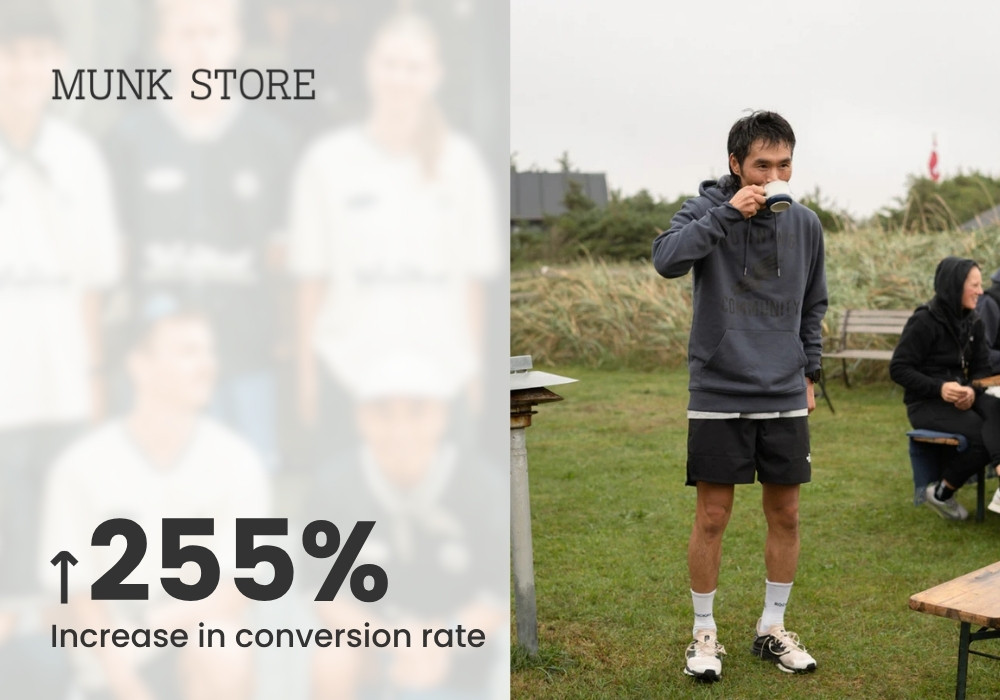
These are reported retailer implementations, often involving several Clerk products. Their results are not isolated estimates of the effect of this feature. Open each story for its original scope and context.
.png)