
← Arts, crafts and entertainment ecommerce overview
Customer segmentation for arts and crafts: more relevant ads and email campaigns
Turn relevant shopping and purchase signals into customer groups you can act on. This guide explains segmentation for arts and crafts, including campaign selection, Meta and Google Ads activation, email targeting and measurement.
Use customer context to choose who receives which campaign
A single customer list hides different needs. Interest in watercolor materials can support a different message from interest in jewelry-making supplies. Segmentation makes those differences usable: a marketer can choose campaign recipients, adjust creative and test appropriate exclusions. It is a way to make marketing decisions more relevant, not a guarantee of cheaper advertising or higher conversion. Recent medium or craft interest, with experience level used only when supplied.
What your setup should be able to do
| Requirement | What to establish |
|---|---|
| Build a segment for a specific campaign | Combine relevant category or purchase context with a clear next action. For example, consider a project follow-up with compatible materials. Specify the qualifying events, time window, exclusions and exit condition. |
| Use meaningful customer context | Recent medium or craft interest, with experience level used only when supplied. |
| Keep customers moving between groups | Define entry, exit and re-entry rules. A completed order, return or changed preference should update the relevant segment and downstream campaigns. |
| Connect segments to ad and email platforms | Check the exact Meta, Google Ads and email integrations. Establish which identifiers are sent, how frequently lists refresh and whether removals are supported. |
| Check how a campaign actually uses its list | A customer list may be used for targeting, an exclusion or a signal for broader delivery, depending on the platform and campaign settings. Inspect those settings rather than assuming the list strictly limits who sees an ad. |
| Make the outcome measurable | Track eligible customers, matched destination users, spend and purchases. Assess incremental revenue after product margin, returns and advertising costs. |
Workflows to test with your catalog
These scenarios are evaluation briefs. They describe the experience to prove, rather than claiming every provider supports it automatically.
| Scenario | Shopper or team task | Acceptance check |
|---|---|---|
| Category campaign | Create separate campaign groups for relevant watercolor materials and jewelry-making supplies interests. | Inspect qualifying and excluded records, matching at the destination and actual campaign settings. |
| Purchase follow-up | Select customers eligible for a project follow-up with compatible materials. | Check product and account requirements; update eligibility after returns or corrections. |
| Channel activation | Send an eligible segment to a supported advertising or email destination. | Verify additions, removals, refresh timing and whether the campaign uses the list as targeting, an exclusion or a broader delivery signal. |
| Reactivation | Use a category-appropriate purchase interval to identify customers for a relevant follow-up. | Compare against a control; do not treat a long purchase cycle as proof a customer has been lost. |
Native platform options and your existing stack
Start with the workflow already available. Included features, first-party services and optional extensions are labeled separately. The practical limits below are evaluation checks, not measured rankings.
| Option and source | Scope | What it provides | What to verify |
|---|---|---|---|
| Shopify customer segments ↗ | First-party segmentation | Customers enter and leave a segment as they meet its criteria. | Verify whether the available data and activation destinations meet the campaign need. |
| Existing commerce and ESP data ↗ | Current-stack baseline | Use existing customer and purchase data for a small number of defined campaigns. | Document missing events and refresh times before adding another system. |
| Warehouse audience model ↗ | Build on existing data | Warehouse models can supply audience attributes to activation tools. | This includes data engineering and activation software; it is not a free platform feature. |
Software providers compared
Each row links to an official source. Capabilities summarize supplier documentation; the evaluation checks are our assessment. This researched shortlist is not a common performance benchmark. Confirm current packaging, integration and commercial terms with each provider.
| Provider and source | Product scope | Documented capabilities | Trade-offs and proof to request |
|---|---|---|---|
| Clerk Audience ↗ | Commerce segmentation | Behavior-based customer segmentation and campaign activation through supported marketing integrations. | The documented marketing integrations sync audiences daily. Verify destination-specific timing, identifiers and removal behavior. |
| Nosto ↗ | Onsite audience intelligence | Audience insights and segment targeting across commerce experiences. | Distinguish onsite targeting from exporting an audience to an ad network. |
| Bloomreach ↗ | Audience building and execution | Segmentation combines customer data with marketing execution. | Inspect definitions, overlapping campaigns and activation latency. |
| Twilio Segment Engage ↗ | Audience building and activation | Segment Engage creates audiences from events and traits and syncs them to supported destinations. Computation and destination delivery can be real-time or batch. | Include source mapping, identity rules and destination configuration. |
| Hightouch ↗ | Warehouse-based audiences | Customer Studio builds and activates audiences from warehouse data. | Requires useful warehouse models and an owner for their freshness. |
| Klaviyo ↗ | Marketing audiences | Email personalization and automation use customer data. | Confirm the required audience logic and destinations outside messaging. |
| Salesforce Data 360 ↗ | Enterprise customer data | Data platform within the Salesforce ecosystem. | Validate identity, activation and operating scope in the proposed architecture. |
Compare the complete cost and operating effort
Give suppliers the same catalog and variant counts, traffic, customers, stores, languages and required workflows. Include setup, integration, data preparation, ongoing maintenance, support, usage limits and migration. Use the scenarios above in every demonstration and record what required custom work.
Questions to answer before choosing
Which customer segments should a arts and crafts retailer start with?
Start with a small set of actionable groups: relevant category interests, recent purchasers and customers eligible for a useful follow-up. Recent medium or craft interest, with experience level used only when supplied. Add value or lifecycle groups only when they change the campaign.
Do we need dedicated customer segmentation software?
Your commerce platform and email provider may already support the necessary groups. A specialist becomes worth evaluating when required events are missing, definitions are difficult to maintain or activation across advertising and email channels needs more control. Use the same segment and update test for each option in the tables.
How do customer segments reach Meta and Google Ads?
Create the segment in your store, marketing platform or customer data tool, then use a supported connection or upload process to activate eligible customer identifiers. Meta offers customer-list Custom Audiences; Google offers Customer Match. These services match identifiers to platform users. They do not automatically receive or understand every product preference stored in your source system.
Will better segmentation automatically improve ROAS?
No. It can make your campaign inputs more relevant, but creative, offer, match coverage, campaign settings and cost still affect results. Compare against an appropriate baseline or controlled test. Platform-attributed ROAS alone does not establish incremental sales.
Can every customer be included in an advertising list?
No. Use the platform’s current customer-data requirements and the customer’s applicable permissions. Email subscription status and permission to activate advertising data are separate questions to resolve in your data setup.
Where does Clerk Audience fit?
Clerk Audience is one option for building customer segments and connecting them to marketing destinations. Its documentation lists Facebook, Google Ads and email integrations, with daily audience syncing. Verify that cadence against the campaign: a purchase should not be assumed to trigger an immediate advertising exclusion.
How should we implement audience?
Prepare medium, material and surface, dimensions, kit contents, skill guidance where needed, define one shopper or team task, connect the relevant data and test error cases. Start with a limited rollout, record maintenance effort and compare a consistent commercial outcome with the existing experience.
How should a small team compare price and effort?
Ask for the same scope: catalog and variants, monthly usage, stores, customer records and the required channels. Include implementation, data preparation, maintenance and usage overages. A low entry price does not establish lower total cost; a large platform does not automatically produce better outcomes for a smaller store.
What changes for a large catalog or a US/multi-market store?
Test peak traffic, local terminology, currency, units, available assortment and the correct destination. Medium, surface and product contents must support the stated creative task. Request the provider’s relevant integration and support terms. Geographic wording in a query is not evidence of a region-specific performance winner.
How should we measure the improvement?
Use comparable eligible visitors or customers and a declared measurement window. Include cancellations, returns, discounts and operating cost. Long-tail discovery should help a shopper complete a project instead of repeating the same bestsellers. A customer who interacts with a feature can already have higher intent, so feature-attributed sales alone are not a causal result.
Do we need a CDP, an ESP or an audience tool?
Identify the job: unifying identity and source data, defining groups, or delivering messages. Products can cover more than one role, but the scope and integrations differ. Start with an existing data and campaign workflow when it meets the requirement.
Connect customer segments to Meta, Google Ads and email
For a campaign about watercolor materials, define an eligible group using relevant preferences or purchase events. Choose creative and a destination page that match the campaign. Decide whether you are re-engaging customers, excluding them where supported, or using their information as an input to wider acquisition.
Meta customer-list Custom Audiences and Google Customer Match use customer identifiers to match platform users. A supported connection does not automatically transfer every product preference or make those preferences available as targeting fields. Verify identifiers, matching, update behavior and the campaign’s actual use of the list.
Sharper campaign inputs are the objective; better results need measurement. A successfully synchronized list does not prove that delivery stayed within that group or that the campaign caused additional purchases.
How to test effectiveness and roll out
- Choose one category, one customer group and one campaign objective.
- Write the segment definition, exclusions and update rules; review representative customer records.
- Connect one destination and inspect list additions, matching and removals.
- Check the campaign’s targeting, expansion or exclusion settings and use creative that fits the group.
- Run a controlled test where feasible; keep the offer and measurement window comparable.
- Review incremental contribution, list freshness and maintenance effort before extending the approach.
Measures to include
- Eligible segment size versus matched destination audience
- Time for additions and removals to reach each channel
- Incremental purchases and contribution after advertising costs
- Acquisition cost and existing-customer spend, where measurable
- Unsubscribes and campaign overlap
Customer stories
See how stores put
the ideas into practice.
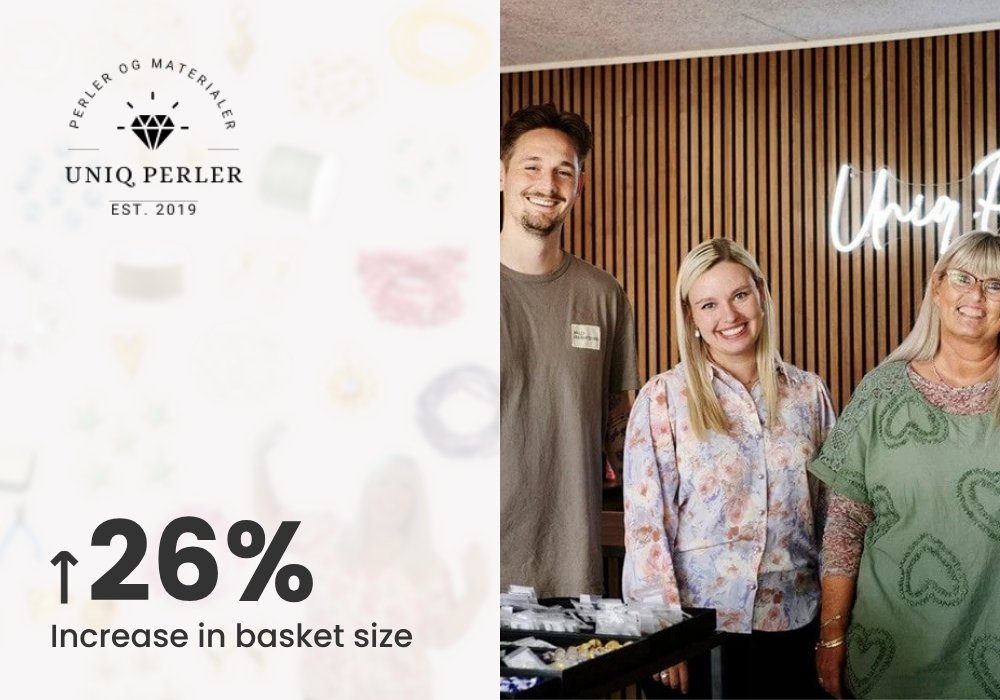
I AM Creative, Gallerix, Uniq Perler and Fechtner illustrate crafts, art, components and model hobbies respectively. They are not interchangeable music or books cases. Reported results belong to the full implementation; the stories do not isolate every feature discussed in this guide.