 March 23, 2026
 14 min read
Fashion profitability depends on what shoppers keep, not just what they add to a basket. Use this guide to prioritize fit information, product discovery, merchandising, lifecycle relevance and measurement.
Why best practices & loyalty matters for fashion ecommerce
Five recurring mistakes make improvement harder: hiding useful product information, accepting weak discovery, leaving merchandising rules unattended, sending undifferentiated incentives, and treating attributed revenue as incremental profit. Each needs an owner and an observable acceptance test.
What your setup should be able to do
| Requirement | What to establish |
|---|---|
| 1. Remove product uncertainty | Keep size guides, composition, care and policy details discoverable; do not promise a fit or return reduction without evidence. |
| 2. Test discovery regularly | Use real queries and selected variants; review zero results, irrelevant results and unavailable products. |
| 3. Maintain merchandising | Give new collections exposure and remove expired rules; keep stock and relevance ahead of commercial boosts. |
| 4. Make retention useful | Coordinate flows, product relevance, rewards and frequency; suppress inappropriate offers after a purchase or return. |
| 5. Measure retained contribution | Include returns, discounts and operating costs. Compare treatments with an eligible control. |
Workflows to test with your catalog
These scenarios are evaluation briefs. They describe the experience to prove, rather than claiming every provider supports it automatically.
| Scenario | Shopper or team task | Acceptance check |
|---|---|---|
| Low conversion | Shoppers repeatedly search and leave without a suitable result. | Audit relevance and available variants before using a discount to compensate. |
| Large baskets, weak profit | Order value rises but discounts and returns rise too. | Use retained contribution per eligible visitor and report the return window. |
| Weak repeat purchasing | A loyalty program is proposed before understanding why buyers leave. | Compare service, product relevance and reward incentives within the same customer group. |
| Collection launch | Email, homepage and product sequencing promote different ranges. | Coordinate dates, stock and messages under one maintained campaign brief. |
Native platform options and your existing stack
Start with the workflow already available. Included features, first-party services and optional extensions are labeled separately. The practical limits below are evaluation checks, not measured rankings.
| Option and source | Scope | What it provides | What to verify |
|---|---|---|---|
| Shopify collections and discovery ↗ | Native merchandising baseline | Use existing collection sorting and product discovery controls. | First verify that catalog data and theme configuration are correct. |
| Shopify customer segments ↗ | Native targeting baseline | Dynamic segment membership can support focused campaigns. | A customer tag or segment is not a loyalty points ledger. |
| Existing email flows ↗ | Current retention baseline | Use current campaign and automation tools before migrating. | Audit overlap and incremental results before adding volume. |
Software providers compared
Each row links to an official source. Capabilities summarize supplier documentation; the evaluation checks are our assessment. This researched shortlist is not a common performance benchmark. Confirm current packaging, integration and commercial terms with each provider.
| Provider and source | Product scope | Documented capabilities | Trade-offs and proof to request |
|---|---|---|---|
| Yotpo Loyalty ↗ | Rewards and referrals | Points, VIP tiers and referral programs. | Check returned-order reversals and reward economics. |
| LoyaltyLion ↗ | Loyalty programs | Spend/points tiers and conditional Shopify customer-tag tiers. | Check tier qualification periods, downgrades and plan scope. |
| Smile ↗ | Points and rewards | Points earning and redemption workflows. | Test redemption visibility, exclusions and the complete shopper journey. |
| Clerk Email + Audience ↗ | Retention activation | Segmentation and relevant messages can be used in retention campaigns; measure any improvement in repeat purchasing. | Complements a loyalty program; do not treat this as proof of a points ledger. |
Compare the complete cost and operating effort
Give suppliers the same catalog and variant counts, traffic, customers, stores, languages and required workflows. Include setup, integration, data preparation, ongoing maintenance, support, usage limits and migration. Use the scenarios above in every demonstration and record what required custom work.
Questions to answer before choosing
Which loyalty platforms should a DTC fashion retailer compare?
Yotpo Loyalty, LoyaltyLion and Smile are documented rewards candidates. Compare earning rules, tiers, referrals, redemption and returned-order adjustments. Clerk Email and Audience can support relevant retention campaigns but should not be described as a substitute for a rewards ledger.
How can clothing and footwear brands improve repeat purchasing?
Offer reliable products, useful follow-up and understandable benefits. Test early access or relevant product reminders alongside discounts. Use retained repeat purchases over a category-appropriate interval and account for the cost of rewards.
Which shoe seller or Australian fashion loyalty program gives shoppers the biggest discounts?
That is a consumer-shopping comparison rather than a merchant-software question. Reward terms change and depend on the retailer and market; this merchant guide does not rank current consumer discounts. The vendor table instead explains the tools a retailer can use to run its own program.
What is a good fashion ecommerce conversion rate or AOV?
There is no single target that is valid across apparel, footwear, markets, devices and traffic sources. Define orders divided by eligible sessions and a consistent AOV basis; compare your own like-for-like periods and a dated peer benchmark with matching definitions. Separate gross order value from retained revenue after returns.
How should we use fashion ecommerce statistics and trends?
Require a source date, geography, category, sample and metric definition. Use external statistics to form a hypothesis, then prioritize using your own query, support and purchase data. This guide does not invent a 2026 industry average.
Which offer structure gives fashion stores the highest conversion?
Test percentage discounts, a basket threshold, free delivery or non-price benefits against an appropriate control. Include discount funding, returns and margin. Higher conversion alone does not show which offer is most profitable.
Measure the business outcome consistently
Conversion rate is orders divided by the eligible sessions in the chosen definition. Average order value is order revenue divided by orders; specify whether tax, shipping, refunds and cancellations are included. Retained contribution subtracts the relevant product, fulfilment, discount, return and intervention costs. Use the same basis in both experiment groups.
A loyalty member can buy more because they were already a loyal customer. To estimate the program’s effect, compare a randomized invitation or treatment with an eligible control where feasible, and account for outstanding rewards and returns. The decision is whether the benefit exceeds its cost.
How to test effectiveness and roll out
- Diagnose the largest observed friction using query, product, support and retained-order data.
- Choose one change and document its baseline, owner and success measure.
- Repair relevant catalog and event-data gaps before installing a tool.
- Compare the native workflow and relevant specialists using a written demonstration brief.
- Roll out with a control and wait for the measurement and return windows.
- Keep the profitable improvement, document the result and select the next constraint.
Measures to include
- Retained contribution per eligible visitor
- Repeat purchase over a defined interval
- Returns and cancellations
- Customer contact pressure and reward cost
Customer stories
See how stores put
the ideas into practice.
These are reported retailer implementations, often involving several Clerk products. Their results are not isolated estimates of the effect of this feature. Open each story for its original scope and context.
.png)
How Oxwork Achieved a 40% Higher Average Order Value With AI-Powered Product Discovery
Read more →
Dudubags: How They Achieved a 17% AOV Increase by Transforming Their Online Presence
Read more →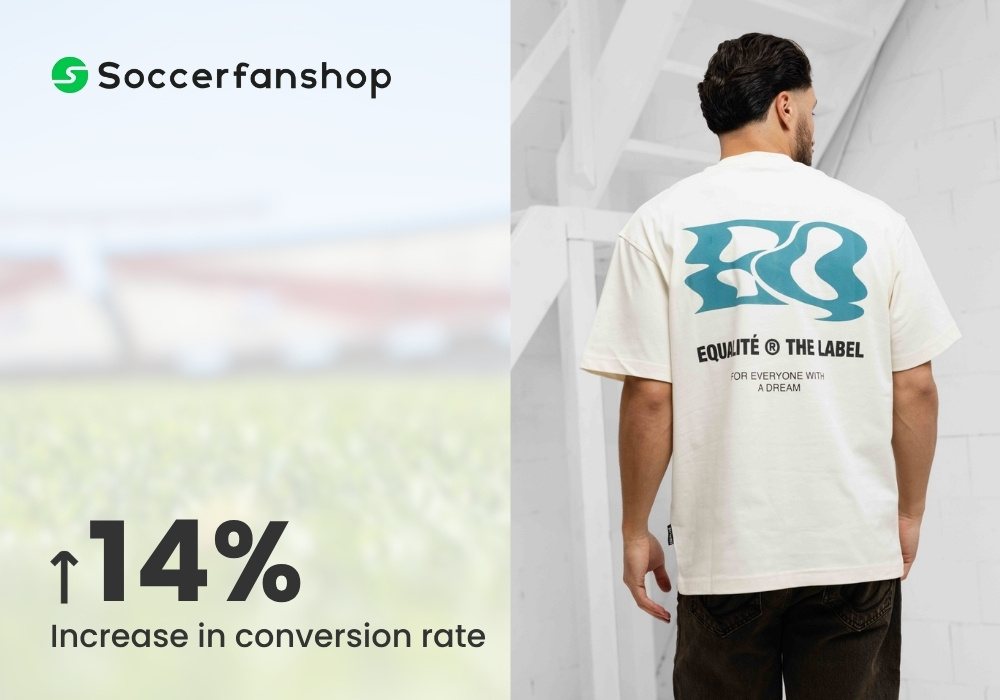
Soccerfanshop: 14% increase in conversion rates with Search and Recommendations
Read more →
Delivering E-Commerce Excellence with Teeshoppen
Read more →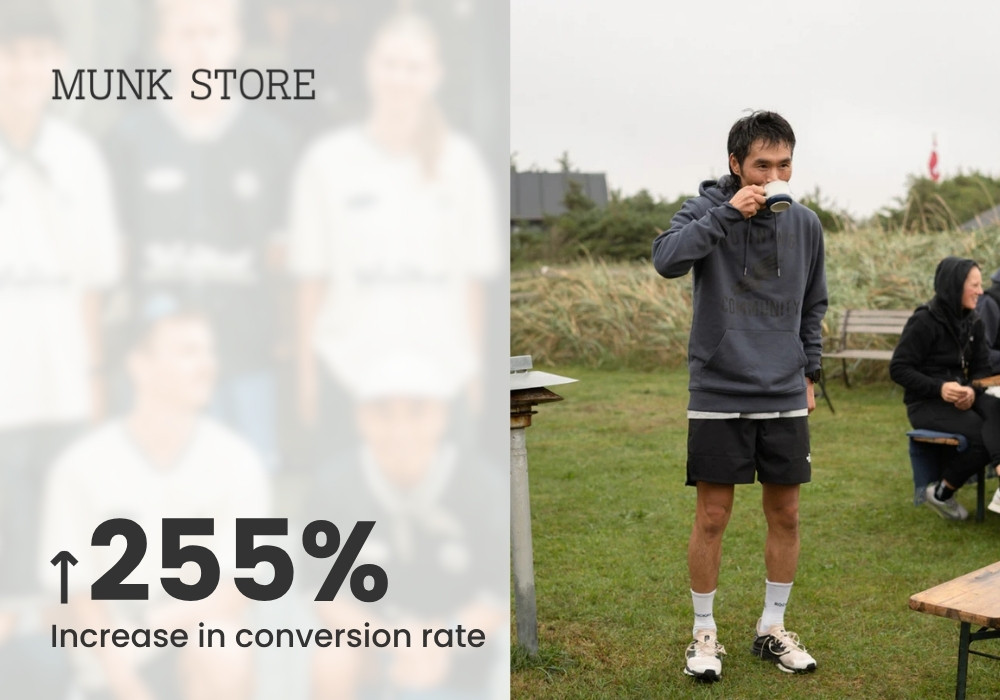
Munk Store Drives Sales & Improves Online Customer Journey Using Clerk
Read more →